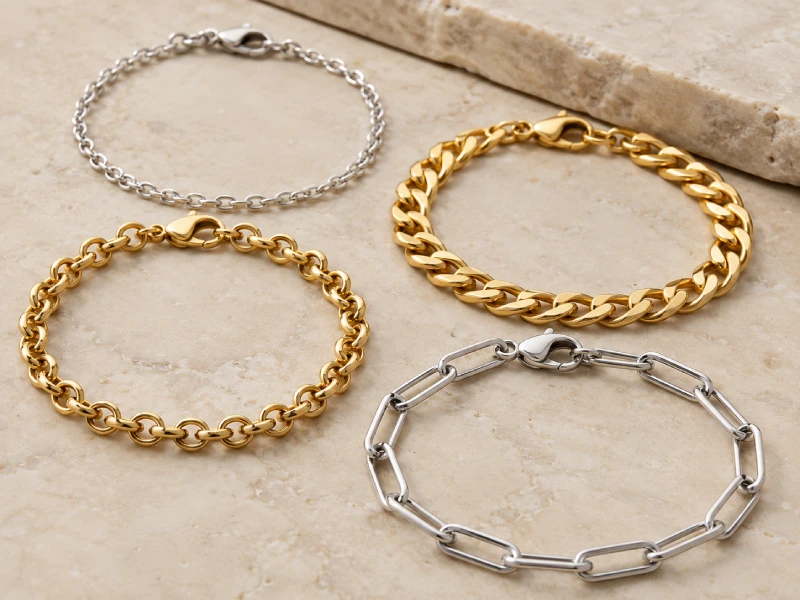
Custom Chain Bracelets
Customize link shapes, chain widths, extension lengths, finishes, and clasps for minimalist or statement bracelet collections.

Develop chain bracelets, charm bracelets, bangles, cuffs, and adjustable designs with customized materials, clasps, finishes, logo branding, and retail-ready packaging.
Share your bracelet concept, preferred material, target quantity, and packaging requirements for an initial project review.
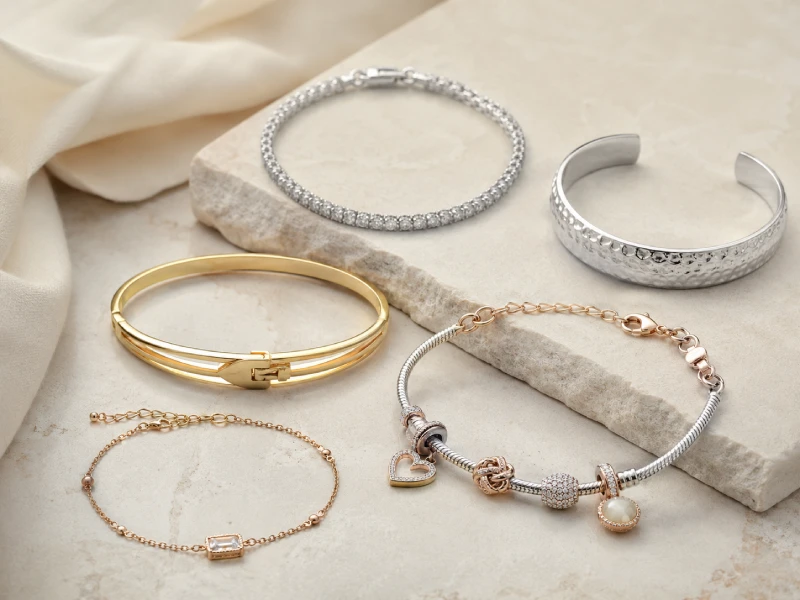
Create an original OEM design or adapt an existing concept for your private label collection.
Review length, clasp type, chain durability, charm movement, connections, and wearing comfort.
Coordinate approved samples, bulk manufacturing, inspection, branding, and packaging.
Customize link shapes, chain widths, extension lengths, finishes, and clasps for minimalist or statement bracelet collections.
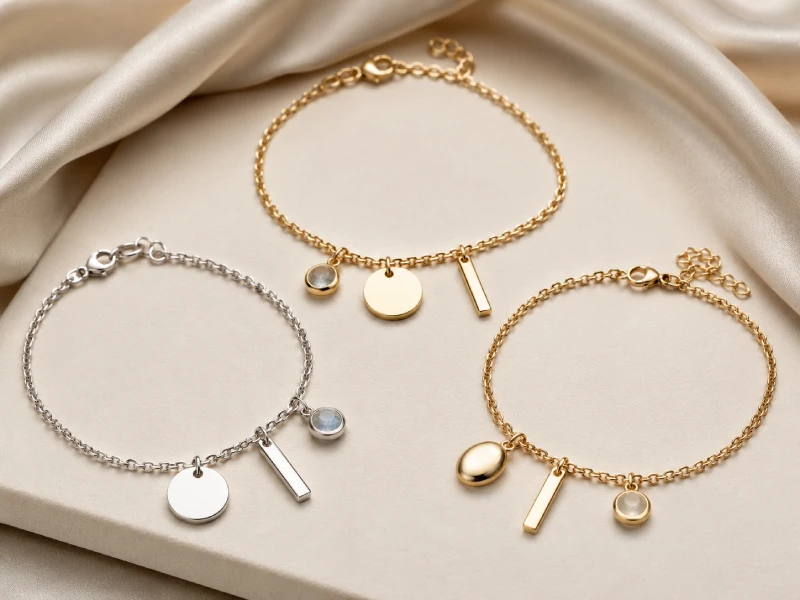
Combine signature charms, initials, stones, symbols, and logo elements with planned spacing and secure connections.
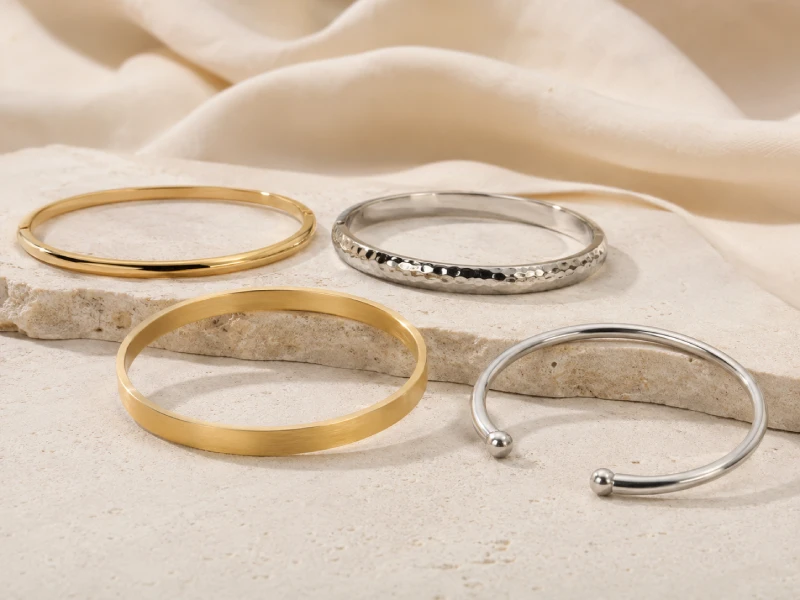
Create polished, textured, engraved, hinged, stone-set, or stackable bangles in market-appropriate dimensions.
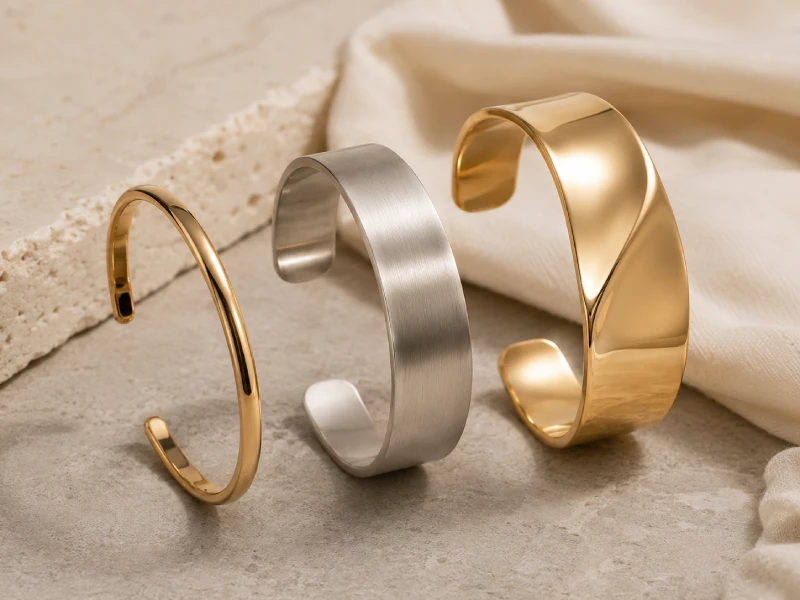
Develop slim or statement cuffs with controlled openings, comfortable inner surfaces, textures, and branded details.
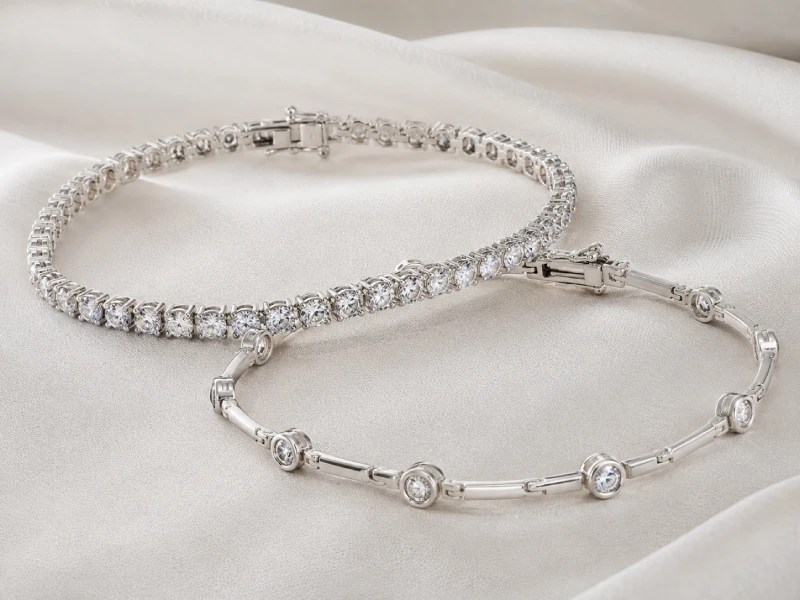
Coordinate stone size, setting structure, flexibility, alignment, and clasp security for refined stone-set designs.
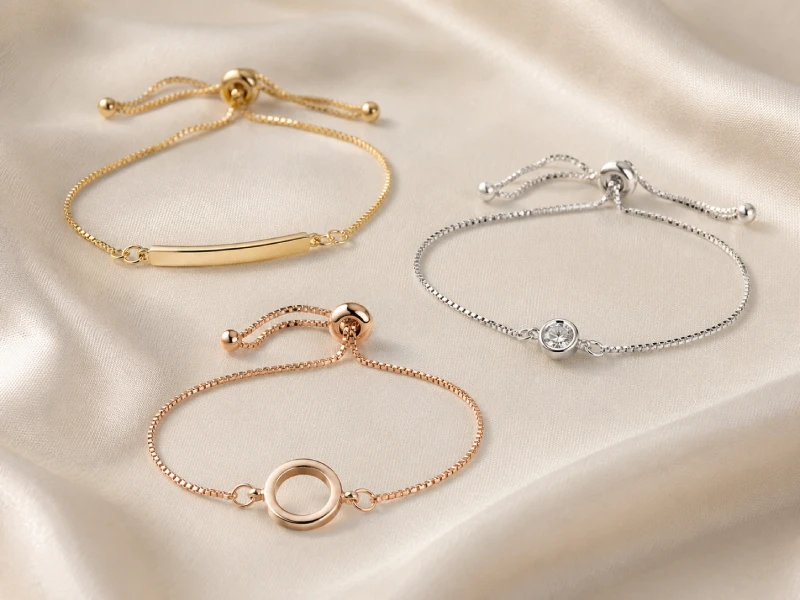
Support flexible wrist sizing with slider closures, adjustable chains, movable beads, and related structures.
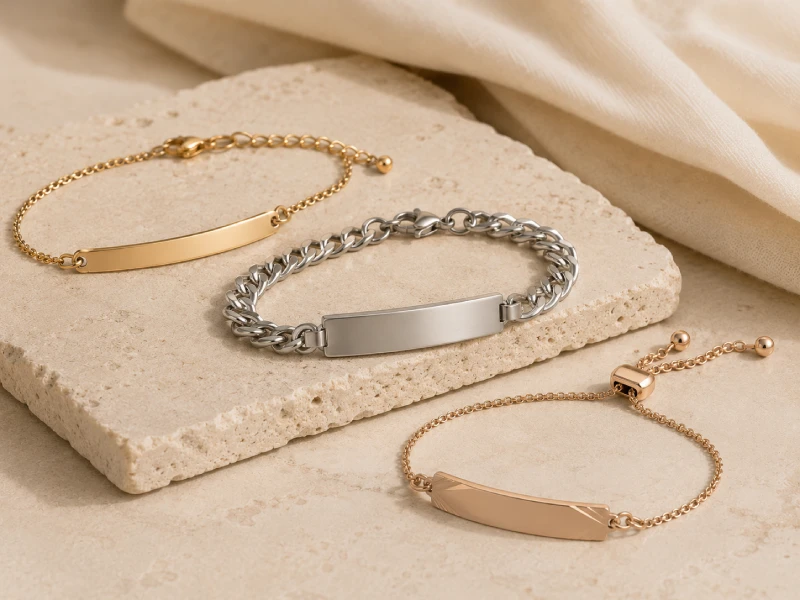
Add logos, names, collection marks, decorative patterns, serial details, or market-specific engraving to custom plates.
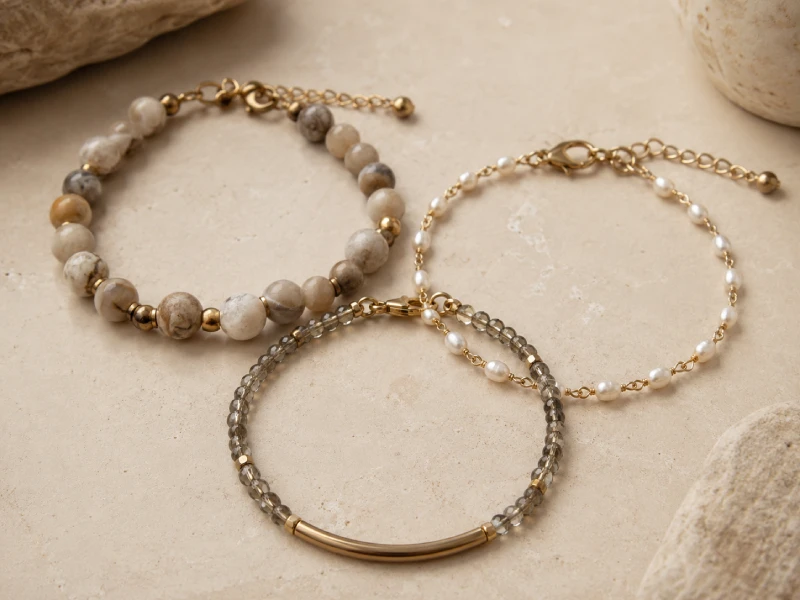
Combine metal parts with pearls, gemstones, enamel, crystals, glass beads, and other approved decorative materials.
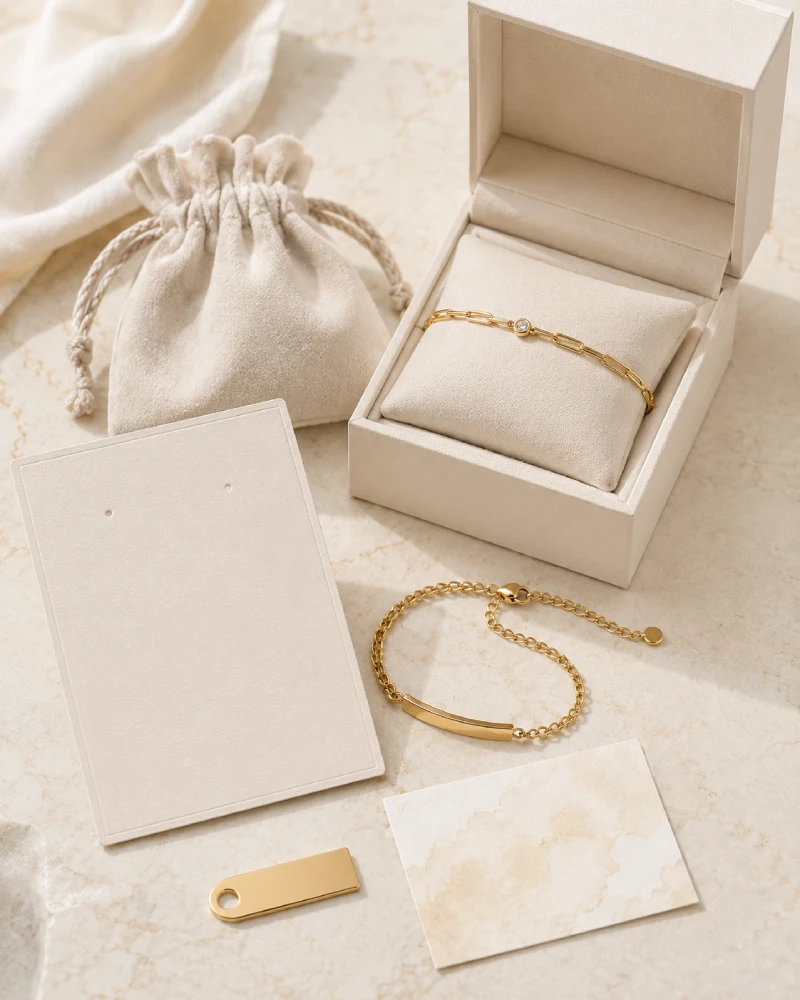
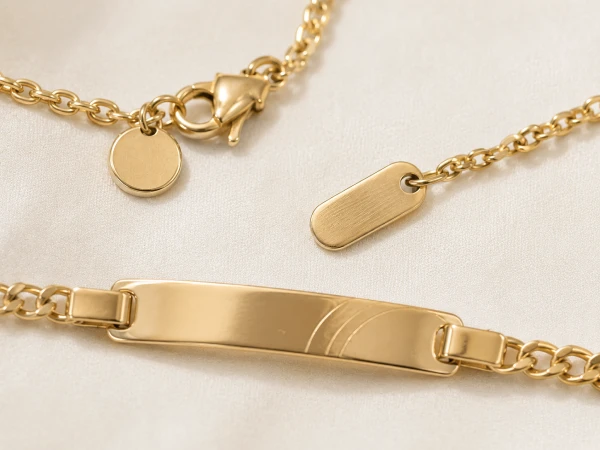
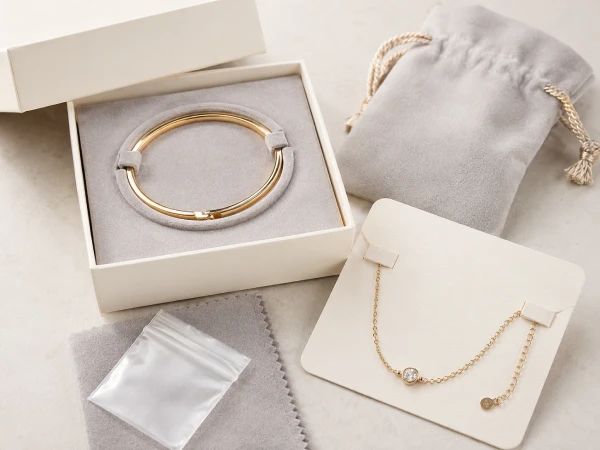
Before production approval, bracelet dimensions, logo placement, packaging fit, label information, and presentation requirements can be reviewed together to reduce avoidable changes during bulk production.
Logo method, size, position, and visibility confirmed.
Bracelet size, clasp, charms, and inserts checked together.
SKU, barcode, care card, labels, and packing details prepared.
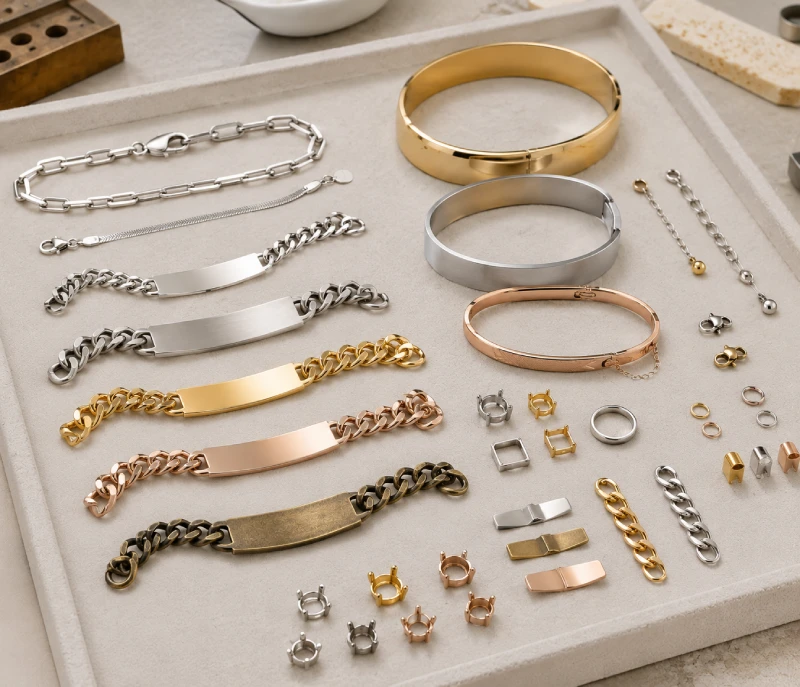
Material selection affects the bracelet’s weight, detail definition, structural strength, polishing result, plating process, and final market position.
| Material | Key Characteristics | Common Applications |
|---|---|---|
| 925 Sterling Silver | Premium positioning, refined detailing, and compatibility with polished, rhodium-tone, or gold-tone finishes. | Fine chain bracelets, charm designs, stone-set bracelets, and premium private label collections. |
| Stainless Steel | Strong structure, good shape stability, and suitability for clean polished or brushed surfaces. | Everyday chain bracelets, cuffs, bangles, and men’s or unisex collections. |
| Brass | Suitable for shaped components, decorative details, casting, and a broad range of plated finishes. | Fashion bracelets, logo charms, statement designs, bangles, and mixed-component collections. |
| Project-Specific Alloys | Selected according to structure, component size, finishing requirements, and the intended production method. | Specialized findings, custom links, decorative components, and design-specific applications. |
Final material availability and suitability should be confirmed during the technical review and sample-development stage.
The chain should be selected according to the bracelet’s visual style, charm weight, required flexibility, clasp size, and expected wearing conditions.
Decorative materials can be used as centerpieces, repeating elements, charms, link accents, or coordinated details across a complete jewelry collection.
Suitable for pavé, channel, bezel, prong, or individual statement settings.
Add natural variation and a more distinctive collection identity.
Introduce color, themed motifs, and seasonal design details.
Combine approved materials while reviewing weight, attachment, and surface compatibility.
Plating color and surface texture should be confirmed on the actual bracelet material because chain movement, joint areas, polishing, and component geometry can affect the final appearance.
Share your design, target market, required finish, order quantity, and expected product positioning for a practical material and production review.
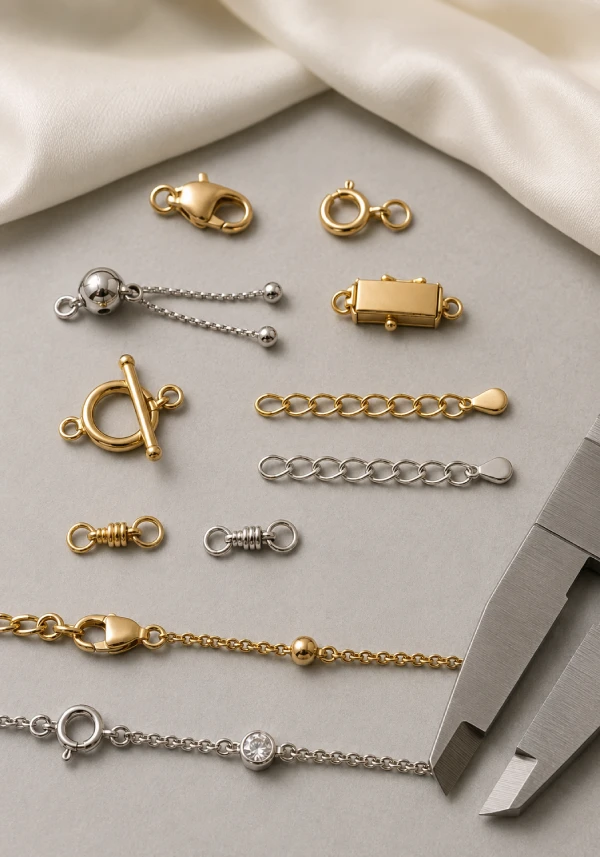
Finished length should be defined together with bracelet width, chain flexibility, clasp dimensions, extension range, and the size of any centerpiece or decorative components.
Confirm the full wearable length, including the clasp and fixed end components.
Define extension-chain length, slider movement, or alternative size options for different customers.
Consider women’s, men’s, children’s, unisex, and regional sizing preferences.
Set an acceptable finished-length tolerance that can be checked during sampling and bulk inspection.
Clasp selection should reflect bracelet weight, chain thickness, charm load, ease of use, appearance, and the required level of security—not appearance alone.
| Clasp Type | Best Suited For | Key Review Points |
|---|---|---|
| Lobster Clasp | Chain bracelets, charm bracelets, and everyday private label collections. | Spring action, opening size, pull strength, and compatibility with the end ring. |
| Spring-Ring Clasp | Lightweight and delicate chain bracelets with a refined appearance. | Ring size, spring tension, ease of handling, and suitability for the target customer. |
| Slider Clasp | Adjustable bracelets requiring a broad wrist-size range. | Sliding resistance, cord or chain compatibility, end-stop security, and balanced movement. |
| Box or Fold-Over Clasp | Tennis bracelets, heavier stone-set designs, and structured bracelet constructions. | Locking engagement, alignment, side safety features, and repeated opening performance. |
| Toggle or Hook Clasp | Statement, decorative, or easy-wear bracelet concepts. | Bar or hook dimensions, bracelet tension, accidental release risk, and visual balance. |
The strength of a bracelet depends on more than the main chain. Connectors, jump rings, solder joints, charm attachments, and clasp transitions often carry repeated movement and pulling force.
Review wire thickness, link dimensions, hollow or solid construction, deformation risk, and compatibility with the bracelet’s total weight.
Confirm ring diameter, wire thickness, closure quality, soldering requirements, and alignment between the clasp and chain.
Balance charm weight, spacing, movement, orientation, and attachment method to reduce twisting, snagging, or premature connection wear.
Check settings, decorative inserts, hinges, sliders, and moving components for looseness or contact with adjacent bracelet parts.
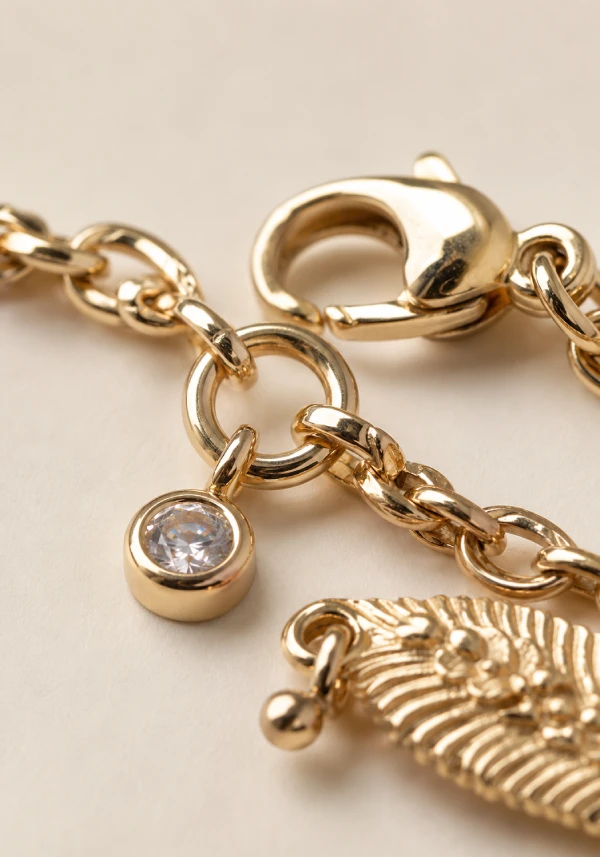
A structurally secure bracelet should also move naturally, avoid sharp contact points, and remain balanced during extended wear.
Check link edges, settings, clasp parts, and interior surfaces.
Prevent heavy centerpieces or charms from pulling excessively.
Review bracelet rotation, charm movement, and chain flexibility.
Inspect prongs, open rings, corners, and projecting components.
Send your bracelet drawing, target length, chain type, clasp preference, charm details, and intended customer profile for an initial structural review.
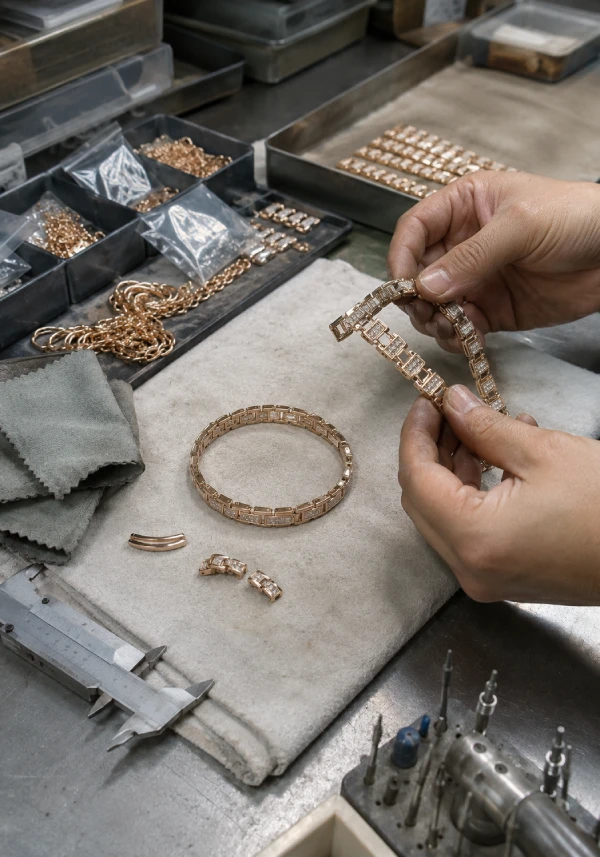
The sample stage converts the design brief into a physical bracelet that can be evaluated for appearance, dimensions, structure, branding, comfort, and packaging fit.
After final approval, the confirmed sample and specification records become the reference for component preparation, assembly, finishing, inspection, branding, and packaging.
The exact workflow may vary by bracelet structure, material, stone setting, tooling, and branding method, but each project follows defined approval points before bulk manufacturing continues.
Confirm the design reference, target dimensions, materials, quantity, branding, packaging, and delivery expectations.
Review chain structure, clasp compatibility, charm attachment, stone setting, tolerances, and production feasibility.
Produce the first physical sample using the confirmed design, material, finish, and component specifications.
Check bracelet length, clasp function, chain movement, comfort, appearance, logo position, and packaging fit.
Record approved changes, complete required revisions, and retain the final sample as the production reference.
Prepare chains, clasps, charms, stones, findings, packaging, and any required molds or production tooling.
Complete forming, casting, assembly, soldering, stone setting, polishing, plating, and brand-mark application.
Inspect the finished bracelets, verify labels and quantities, and complete approved packaging for shipment.
Approval should cover the full bracelet as it will be manufactured and delivered, not only its visual appearance.
Repeatable production requires clear references for materials, dimensions, finishes, branding, and packaging.
Send your design reference, preferred material, bracelet dimensions, clasp and charm requirements, target quantity, branding details, and packaging expectations for an initial project review.
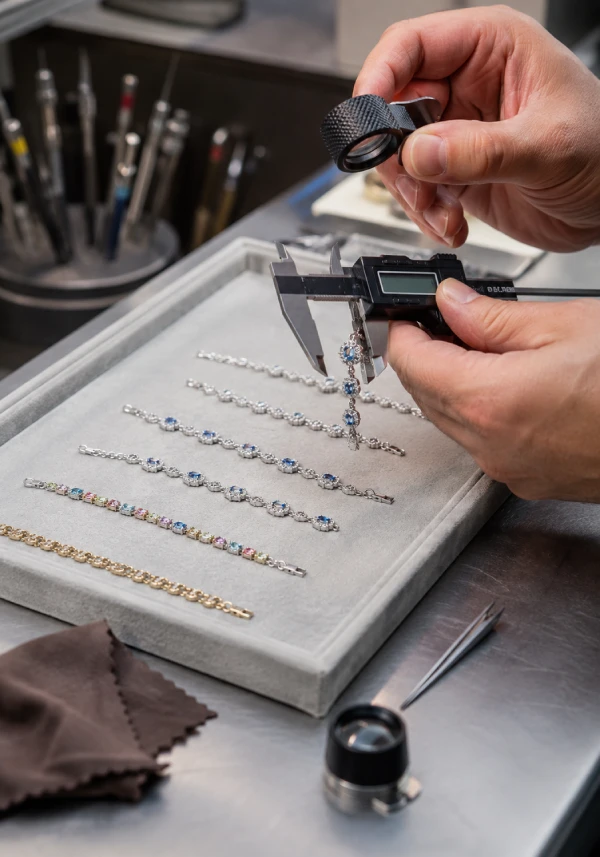
Chains, clasps, charms, stones, findings, and packaging components are checked before they enter bracelet assembly.
Inspection during assembly helps identify connection, alignment, setting, polishing, and dimension problems before later processes.
Finished bracelets are reviewed against the approved sample, specification records, branding details, and packaging requirements.
Inspection points are selected according to bracelet construction, materials, clasp type, decorative components, and approved quality requirements.
| Inspection Area | Key Checkpoints | Main Risk Controlled |
|---|---|---|
| Length and Dimensions | Finished length, extension-chain length, width, component position, and agreed production tolerance. | Poor wrist fit, inconsistent sizing, and differences from the approved sample. |
| Clasp and Closure | Opening and closing action, spring tension, engagement, alignment, and connection to the bracelet chain. | Accidental opening, weak closure, difficult operation, or clasp-to-chain mismatch. |
| Chain and Connections | Link condition, flexibility, jump-ring closure, solder joints, connectors, hinges, and slider components. | Chain breakage, open rings, deformation, loose connections, or restricted movement. |
| Charms and Stones | Attachment security, charm orientation, setting condition, stone alignment, and contact with adjacent parts. | Loose charms, missing stones, twisting, snagging, or premature wear at attachment points. |
| Plating and Surface | Color consistency, coverage, polish, texture, scratches, exposed areas, sharp edges, and visible handling marks. | Uneven color, poor coverage, surface damage, discomfort, or inconsistent presentation. |
| Branding and Packaging | Logo position, marking clarity, SKU labels, barcode details, bracelet placement, protective contact, and carton quantity. | Incorrect branding, chain tangling, packaging scratches, label errors, or packing discrepancies. |
Functional checks should reflect the approved bracelet design rather than applying one identical test method to every product structure.
Confirm repeated opening, closing, locking, spring action, and ease of use without visible deformation.
Review chains, jump rings, solder joints, connectors, and charm attachments at the bracelet’s main stress points.
Check whether links, stone settings, hinges, sliders, and charms move naturally without binding or excessive friction.
Confirm that the bracelet remains positioned, protected, and untangled during handling and transportation.
Share your bracelet design, critical dimensions, functional concerns, branding details, packaging requirements, and any project-specific inspection priorities during the quotation and sampling stage.
Custom bracelet development becomes more efficient when the buyer has already considered collection direction, materials, sizing, branding, packaging, quantity, and approval requirements.
Clarify bracelet style, customer profile, dimensions, and collection positioning.
Review materials, chains, clasps, finishes, branding methods, and packaging.
Identify the specifications and quality points that must be confirmed on the sample.
Plan your target customer, bracelet styles, collection size, branding direction, packaging, and initial production requirements.
Understand how customization, tooling, materials, sample revisions, packaging, and order volume can affect production planning.
Compare base metals, chain structures, plating colors, surface treatments, stones, pearls, and other decorative components.
Plan bracelet cards, pouches, boxes, inserts, labels, barcodes, anti-tarnish protection, and export packing requirements.
We can evaluate chain bracelets, charm bracelets, bangles, cuffs, tennis bracelets, adjustable slider bracelets, engraved ID bracelets, beaded bracelets, and mixed-material designs. Production feasibility depends on the material, structure, dimensions, components, finish, and required quantity.
Yes. Development can begin from sketches, reference images, CAD files, technical drawings, physical samples, or an existing bracelet that requires structural or branding changes. The available reference will be reviewed before the sample method and required technical information are confirmed.
Common project options include 925 sterling silver, stainless steel, brass, and design-specific alloys. Depending on the base material and bracelet construction, finishes may include gold tone, rose gold tone, rhodium tone, black finish, high polish, matte, brushed, hammered, or antique-style surfaces.
Final material and finish suitability should be confirmed on the actual bracelet structure during sampling.
MOQ is evaluated by project rather than applying one quantity to every bracelet. It can be affected by the base material, custom chain or components, molds, stones, plating, logo method, packaging, color variations, and the number of styles included in the order.
Share the estimated quantity for each design so a practical production arrangement can be reviewed.
Timing depends on design readiness, technical complexity, material sourcing, tooling, stone setting, plating, packaging, and the number of sample revisions. Bulk production timing is confirmed after the final sample, specifications, quantities, and packaging requirements have been approved.
Yes. Depending on the bracelet design, branding may include engraving, stamping, laser marking, custom logo charms, clasp tags, ID plates, collection marks, or style codes.
Packaging can also be coordinated with bracelet cards, pouches, boxes, inserts, care cards, labels, barcodes, and protective packing. Logo dimensions and placement should be approved during sampling.
Inspection can cover finished length, extension range, clasp operation, link condition, jump-ring closure, solder joints, charm attachment, stone security, flexibility, sharp edges, and wearing comfort.
The approved sample and specification records are used as the main references for bulk-production inspection.
A project may include several bracelet styles, sizes, plating colors, or coordinated jewelry pieces. Feasibility depends on the quantity assigned to each variation, shared components, material preparation, plating batches, packaging versions, and production complexity.
Providing a style and quantity breakdown helps determine the most practical manufacturing arrangement.
Send your available design references, specifications, estimated quantity, private label requirements, and target schedule for an initial project review.
Share your bracelet concept, available specifications, and target production requirements. Jinnuo Jewelry will review the design, identify the details that need confirmation, and help prepare the project for sampling and bulk manufacturing.
A complete technical drawing is not required for the first inquiry. Sketches, photographs, reference products, and early concepts can also be reviewed.
Providing the available details helps us evaluate manufacturing feasibility, sample requirements, and the next development step.
Sketch, CAD file, photograph, physical sample, or similar bracelet design.
Preferred metal, chain, clasp, stones, plating color, and surface finish.
Logo method, branded components, jewelry cards, pouches, boxes, labels, or barcodes.
Estimated quantity, number of styles, target market, and required production schedule.
We review the design, structure, materials, branding, packaging, and production requirements.
Missing dimensions, components, finishes, or technical details are identified for confirmation.
The recommended sampling approach, quotation basis, and next manufacturing steps are prepared.
Submit the information currently available. Additional technical details can be confirmed during the project review.
— CUSTOM JEWELRY INQUIRY —
Share your requirements and our team will respond within 24 hours.