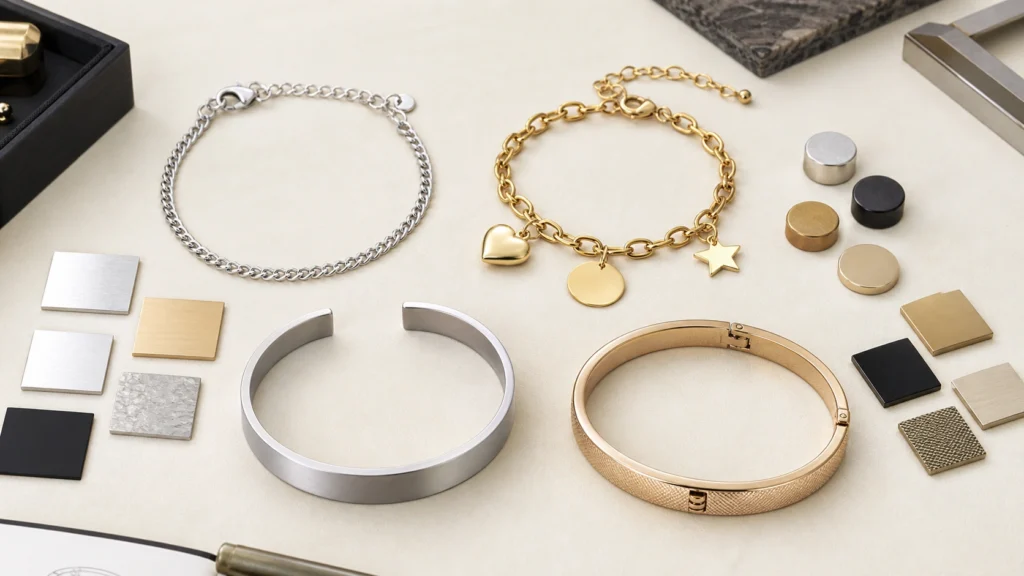
Choose custom bracelet materials and finishes as one construction system. The body, clasp, jump rings, pins, charms, soldered joints, stones, and surface layers may follow different production routes. Brass supports many detailed and finish-led fashion designs. 925 sterling silver suits brands that want a recognized precious-metal base and can address tarnish and deformation in the product plan.
Stainless steel may suit selected durable forms, but Jinnuo Jewelry’s steel scope is conditional and must be confirmed. Approve the final choice on a finished bracelet, especially at moving joints and skin-contact zones. A metal name alone does not prove wear life, safety, or compliance.
Choose Material by Bracelet Architecture
Start with the part that moves, flexes, or carries load. A chain bracelet depends on link and joint behavior. A cuff depends on its section, opening, and any intended adjustment. A rigid bangle depends on inside geometry and joint quality. A charm bracelet adds multiple attachments and rubbing surfaces.
Create a parts map with body, clasp, connectors, charms, stones, and logo element. Record the proposed material and joining method for each. If two metals meet, ask how their color, finish, wear, and connection will be managed.
This prevents a common mistake: choosing a base metal for the visible body while leaving the clasp or connectors unspecified.
Compare Brass, Silver, and Conditional Steel
Brass is useful for cast detail, decorative forms, and plated fashion finishes. Its finished appearance depends on surface preparation and the complete finish system. Edges, recesses, and joints deserve extra review.
925 sterling silver provides a precious-metal identity and supports many cast, formed, polished, textured, and stone-set designs. It can tarnish, and light sections may deform. Those conditions affect care language and sample review.
Stainless steel can suit clean, robust forms and stable surfaces where the design matches the confirmed process. Forming, machining, polishing, joining, setting, and resizing differ from brass or silver. Do not assume a silver design transfers unchanged to steel.
Jinnuo Jewelry’s verified primary materials are brass and 925 sterling silver. Any steel bracelet should begin with a specific feasibility check.
Map the Finish by Contact Zone
Mark four zones on the drawing: high-rub exterior surfaces, wrist-contact surfaces, moving joints, and recessed or hidden areas. Each zone creates a different finishing challenge.
A mirror polish shows scratches and waviness easily. A brushed finish needs a consistent direction and can be disturbed at joins. Textures can hide some marks but trap residue or change finish coverage. Gold-tone or other plated colors need an agreed visual reference and compatible base preparation.
Avoid specifying “long lasting” without a test method and use conditions. Wear depends on friction, chemistry, care, storage, construction, and the actual finish specification.
Control Mixed Components as One Color System
Clasps, chains, charms, cast bodies, and findings may come from different lots or processes. Approving each part separately can produce a bracelet with visible color breaks.
Review all components together under the same lighting. Define the main color reference, acceptable natural variation, and which component takes priority when an exact visual match is impractical. Check hidden sides too, because movement can expose them during wear.
If a component source changes, decide whether a color or assembly sample must be repeated.
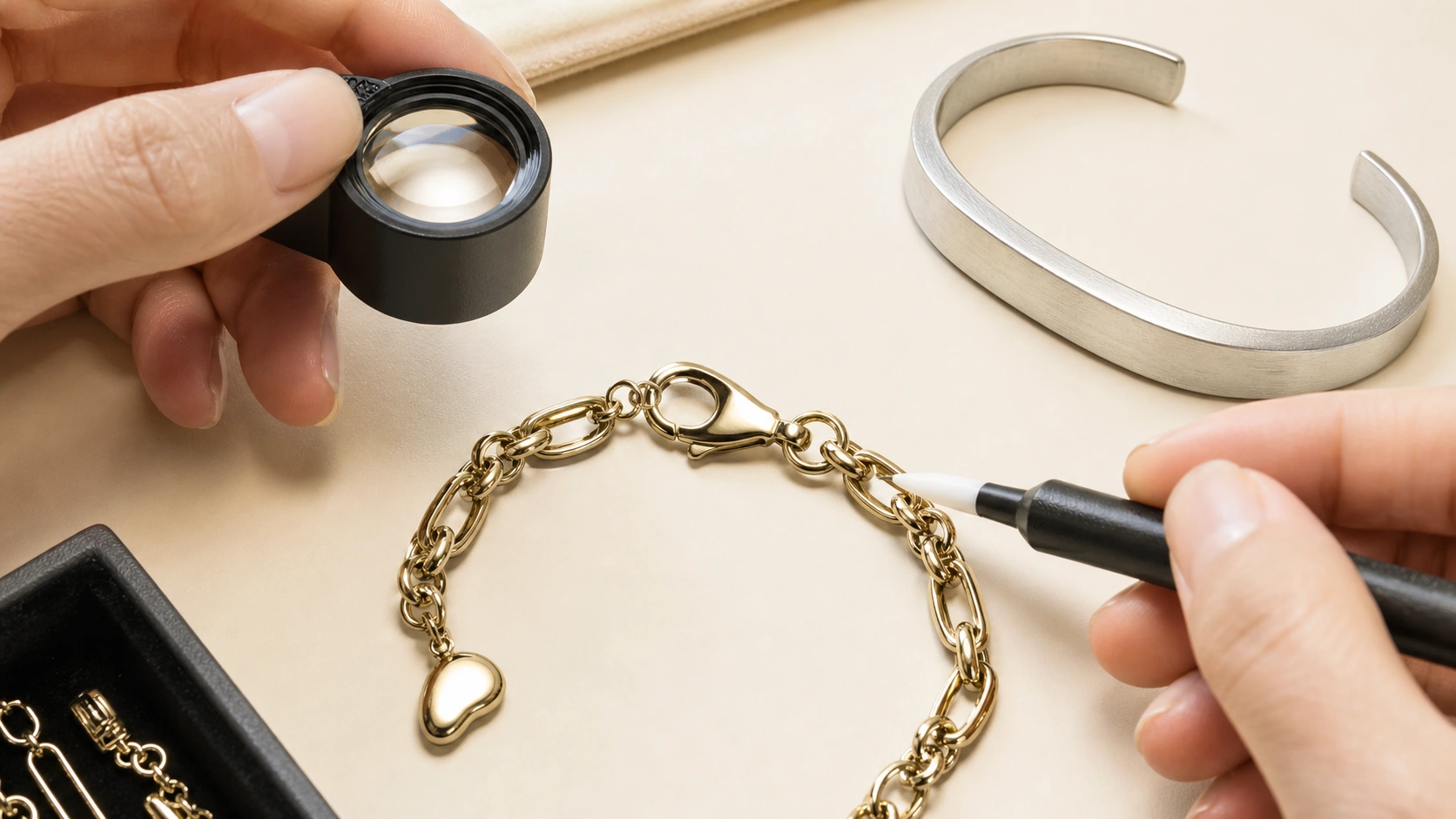
Approve a Finished Bracelet Under Movement
Inspect the completed bracelet flat, suspended, closed on a form, and moved through its normal articulation. Check color continuity, polishing direction, recess coverage, joint shadows, clasp operation, sharp edges, stone or enamel protection, and packaging contact.
Record the approved material by part, finish reference, component source where relevant, sample photos, care assumptions, and inspection points. Market-specific composition, labeling, and testing requirements should be confirmed by qualified parties.
Send Jinnuo Jewelry the parts map, drawings, material choices, finish references, lengths, components, intended use, packaging, and destination market. Exact process, sample scope, MOQ, testing, price, and timing follow feasibility review.

Carol
Carol is a jewelry manufacturing expert with first-hand experience across materials, surface finishes, production processes and quality control. He brings critical thinking and rigor to his work, questioning common assumptions and testing them against industry standards and real production results. He looks at every issue from the point ofview of the people who buy and wear jewelry, turning technical details into clear, practical answers to real-world problems.