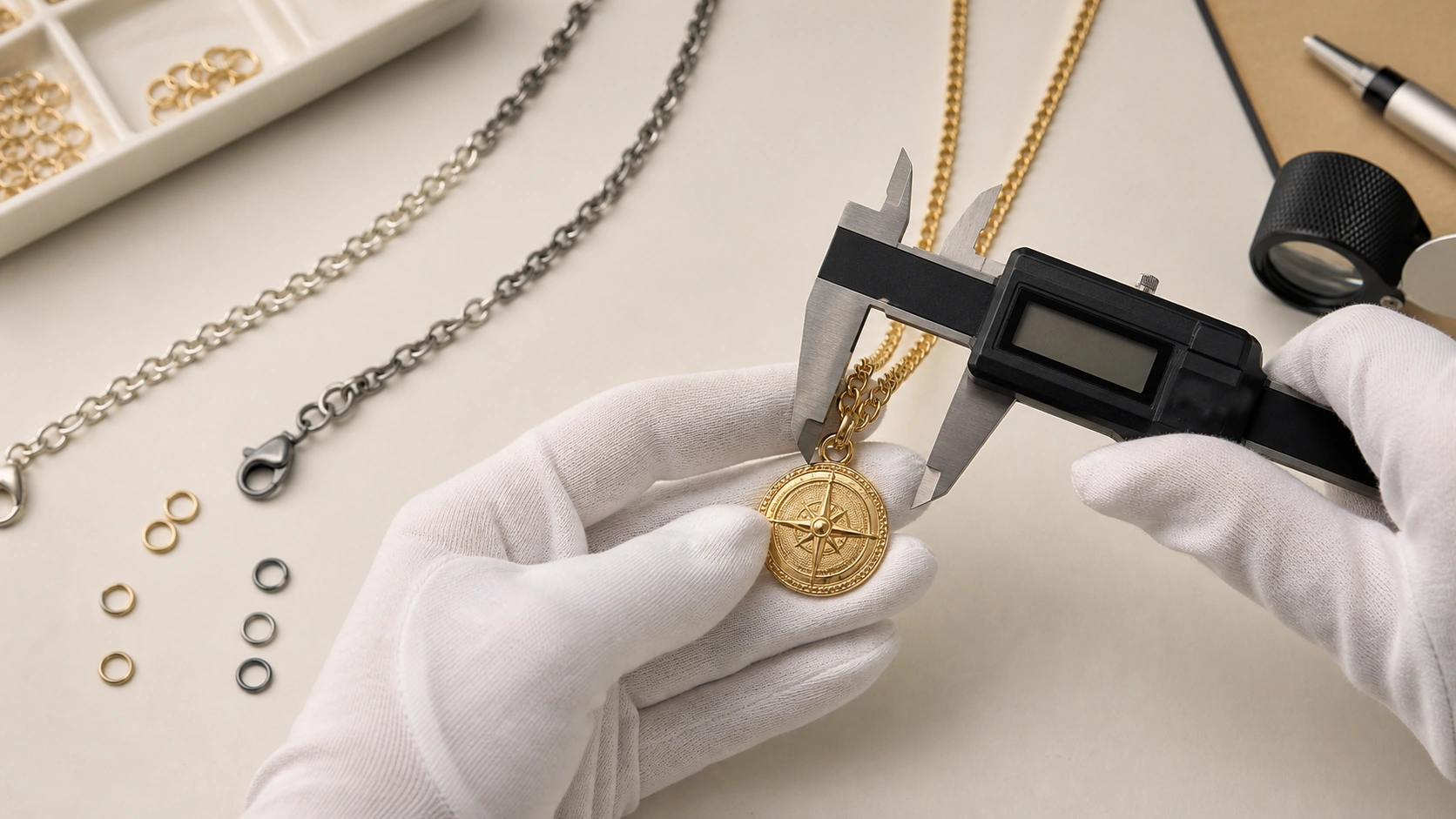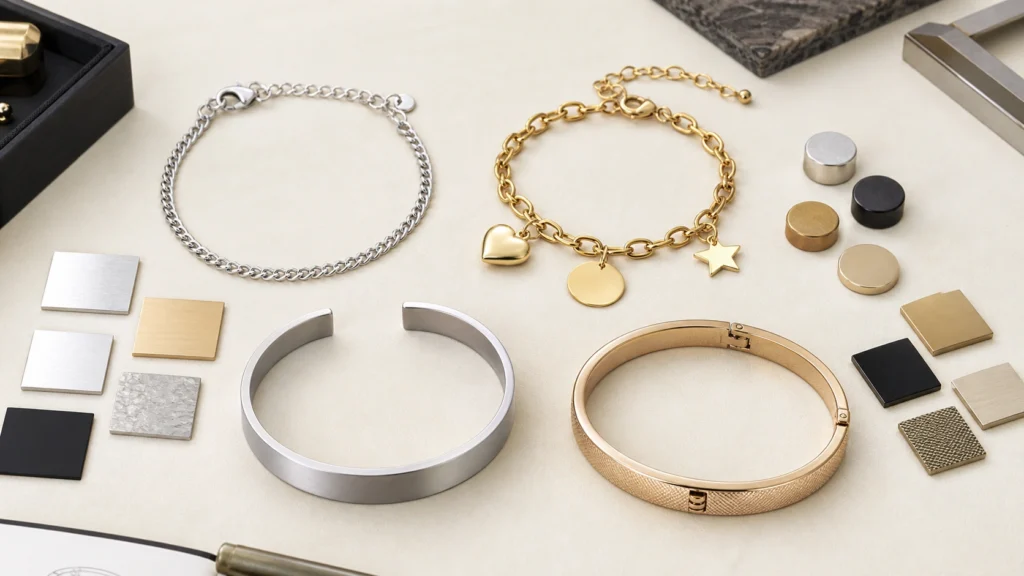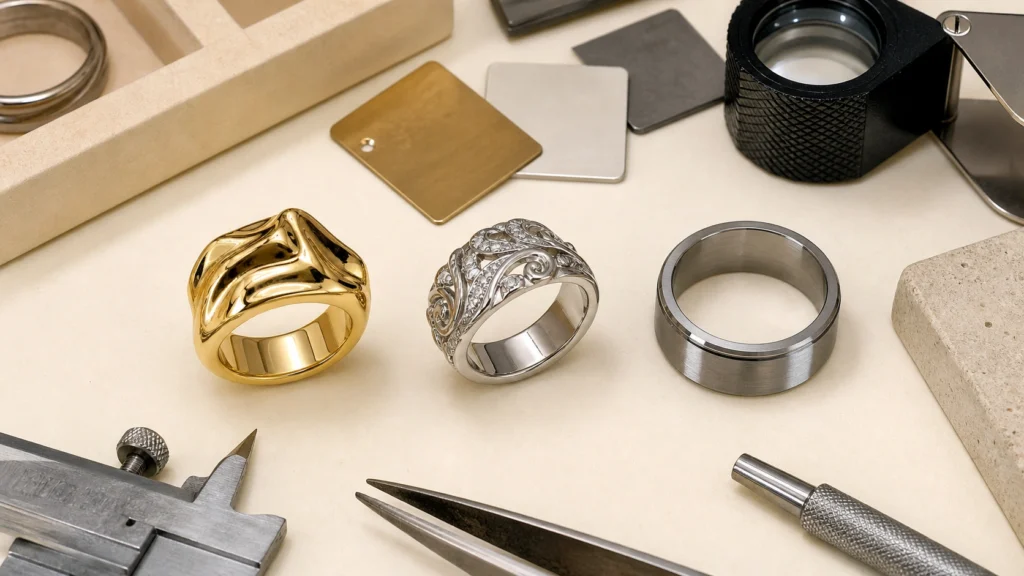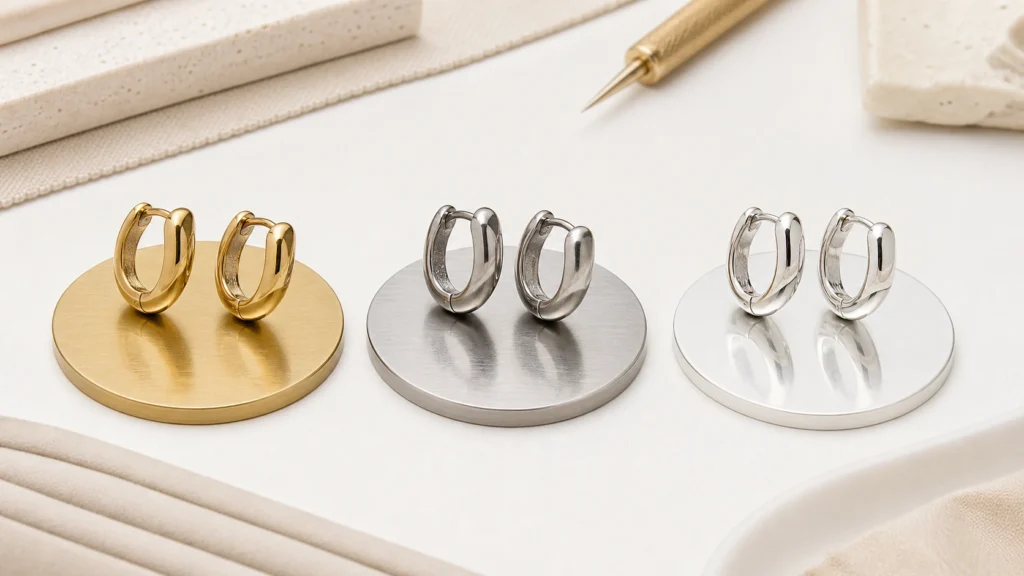
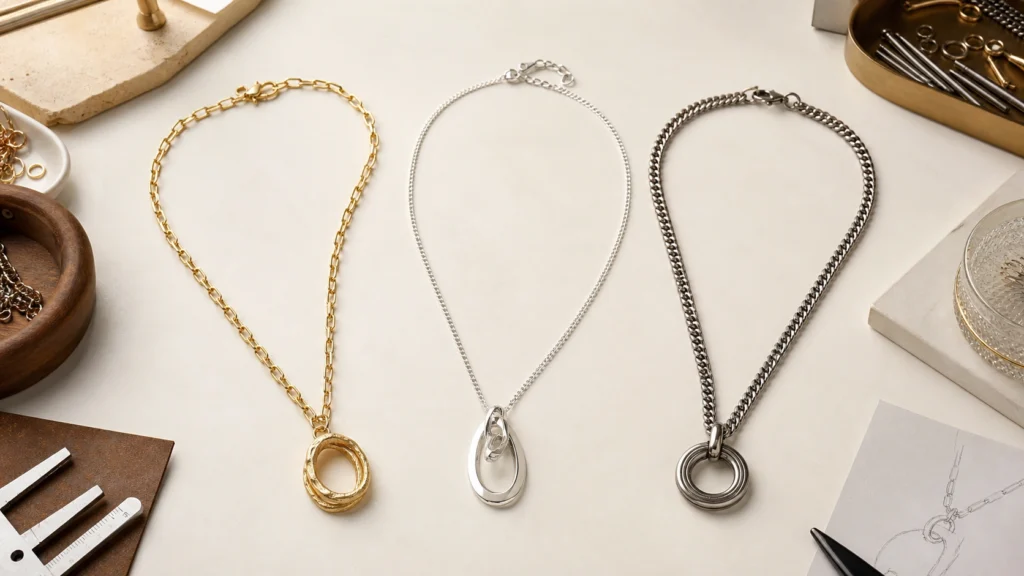
The best material for a custom fashion necklace depends on its price position, design detail, weight, finish, wear expectations, and target market. For many private-label collections, brass offers the broadest design flexibility, 925 sterling silver supports a precious-metal position, and stainless steel suits durable, streamlined styles when the design and production route are compatible.
There is no single material that is best for every necklace. A delicate pendant, a heavy statement chain, and a frequently worn necklace place very different demands on the base metal, plating, chain construction, and clasp.
Quick Comparison of Necklace Materials
| Material | Best suited to | Main advantages | Main trade-offs |
|---|---|---|---|
| Brass | Trend-led necklaces, detailed pendants, statement pieces | Versatile shaping, good surface for many finishes, broad style range | Usually needs an appropriate finish; large pieces can become heavy |
| 925 sterling silver | Premium fashion, gifting, fine-detail pendants | Precious-metal identity, bright appearance, good detail capability | Higher material value; tarnish care and weight control matter |
| Stainless steel | Minimal chains, durable everyday styles, simple geometric forms | Strong, corrosion resistant, stable for repeated wear | Harder to form and modify; not every intricate design is economical or feasible |
Gold-filled, solid gold, titanium, aluminum, and zinc alloys also appear in the market, but they are not interchangeable substitutes. Their suitability depends on the design, manufacturing route, supplier capability, target price, and destination-market requirements. Confirm the exact specification before sampling.
Brass: The Versatile Choice for Fashion-Led Collections
Brass is often a practical starting point because it can support cast pendants, stamped parts, chain components, textured surfaces, and a wide range of plated appearances. It works particularly well when a brand needs visual variety without positioning every item as precious-metal jewelry.
Where brass performs well
- Detailed or sculptural pendants
- Medallions, charms, and logo components
- Statement necklaces with custom metal parts
- Gold-tone, silver-tone, antique, or mixed-finish concepts
- Collections that need coordinated silhouettes
The final result depends on more than the alloy name. Part thickness, polishing access, edge geometry, solder joints, and plating preparation all affect appearance. Deep recesses and tight corners can make finishing less uniform.
Brass trade-offs to plan around
Large brass components can become heavy. The design team may need to reduce thickness, hollow a component, change its internal structure, or distribute weight along the chain. Review such changes before tooling because they can affect strength and the way a pendant hangs.
Brass jewelry commonly relies on plating or another surface finish for its final color and wear characteristics. The exact finish specification, including color target, surface texture, and any protective coating, should be agreed before sampling. Do not treat “gold plated” as a complete specification.
925 Sterling Silver: Best for a Precious-Metal Story
925 sterling silver contains 92.5% silver, with the balance made up of other metals that improve practical working properties. It is a strong option when the collection needs genuine precious-metal identity, a bright intrinsic appearance, or a premium gifting position.
Explore the dedicated 925 sterling silver jewelry capabilities when silver is central to the product brief.
Where sterling silver performs well
- Delicate pendant necklaces
- Initial, symbol, and personalized-style designs
- Giftable collections
- Small pieces requiring crisp detail
- Designs sold explicitly as sterling silver
Sterling silver can be polished, textured, oxidized, or plated. Rhodium or gold-tone finishes may suit particular designs, but choose the finish system as part of the complete product specification.
Sterling silver trade-offs to plan around
Silver has a higher material value than brass, so excess thickness and oversized solid components can affect both cost and comfort. A design that looks simple on screen may contain more metal than expected once converted into production dimensions.
Sterling silver can tarnish through exposure to air, moisture, cosmetics, or certain chemicals. Packaging, storage guidance, surface finish, and customer care instructions should support the intended experience. No material choice alone makes a necklace maintenance-free.
Stainless Steel: Strong for Streamlined, Durable Designs
Stainless steel is attractive for durable chain styles, simple pendants, and a clean contemporary appearance. It generally offers good corrosion resistance and strength, which can suit frequently worn fashion jewelry.
However, stainless steel is harder than brass or silver and usually less forgiving when a design requires intricate forming, extensive hand modification, or very fine cast detail. Production may rely on machining, stamping, laser cutting, or other processes selected for the component.
Where stainless steel can be effective
- Simple geometric pendants
- Minimal chain necklaces
- Flat tags or cut shapes
- Contemporary, unisex collections
- Designs where strength and surface stability are priorities
Specify stainless steel only after confirming the design and production route. Alloy grade, joining method, edge finishing, coating system, and component availability can all influence feasibility. See the overview of stainless steel jewelry for relevant scope.
The Chain and Pendant Do Not Have to Use the Same Material
A necklace is a system. The pendant, chain, jump rings, bail, extension chain, and clasp may have different functional requirements. A heavy pendant may need a stronger chain and connection point, while a delicate chain needs a clasp sized for appearance and usability.
When mixing materials, ask:
- Will the plated colors match under the same lighting?
- Can the parts be joined without damaging the finish?
- Will they age at visibly different rates?
- Does the combination create a corrosion concern?
- Can replacement components be sourced consistently?
- Can all components meet the same market and labeling requirements?
Define the complete bill of materials and finish system before approving the sample.

Choose the Material by Design, Not by Name Alone
1. Define the market position
Clarify whether the necklace is accessible trend jewelry, a premium fashion piece, a gifting product, or a durability-led design. This prevents a mismatch between material value and the customer proposition.
2. Establish the target appearance
Specify metal color, gloss level, texture, and acceptable variation. Share physical references or controlled color targets when possible. A rendering alone may not communicate how reflective or warm the finish should be.
3. Review geometry and weight
Check pendant dimensions, thickness, chain gauge, overall length, and estimated weight. Statement designs may favor brass for formability, but still need weight engineering. Delicate silver designs need enough material around loops and settings for normal use.
4. Match the manufacturing process
Casting, stamping, machining, laser cutting, soldering, polishing, and plating impose different constraints. A material that looks ideal on a comparison chart may not suit the intended geometry.
5. Confirm wear and care expectations
Discuss exposure to sweat, water, cosmetics, perfume, and storage conditions. Translate “everyday wear” into product expectations rather than treating it as a vague marketing phrase.
6. Check destination-market requirements
Material declarations, restricted substances, labeling, and testing expectations vary by market and sales channel. Verify applicable requirements for the destination market and agree the testing scope for the actual product.
Common Material-Selection Mistakes
Choosing only by base-metal price
Part weight, polishing time, plating system, chain development, assembly, testing, packaging, and quality controls can change the overall commercial result.
Approving color without approving construction
A necklace can match the desired gold tone but still fail as a product if the bail flips, the chain is too light, or the clasp is difficult to use. Approve appearance and function together.
Assuming one sample represents every size
Changing pendant dimensions or chain gauge can alter weight distribution, strength, polishing access, and cost. Review variations as real product specifications.
Using vague material descriptions
Terms such as “silver,” “gold,” or “steel” are not complete specifications. Record the base material, component material, finish, color, surface texture, and agreed testing requirements.
A Practical Recommendation for Private-Label Buyers
Start with brass when the collection depends on trend flexibility, decorative detail, or multiple plated looks. Choose 925 sterling silver when precious-metal identity and a premium story justify the material value. Consider stainless steel for clean, durable designs after confirming that the geometry and manufacturing process fit.
For many brands, the right answer is a small material architecture rather than one universal metal: for example, brass for statement fashion pieces and sterling silver for a premium capsule.
Jinnuo Jewelry works with confirmed core materials including brass and 925 sterling silver, while other material routes should be reviewed against the specific design and project requirements. Buyers can review the broader materials and finishes or submit necklace dimensions, references, target finish, market, and quantity through the custom necklace inquiry page.
Material Selection Checklist
- Base material for every major component
- Pendant dimensions, thickness, and target weight
- Chain type, gauge, length, and extension
- Clasp, bail, and jump-ring construction
- Surface texture and metal color
- Plating or coating specification
- Wear and care expectations
- Destination market and sales channel
- Packaging and storage needs
- Agreed sample approval criteria
The best custom fashion necklace material is the one that supports the design, price position, production method, and real wearing conditions as one coherent specification.