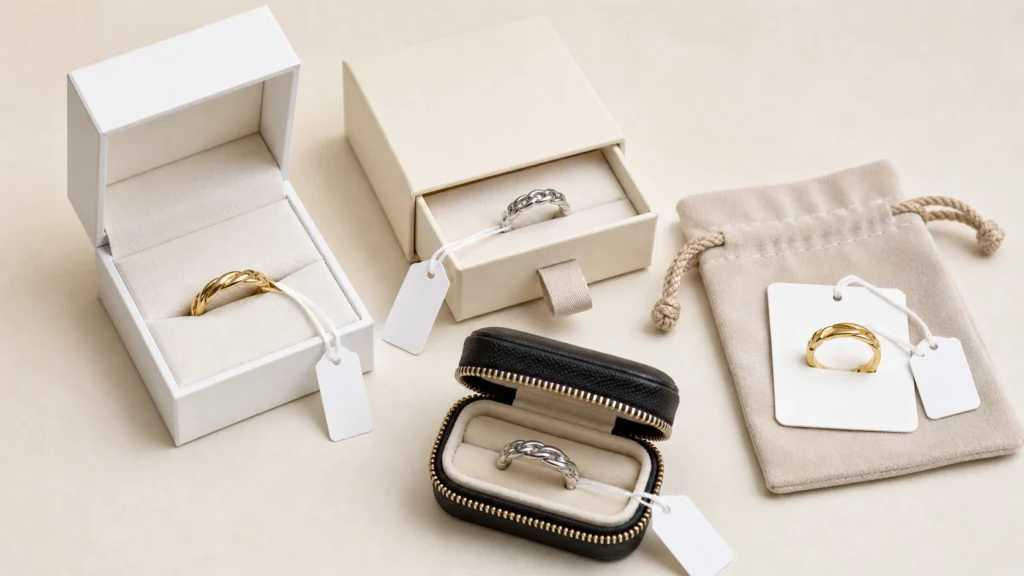
Private Label Ring Packaging Ideas for Jewelry Brands

Article Contents

Private-label ring packaging should protect the ring, present it at the right brand level, identify the size and SKU, and fit the brand’s retail or ecommerce workflow. The best option is not always the most elaborate box. It is the packaging system that controls movement, prevents contact with other jewelry, provides enough clearance for the ring profile, and keeps each variant traceable through fulfillment.

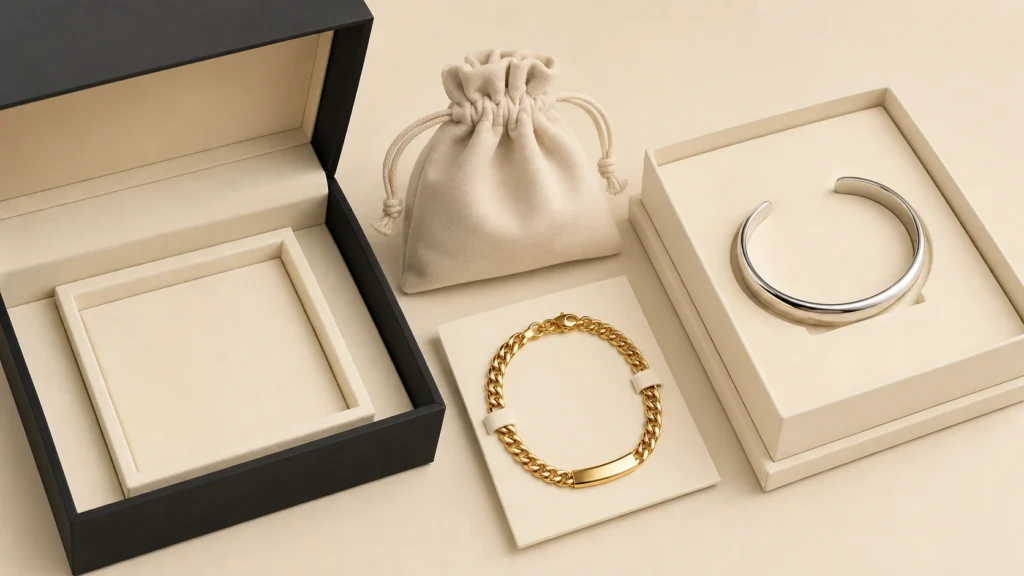
For most brands, ring packaging has three layers: direct product support holding the ring, customer-facing packaging carrying the brand experience, and wholesale or transit protection protecting units during storage and delivery.

Quick Comparison of Ring Packaging Options

OptionBest forMain advantagesMain limitations
Rigid hinged ring boxPremium gifting and stone-set ringsStrong presentation, fitted insert, good clearanceHigher volume, weight, storage, and shipping impact
Drawer-style boxBranded ecommerce and giftingControlled reveal, printable sleeve, compact structureDrawer and insert must prevent movement
Folding carton with ring padMid-range presentation and efficient storageFlexible graphics; some styles ship flatNeeds a separate retention solution
Ring card in pouchLightweight bands and compact fulfillmentSpace-saving, easy to label, flexibleNeeds protection from bending, crushing, and rubbing
Small soft pouchSimple gifting or secondary packagingReusable, compact, tactileRing may move, snag, or contact other items
Mini travel casePremium reusable packaging or setsStrong protection and perceived valueLarger and often unnecessary for entry-price products
Individual protective bagInventory handling and size separationKeeps unit, tag, and ring togetherNot a complete customer-facing package

No option is universally best. A plain band, tall solitaire-style ring, wide signet, adjustable ring, and stackable set need different clearance and support.

Start with the Finished Ring Specification

Packaging should be tested with the actual finished ring. Collect the size range, band width and thickness, top height, stone setting or raised details, weight, surface finish, adjustable opening, set configuration, size mark, logo, SKU requirements, and sales channel.

The largest ring size may not be the tallest product. The most challenging version may be a smaller ring with a high setting or wide signet face. Test representative extremes.

Rigid Ring Boxes: Best for Structure and Gifting

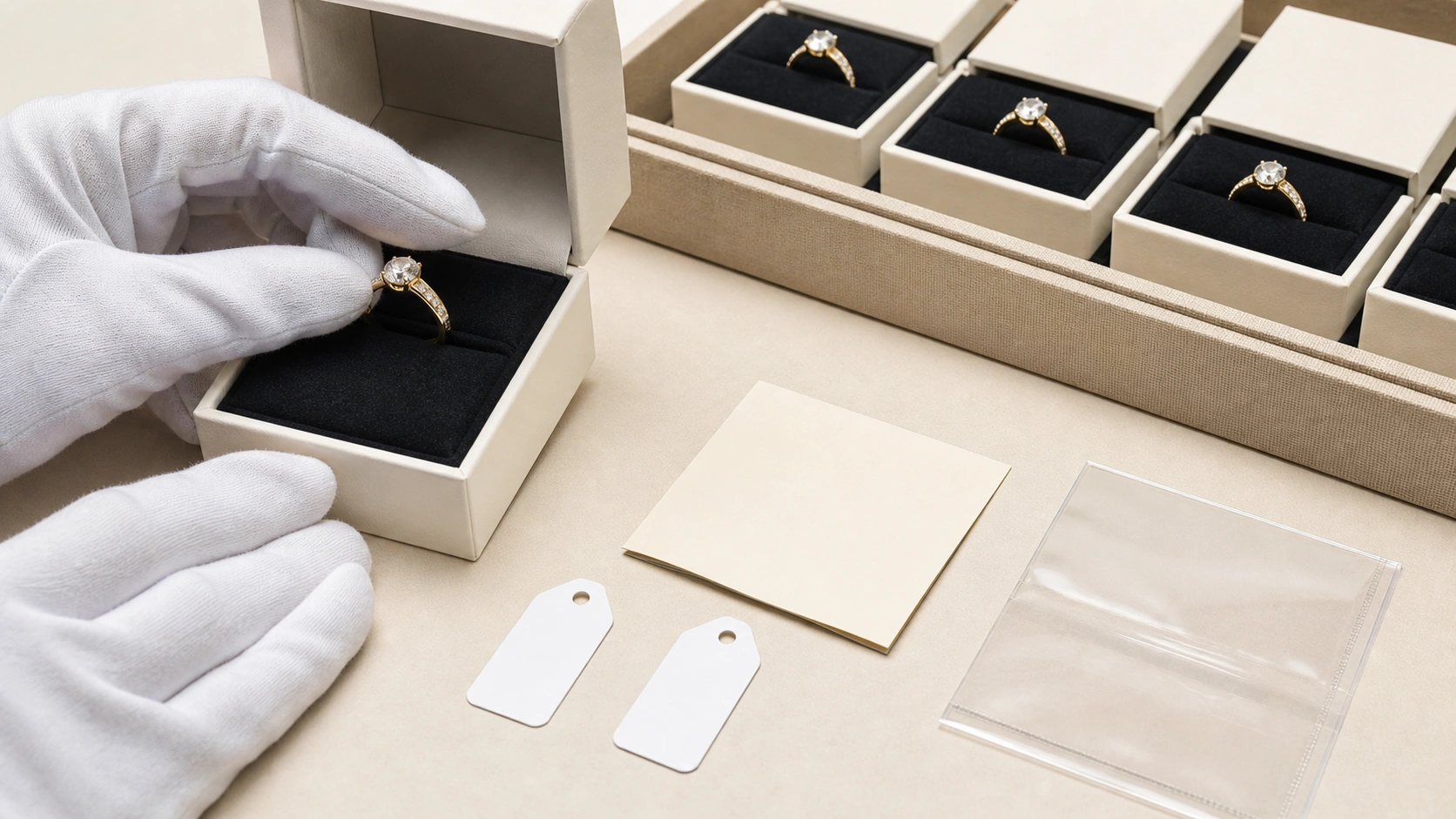
Rigid hinged boxes position a ring clearly and offer structural protection. A fitted insert can hold the shank while leaving the top visible. They support gifting, boutique display, branding, and care information.

Trade-offs include storage space, material, weight, and shipping volume. One insert may not fit a slim band, wide ring, and tall stone-set design equally well. Confirm internal height, lid clearance, slot width, holding force, removal access, surface durability, and master-carton efficiency.

Drawer-Style Boxes: Controlled Unboxing

A drawer-style box combines an outer sleeve with an inner tray. The drawer should not slide open unintentionally, and the insert should not shift when pulled. Test opening force, finger access, tray depth, insert fit, and orientation after repeated handling.

Folding Cartons: Flexible and Space-Efficient

Folding cartons can reduce storage volume and provide a printable surface. They may use a ring pad, folded paper insert, molded pulp insert, or small pouch.

The carton alone does not secure the ring. Check whether the insert keeps the product facing forward, whether the carton withstands stacking, and whether it needs an outer mailer or shipping carton.

Ring Cards and Pouches: Compact for Fashion Jewelry

A ring can be secured to a card through a slot, tab, tie, or other controlled feature, then placed in a pouch or sleeve. The card should not distort the ring, scratch the finish, or allow it to slide off. The attachment point must work across the size range.

A soft pouch adds tactile presentation but not necessarily structural protection. Pair it with a ring card, small insert, or individual protective package where movement or compression is a concern.

Travel Cases and Multi-Ring Sets

Small travel cases can support premium reusable packaging or ring sets. For sets, confirm that rings cannot strike one another when the case moves. Dividers should remain in place, and settings should not touch the lid or adjacent rings.

Design the Insert Around the Ring

The insert controls position, pressure, clearance, and removal. Features may include a slit holding the shank, padded roll, recessed area for a signet top, clearance above stones and prongs, finger access, removable display pad, and space for a size tag or card.

The insert should grip enough to prevent movement without deforming an adjustable ring, compressing a wide band, or placing pressure on the setting. Evaluate insert materials for abrasion, lint, odor, compression recovery, and recycling considerations.

Stone-set ring being secured in a fitted box insert before wholesale packing

Protect Stone Settings and Raised Profiles

Check the distance between the setting and closed lid, whether prongs catch the liner, whether the ring rotates, contact between stones and hard surfaces, pressure on pave or side settings, movement during handling, and whether the customer can remove the ring without pulling the stone or prongs.

The tallest point should not carry the load if the package is compressed. Use the shank or suitable surrounding structure to support the ring.

Plan Ring Size and SKU Identification

Rings in different sizes often look nearly identical. Size and variant information may appear on an individual bag, removable tag, box label, product card, pick list, inner carton, and master-carton record.

Keep customer-facing appearance clean while preserving traceability. Variable information such as size, material, finish, stone color, and SKU should be controlled separately from fixed artwork where possible. Barcode and SKU data should be supplied and approved by the brand or retailer.

Branding Options for Ring Packaging

Options may include printed artwork, foil stamping, embossing or debossing, branded sleeves, custom-color boxes or pouches, printed cards, custom-shaped inserts, and operational labels.

Fine details may reproduce differently on textured paper, fabric, coated board, or soft-touch surfaces. Approve production artwork, dielines, physical color references, and a representative sample.

Separate Unit Packaging from Wholesale Packing

Unit level

The ring, insert, label, and box should remain together and free from abrasion or contamination.

Inner-pack level

Use trays, dividers, sleeves, or cartons to prevent boxes from moving or scuffing. Grouping should match the buyer’s size and SKU plan.

Master-carton level

Confirm count, orientation, void control, moisture considerations, carton strength, markings, and packing-list references.

Material and Sustainability Decisions

Ring packaging may use paperboard, rigid board, molded pulp, foam, fabric, plastic, magnets, coatings, adhesives, or metallic decoration. Each choice affects protection, appearance, pack size, and end-of-life handling.

Avoid vague claims such as “eco-friendly” without a defined and supported basis. Where evidence exists, specify measurable attributes such as certified fiber, verified recycled content, reduced material weight, plastic-free construction, separable components, or a reusable case.

Test the Complete Ring Package

Approve the package with representative finished rings and intended outer packing:

  1. Confirm dimensions, material, color, structure, and branding.
  2. Install and remove different ring sizes.
  3. Check tall settings, wide bands, signets, and adjustable rings.
  4. Look for pressure, scratches, lint, residue, or color transfer.
  5. Close, stack, and handle the unit.
  6. Pack units in intended inner and master cartons.
  7. Review after an agreed handling or transit simulation.
  8. Confirm size labels, SKUs, and barcode scanning where required.

Common Ring Packaging Mistakes

One insert is assumed to fit every ring

Slim bands, wide rings, signets, tall settings, and adjustable rings may need different slots or clearances.

The lid touches the setting

Check the tallest finished ring and movement under normal handling.

Size identification is added at the end

Plan variable labels and SKU mapping before artwork and packing instructions are final.

A pouch is treated as crush protection

Soft packaging can support presentation but usually needs structure for shipping.

Packaging is sampled without the actual ring

Fit, pressure, removal, and surface contact cannot be approved with an empty box.

Environmental claims are unsupported

Define and verify the specific attribute or packaging reduction before using a claim.

Private-Label Ring Packaging Brief Checklist

  • Ring samples and size range
  • Band width, thickness, top height, and weight
  • Stone, prong, enamel, or sculptural details
  • Preferred package and brand position
  • Required insert support and lid clearance
  • Artwork files and physical color references
  • Fixed and variable printed information
  • SKU and barcode ownership
  • Sales channel and destination market
  • Unit, inner-pack, and master-carton requirements
  • Material restrictions or documented sustainability targets
  • Sample testing and approval criteria

Packaging MOQ, tooling, price, sampling time, and production time vary by structure, materials, decoration, quantity, and packing requirements. Confirm them after a feasibility review.

Final Recommendation

Choose a rigid or drawer-style box when structure, gifting, and setting clearance justify the volume. Use a folding carton when branded presentation and storage efficiency matter. Pair ring cards or pouches with suitable protection for compact fashion-jewelry fulfillment. Use a travel case when reusability and premium protection are part of the proposition.

Whatever format you select, solve ring retention, setting clearance, size identification, and wholesale transit protection before adding decorative finishes.

Jinnuo Jewelry supports private-label jewelry and custom packaging discussions according to each project’s requirements. Brands can explore custom rings, review custom jewelry services, or submit ring samples, packaging ideas, size matrices, target market, and quantities through the quote request page.

CONTENT REVIEW

Prepared for Custom Jewelry Buyers

Written by
Jinnuo Jewelry Team
Reviewed by
Production & Quality Control Team
Last updated
Jul 31, 2026

Developing an OEM, ODM or Private Label Collection?

Share your collection direction, product category and branding requirements to discuss a suitable development route.
Email Us WhatsApp