Choose a stone setting only after the stone dimensions, shape, girdle or edge condition, ring profile, and available support metal are known. Prongs expose more of the stone but can snag or lose alignment. A bezel covers more of the edge and can create a lower, protected profile, but it changes the visible size.
Channel and pavé layouts create continuous sparkle yet demand consistent stones and controlled metal geometry. Flush setting gives a clean surface but needs enough metal depth. No option is universally most secure. The best choice is the one that can be manufactured, finished, inspected, and worn as the design requires.
Start with the Stone and Its Support
Do not begin with “four prongs” or “micro pavé.” Begin with a stone schedule. Record the supplier or reference, shape, target dimensions, allowed variation, orientation, color direction, and replacement plan. Natural and manufactured stones can vary, so the setting and sourcing assumptions must agree.
Then map the supporting metal. Show the shank section, seat, gallery, wall thickness, setting height, and nearby cutouts. A visually delicate setting may lack room for the seat or finishing tools. A very low setting may reduce snagging but limit cleaning access or stacking clearance.
This review is especially important for small accent stones, pointed shapes, thin edges, and mixed stone sizes.
Choose Prong or Bezel by Exposure
Prongs hold the stone at several points and leave much of it visible. They suit designs where light, an open side view, or a defined stone silhouette matters. The tradeoffs include snag points, prong alignment, finishing access, and the need to inspect each contact.
A bezel surrounds all or part of the stone edge. It can protect vulnerable edges and create a smooth outline. It also covers some visible area and requires a closely fitted seat. An uneven bezel edge is easy to see on a polished ring.
Choose between them by asking what the stone must be protected from, how high the ring may sit, and which visual area may be covered. Do not describe either choice as loss-proof.
Use Channel, Pavé, and Flush Settings Selectively
Channel setting places stones between metal walls. It works when the stone line, channel width, and seat geometry remain consistent. It can create a smooth top line, but one poor stone fit can disturb the sequence.
Pavé and bead-set layouts place many small stones close together. They add surface sparkle while multiplying placement, alignment, and inspection points. They are best for designs that can provide enough supporting metal and a controlled stone supply.
Flush setting seats a stone into the ring surface. It suits clean designs and reduces projection above the metal. The ring needs enough depth around the seat, and the stone still requires a defined retention method.
The right option may differ across one ring. A center stone can use prongs or a bezel while accents use a channel or pavé layout.
Design Out the Likely Failure Modes
Review CAD and early samples for the failure mode specific to the setting:
- Prongs are uneven, thin after polishing, or positioned over the wrong part of the stone.
- A bezel has gaps, an irregular edge, or covers too much of the face.
- Channel stones tilt because the seat or stone size varies.
- Pavé rows drift, show uneven beads, or leave too little support metal.
- A flush stone sits proud, too deep, or off-center.
- The final finish obscures detail or is damaged during setting.
Also check how the setting contacts clothing, adjacent fingers, and neighboring rings. These observations help define inspection points, but they do not replace market-specific testing or professional compliance review.
Approve Evidence That Production Can Repeat
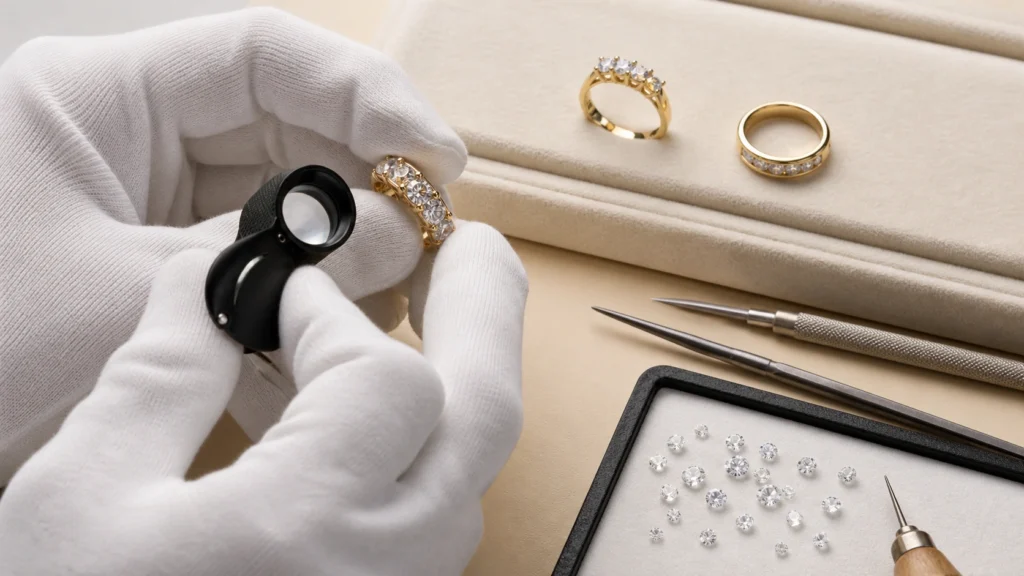
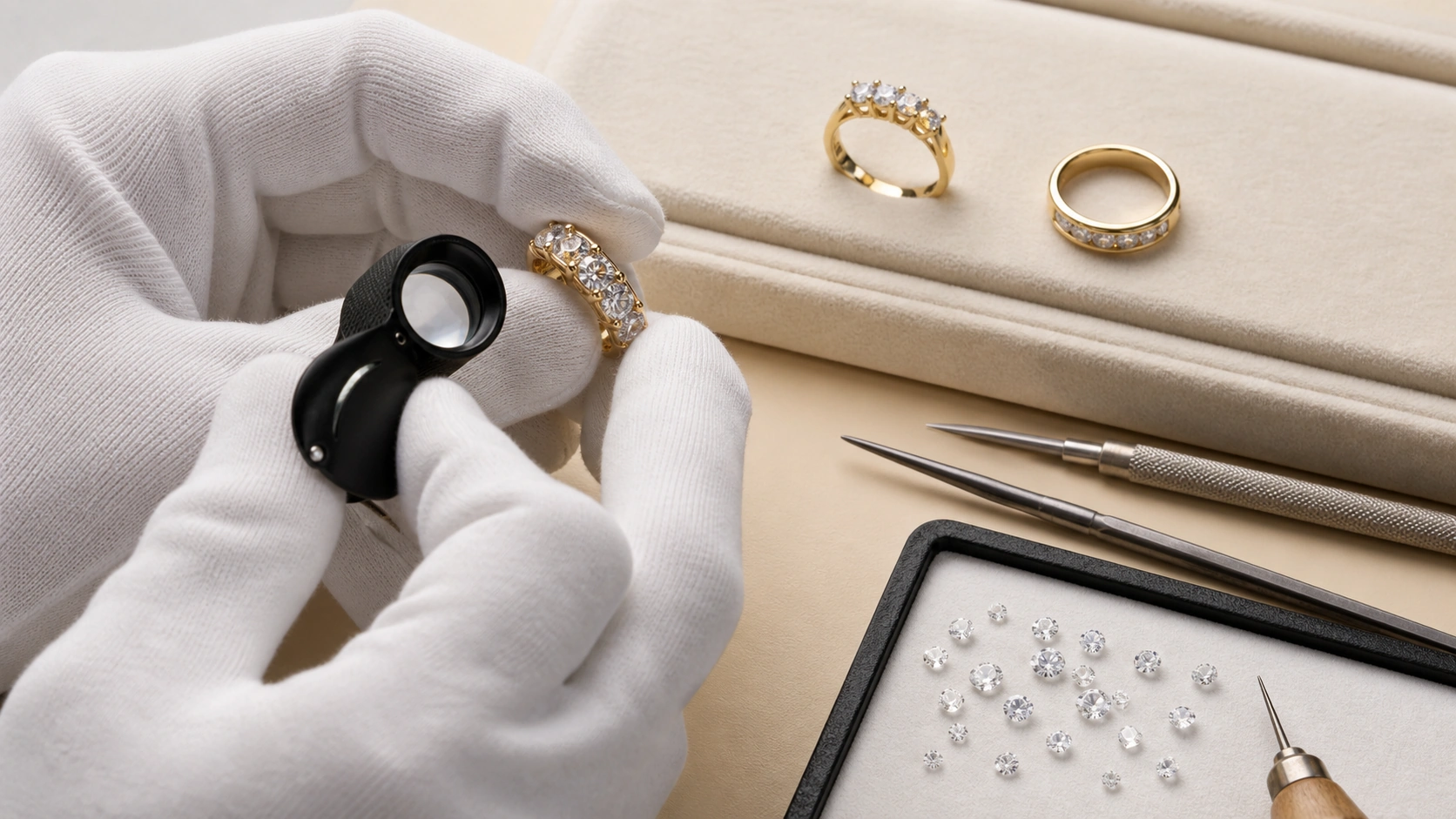
Inspect the finished sample under consistent magnification and lighting. Check stone identity, orientation, height, alignment, visible gaps, metal contact, surrounding finish, and underside access. Gently applied checks and acceptance limits should be agreed with qualified production staff for the actual design.
Keep the approved sample, stone schedule, current CAD, setting notes, finish reference, and photos of critical views. If the stone source, dimensions, setting method, or metal section changes, decide whether a new setting sample is required.
Jinnuo Jewelry can review setting projects within confirmed brass or 925 sterling silver programs. Send the ring drawing, size range, stone schedule, finish, use context, target market, and required inspection evidence. Feasibility, MOQ, testing, price, and schedule remain project-specific.

Carol
Carol is a jewelry manufacturing expert with first-hand experience across materials, surface finishes, production processes and quality control. He brings critical thinking and rigor to his work, questioning common assumptions and testing them against industry standards and real production results. He looks at every issue from the point ofview of the people who buy and wear jewelry, turning technical details into clear, practical answers to real-world problems.