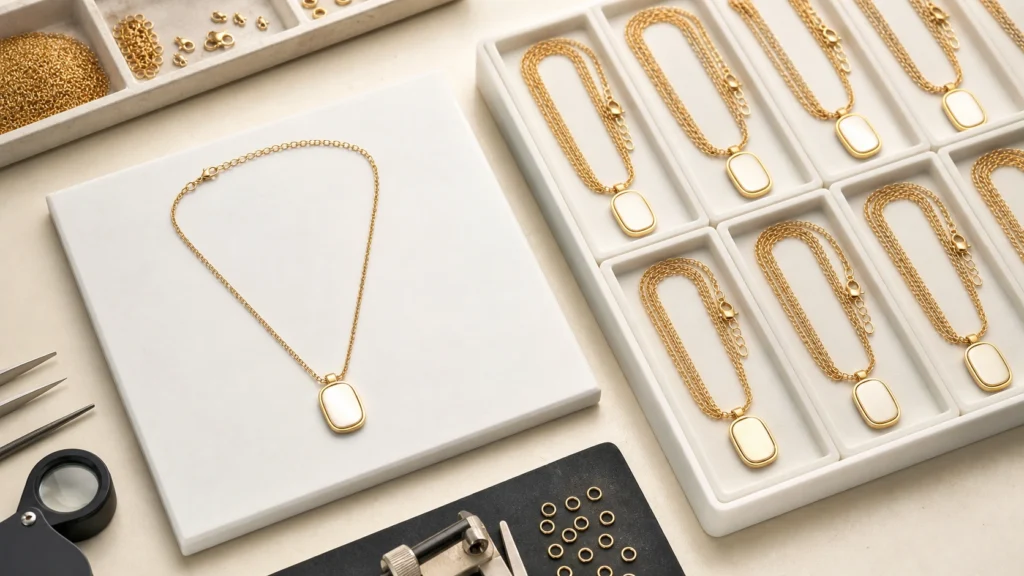
OEM Necklace Manufacturing Process: From Sample to Bulk Production

Article Contents

The OEM necklace manufacturing process does not move directly from a visually approved sample to unrestricted mass production. A reliable handoff freezes the approved product specification, confirms materials and components, translates the sample into repeatable production instructions, checks early production output, and controls quality through assembly, finishing, packing, and release.

For buyers, the key principle is simple: the approved sample must become a documented production standard rather than remain an informal visual reference. This reduces ambiguity when many necklaces, components, operators, and process steps are involved.

OEM Necklace Production at a Glance

StageMain purposeBuyer decision or record
Design and feasibility reviewConfirm that the concept can be manufacturedApproved dimensions, construction, material direction, and finish
Sample developmentTurn the design into a complete physical necklaceComments on appearance, fit, function, weight, and packaging
Sample approval and specification freezeEstablish the production referenceSigned-off sample plus final specification
Material and component preparationPrepare repeatable inputsApproved chain, clasp, pendant, finish, stones, and packaging
Pre-production or first-unit reviewConfirm the production setupComparison against the approved reference
Bulk manufacturing and assemblyProduce the order under controlled instructionsIn-process checks and issue handling
Final inspection and packingConfirm the order is ready for releaseInspection outcome, packing configuration, and shipment approval

The exact route varies by necklace design. A cast pendant on a standard chain, a custom link necklace, and a multi-component statement piece do not require identical tooling, assembly, or inspection plans.

1. Turn the Necklace Concept into a Manufacturing Brief

The process begins with more than a sketch or inspiration image. An OEM manufacturer needs enough information to understand what the necklace must be and how the brand intends to sell it.

A useful initial brief includes:

  • Front, side, and back references
  • Pendant dimensions and thickness
  • Necklace length and extension range
  • Chain type and gauge
  • Clasp, bail, and jump-ring requirements
  • Base material and finish direction
  • Stones, enamel, engraving, logo, or other details
  • Target weight or comfort requirement
  • Destination market and intended product claims
  • Packaging format
  • Order and sampling context

If a field is undecided, describe the required outcome and request a feasibility recommendation. Avoid asking a manufacturer to infer critical specifications from a rendered image.

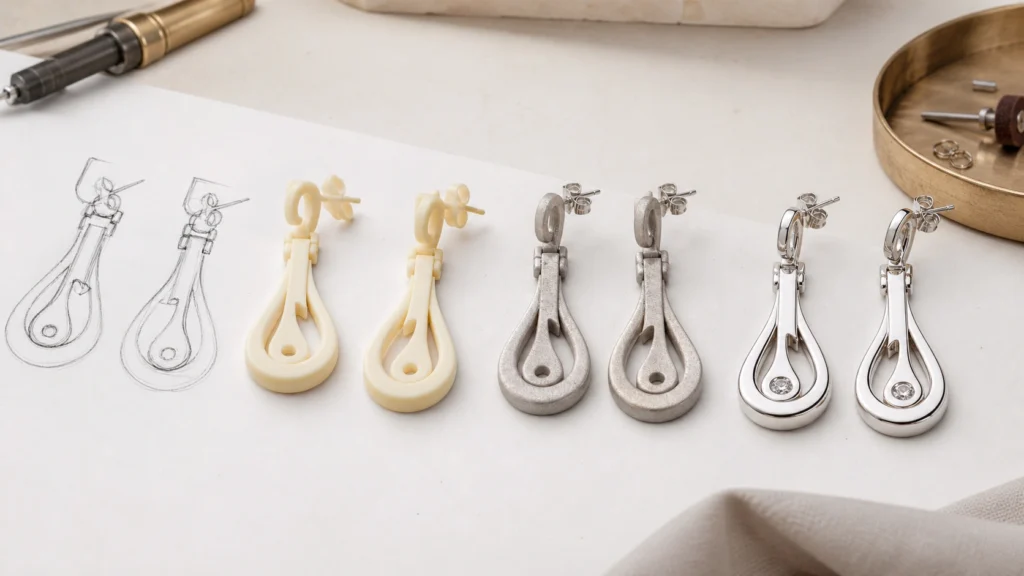
The concept may need CAD, technical drawings, tooling, molds, or prototype parts. The relevant route depends on the geometry and process. Jinnuo’s 3D jewelry design service explains how product concepts can be prepared for development.

2. Review Design and Production Feasibility

Before sampling, the manufacturer should review whether the proposed necklace can be produced consistently. Important checks include:

  • Whether the pendant is too heavy for the selected chain
  • Whether the bail allows the pendant to move freely
  • Whether jump rings and clasp suit the load
  • Whether narrow areas are strong enough
  • Whether deep recesses can be polished and plated evenly
  • Whether stone settings are accessible and secure
  • Whether the logo remains legible at production size
  • Whether components can be sourced consistently
  • Whether packaging protects the finish

A feasibility review may lead to changes in thickness, connection points, component sizes, surface detail, or assembly method. Document these changes before the first sample.

3. Develop the OEM Necklace Sample

The sample combines the design, materials, components, assembly, finish, branding, and packaging into a physical product. Depending on the design, development can include CAD review, tooling, casting or forming, component sourcing, polishing, stone setting, plating, assembly, logo application, and packing trials.

Sample timing cannot be assumed from the category alone. It varies by complexity, tooling, material, component availability, finish, packaging, revision rounds, and testing requirements. Confirm the schedule after review of the complete specification.

Review the whole necklace, not only the pendant

  • Pendant shape, dimensions, thickness, and weight
  • Chain style, length, gauge, and drape
  • Bail movement and orientation
  • Clasp operation and extension usability
  • Jump-ring closure and connection strength
  • Stone alignment and setting where applicable
  • Logo position and readability
  • Surface, edges, polish, texture, and color
  • Plating coverage in recesses and around joints
  • Wearing balance and whether the pendant flips
  • Packaging fit and protection

Comments should be objective. Replace phrases such as “make it better” with measurable instructions, annotated images, physical color references, or an identified approved reference.

4. Revise the Sample and Control Changes

If changes are needed, record them in a revision list and identify which files, dimensions, materials, or processes are affected. Separate required corrections, acceptable variation, and future development ideas. This prevents late creative changes from being mixed into production corrections.

When a revision affects construction, tooling, fit, finish, weight, or packaging, another physical sample or partial re-sample may be appropriate.

5. Approve and Freeze the Necklace Sample

Sample approval should create a controlled production baseline. The physical sample should be supported by a final specification.

Freeze the following before bulk production:

  • Final drawing or CAD revision
  • Critical dimensions and tolerances
  • Base material for each component
  • Chain, clasp, bail, extension, and jump-ring specification
  • Stone, enamel, or decorative-part specification
  • Surface texture, polish, and finish system
  • Approved metal color reference
  • Logo, hallmark, or engraving details
  • Finished weight or agreed range where relevant
  • Packaging components and packing method
  • Destination-market and testing requirements
  • Inspection points and acceptance criteria

Keep one approved reference sample under controlled conditions. If multiple references exist, identify them consistently so the buyer, production team, and quality team use the same standard.

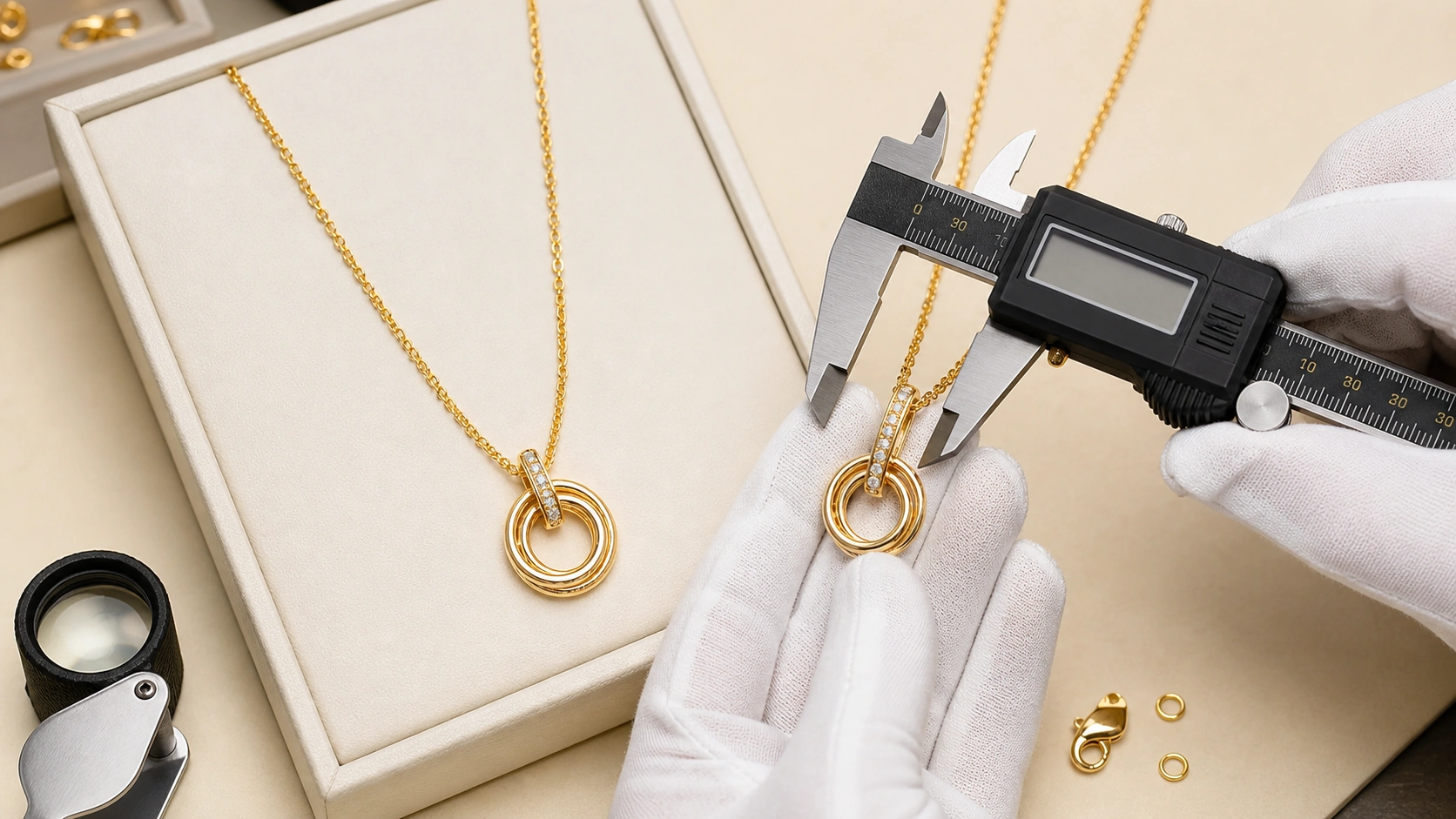
Technician comparing an approved necklace sample with a first production unit

6. Prepare Materials, Components, and Production Instructions

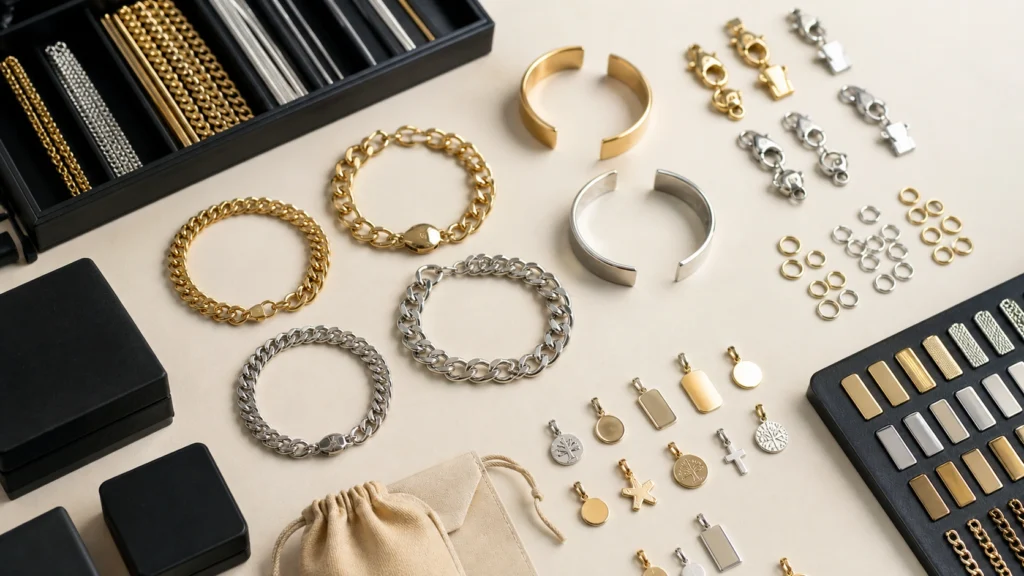
Production planning converts the specification into purchasing, process, and assembly requirements. Inputs can include raw metal, cast or stamped parts, chains, clasps, jump rings, stones, plating materials, logo parts, cards, pouches, boxes, labels, and protective packing.

Material and component substitutions should not happen silently. A replacement chain may look similar but differ in gauge, soldering, color, drape, or strength. Any proposed substitution should be reviewed against the approved product.

Production instructions should identify the process sequence, critical dimensions, finish references, assembly orientation, inspection checkpoints, handling precautions, and packing configuration.

7. Confirm Early Production Output

Before the full order advances through every process, compare early output or first completed units with the approved sample and final specification. This can identify incorrect components, dimensional drift, pendant or bail orientation problems, uneven polishing, color differences, assembly errors, stone-setting issues, and packaging mismatch.

The appropriate first-unit, pilot, or pre-production confirmation depends on the project and should be agreed for the order. The objective is to catch setup errors while correction is still manageable.

8. Run Bulk Manufacturing and In-Process Quality Checks

A pendant necklace may involve casting, trimming, filing, polishing, cleaning, stone setting, plating, chain cutting, clasp assembly, logo application, final assembly, and packing. Quality control should not be postponed until finished units are boxed.

Useful checkpoints may include:

  • Cast or formed part dimensions and visible defects
  • Hole, bail, and connection geometry
  • Surface preparation before plating
  • Stone position and security
  • Chain length and component count
  • Clasp function and jump-ring closure
  • Pendant orientation during assembly
  • Finish color and coverage
  • Handling marks before packing

The exact sampling plan, tolerances, tests, and acceptance limits depend on the design, quantity, risks, contractual requirements, and destination market. They should be agreed rather than invented from a generic checklist.

9. Inspect Finished Necklaces Against the Approved Standard

Final inspection compares finished units with the frozen specification and approved reference. Typical review points include:

  • Correct product and variant
  • Necklace and extension length
  • Pendant dimensions, orientation, and movement
  • Finished weight where specified
  • Chain consistency and freedom from kinks
  • Secure jump rings and connections
  • Smooth clasp operation
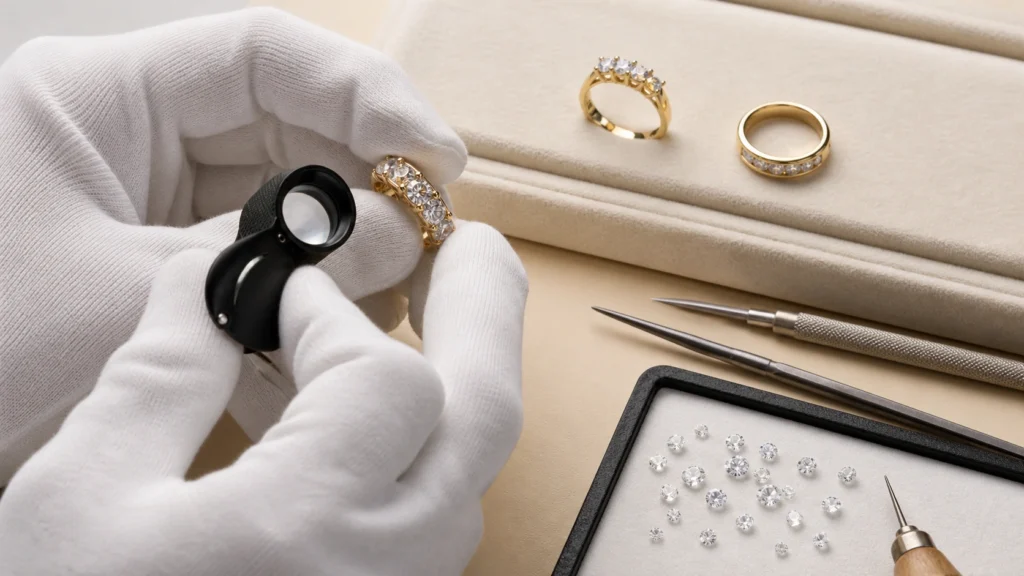
  • Stone, enamel, and decorative-detail condition
  • Surface color, polish, texture, and coating coverage
  • Sharp edges, scratches, residue, or handling damage
  • Logo or marking position
  • Correct packaging, labels, and unit count

A necklace can look acceptable when flat but behave poorly when worn. Functional handling should accompany visual inspection.

10. Pack and Release the Bulk Order

Packing should protect the chain, pendant, finish, stones, and branding through storage and transport. Necklaces may need to be secured to cards, placed in pouches or boxes, separated to prevent tangling, and protected from abrasion.

Before release, confirm approved unit packaging, chain and pendant restraint, protective materials, buyer-supplied label and barcode data, variant identification, packing configuration, carton markings, quantity records, and shipping-document responsibilities.

Packaging, shipping, and customs requirements vary by project and destination. Agree the exact specification before production or packing.

Common Problems Between Sample and Bulk Production

The sample was approved only by appearance

If chain gauge, dimensions, component materials, finish, or packaging were not documented, production teams may have to interpret the sample. Freeze both the physical reference and written specification.

Late changes were sent through scattered messages

Maintain one current revision record and clearly close superseded versions.

Bulk components were assumed to match sample components

Confirm component specifications and substitutions before assembly. Small changes to a clasp, chain, or jump ring can affect function and appearance.

Inspection criteria were discussed after production

Define critical checks and acceptance expectations before bulk work begins.

Packaging was treated as a separate final task

Test the necklace and packaging together during sampling. A chain can tangle, a pendant can scratch, or a card can distort presentation.

Buyer Checklist Before Authorizing Bulk Production

  • The approved sample is clearly identified
  • Final drawings and revision numbers match the sample
  • Materials and components are specified
  • Dimensions, length, weight, and tolerances are recorded where relevant
  • Finish and color references are approved
  • Logo and marking details are final
  • Packaging has been tested with the actual necklace
  • Destination market and testing scope are confirmed
  • Inspection criteria and decision owners are agreed
  • Quantity, variants, and packing breakdown are final
  • Changes and substitutions require documented approval

Final Takeaway

An effective OEM necklace manufacturing process is a controlled transfer from design intent to repeatable production. The sample proves the product concept, but the frozen specification, approved inputs, early production checks, in-process controls, final inspection, and protective packing make that result scalable.

Jinnuo Jewelry supports OEM and private-label jewelry development using confirmed core materials including brass and 925 sterling silver. The exact manufacturing route, sampling requirements, timing, testing, and production plan depend on the necklace design and project requirements.

Buyers can review the broader manufacturing process, explore the OEM jewelry service, or submit specifications through the custom necklace page for a feasibility review.

CONTENT REVIEW

Prepared for Custom Jewelry Buyers

Written by
Jinnuo Jewelry Team
Reviewed by
Production & Quality Control Team
Last updated
Jul 31, 2026
Email Us WhatsApp