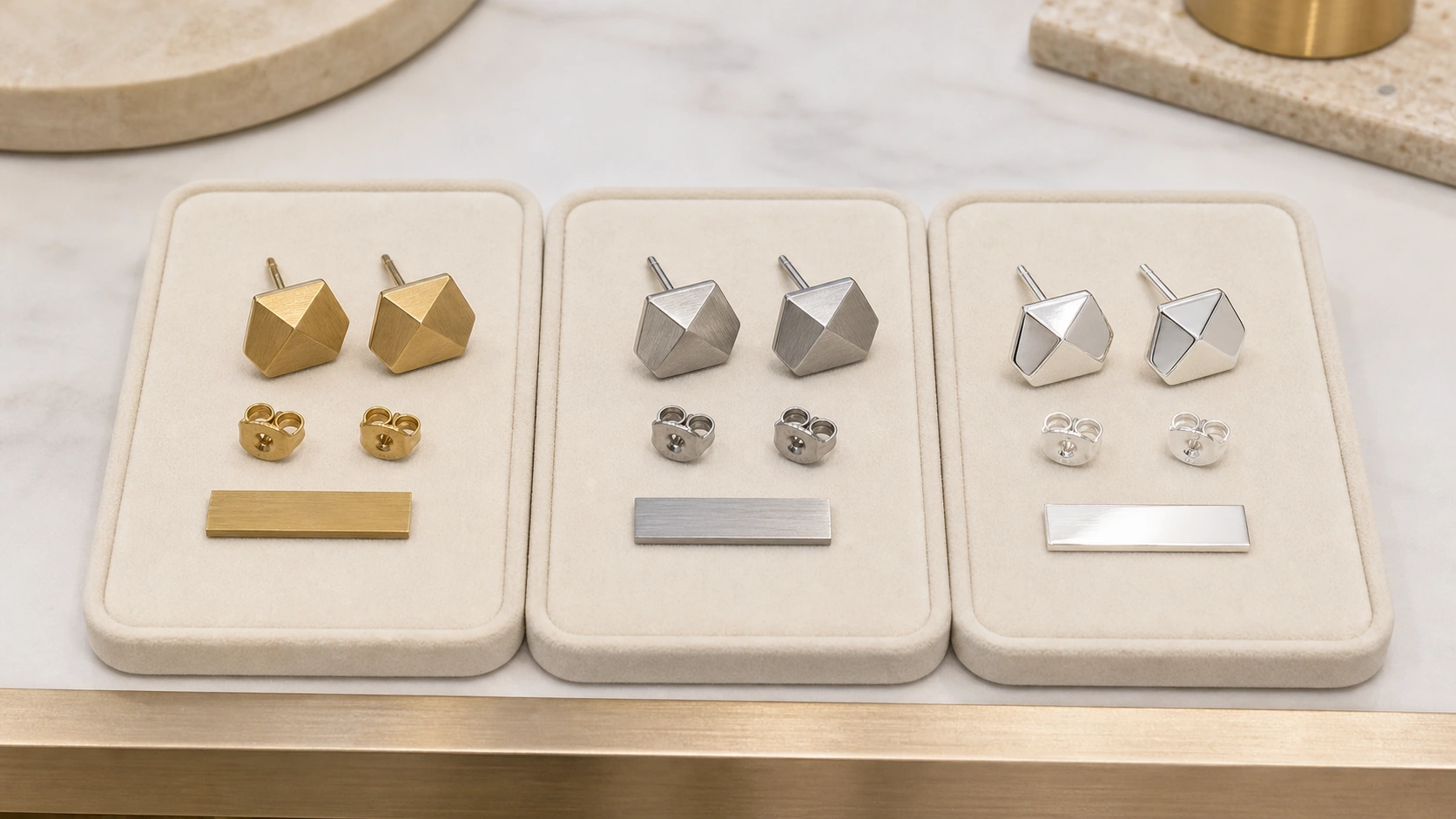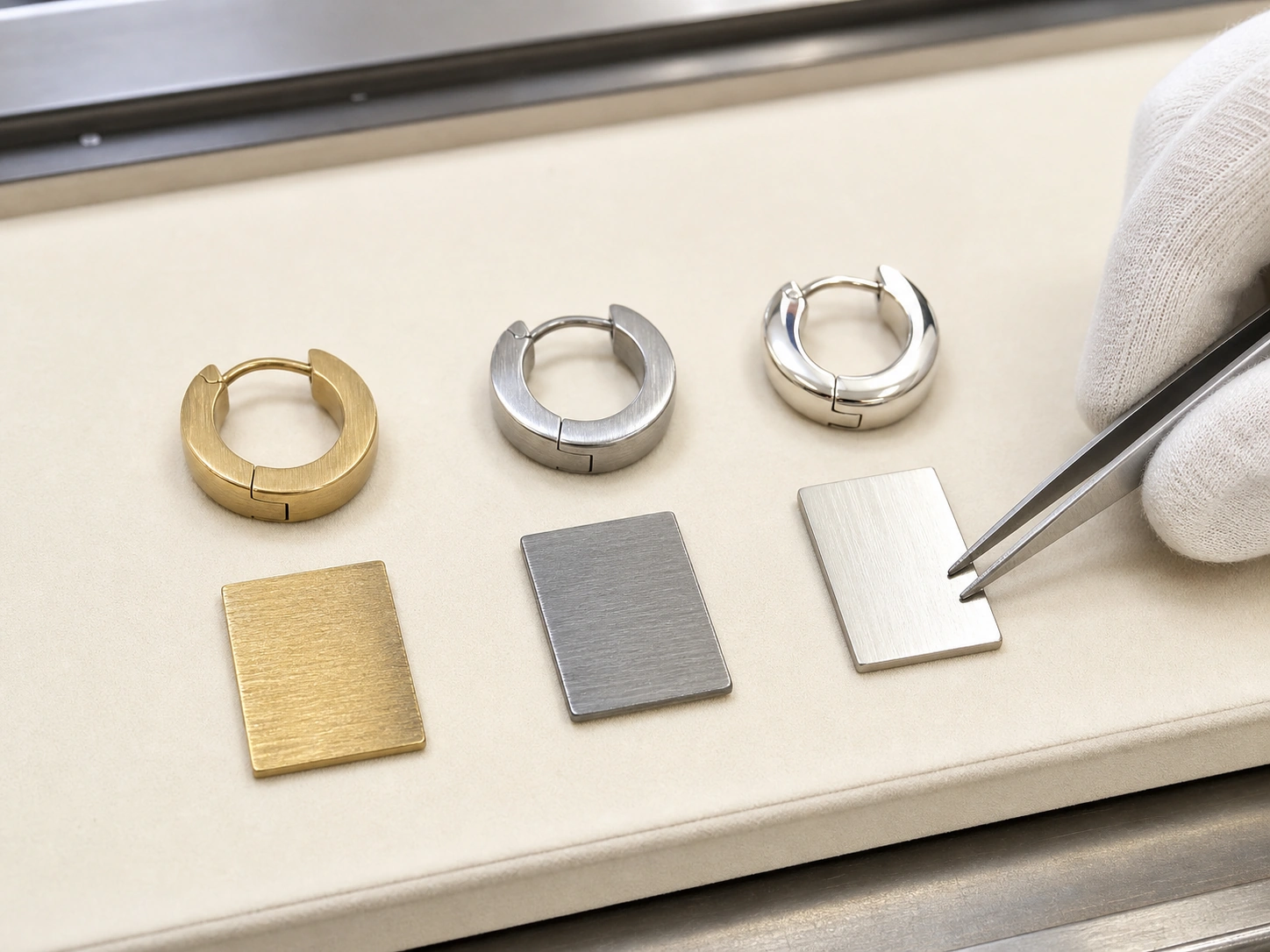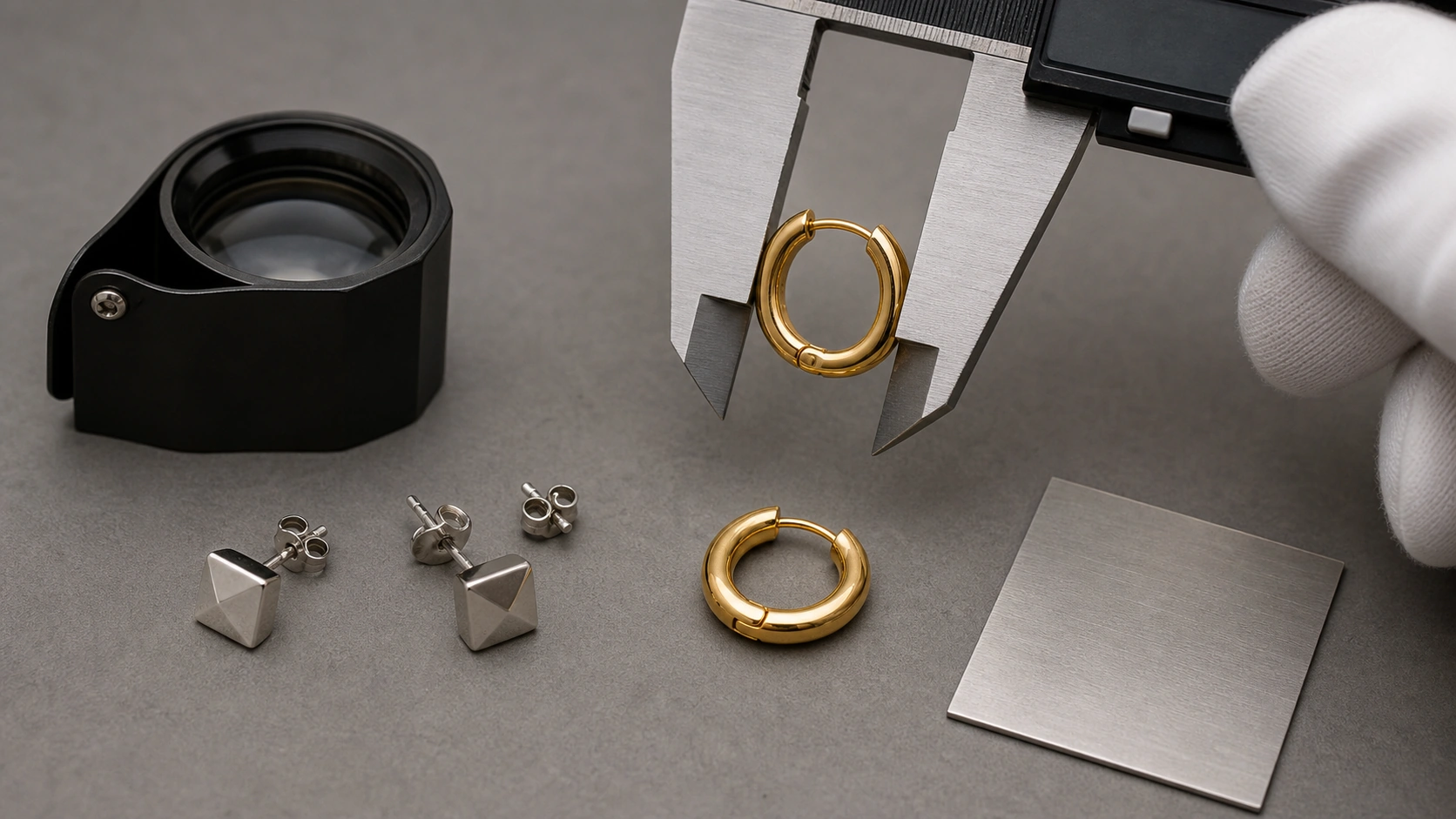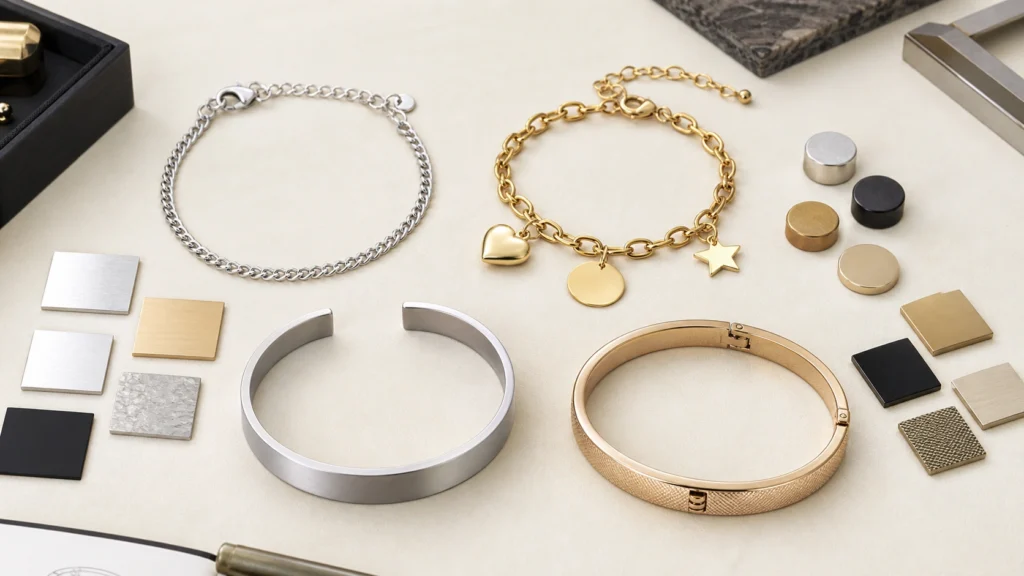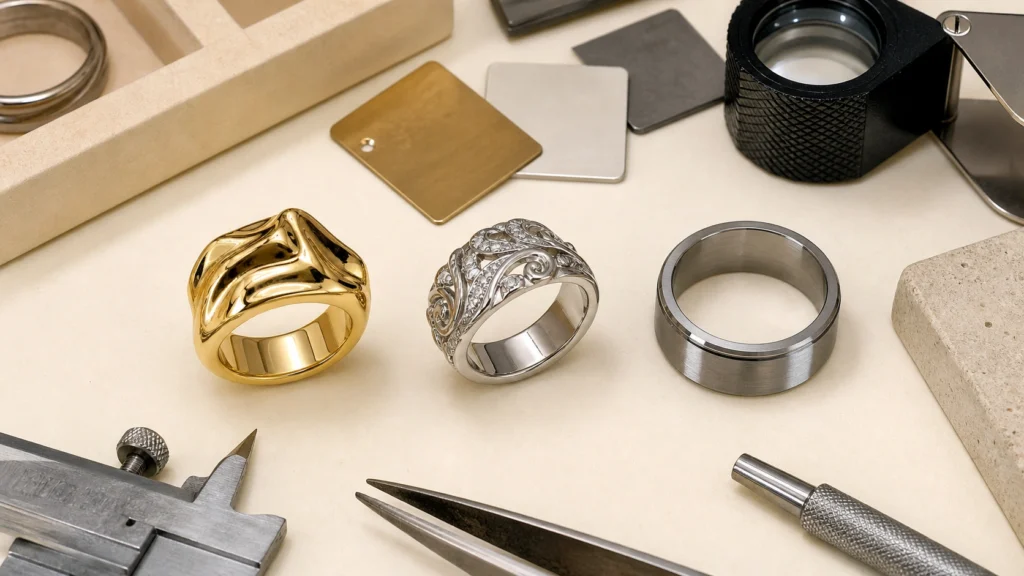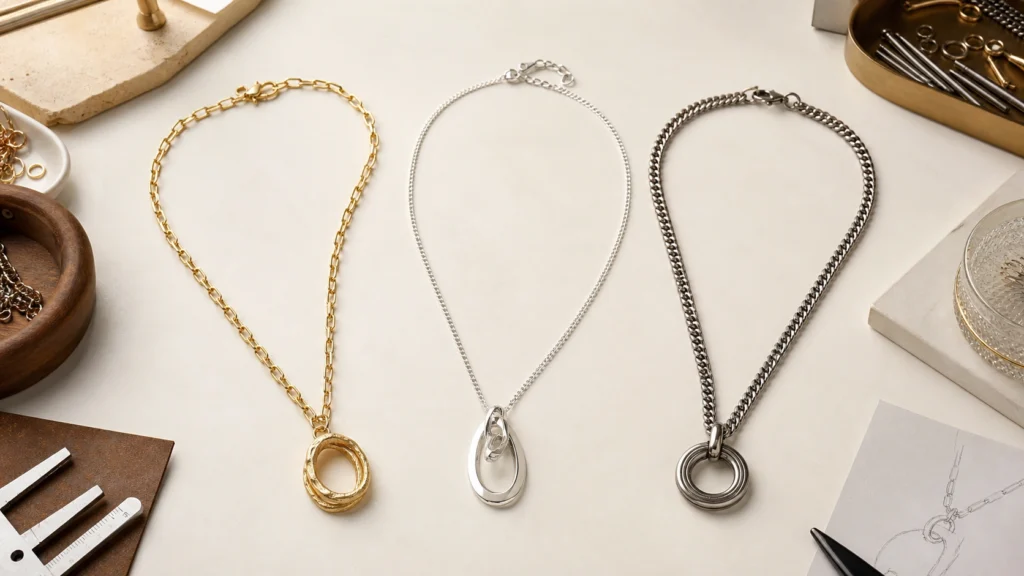
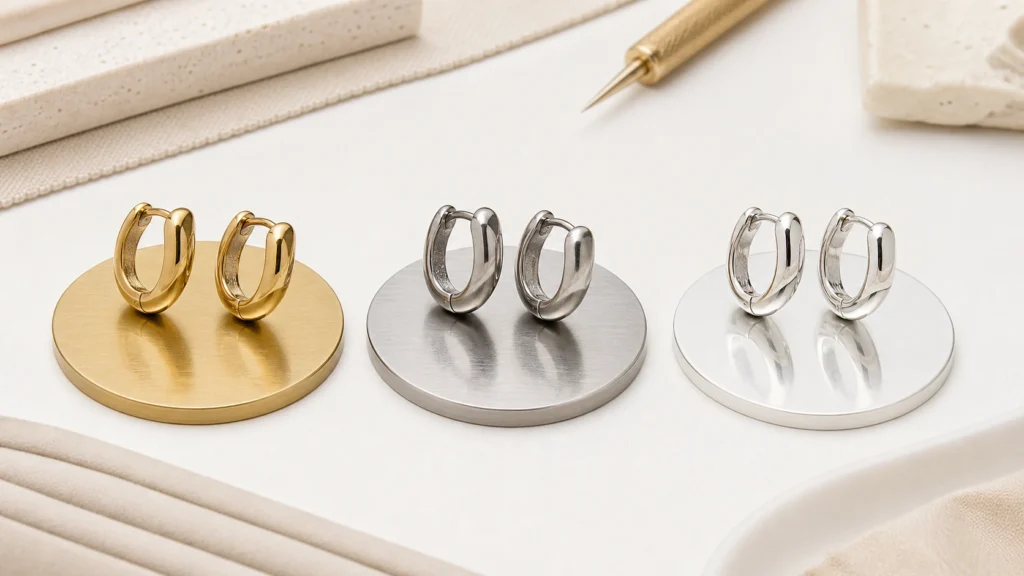
Brass, stainless steel, and 925 sterling silver support different earring strategies. The metal affects forming, casting, machining, stone setting, finishing, findings, maintenance, labeling, and quality control.
The right choice begins with the customer promise and the actual design. A small plated brass stud, a stainless steel huggie, and a polished silver statement earring do not solve the same commercial or technical problem. Treat the material as a complete specification rather than a one-word selection.
Quick Answer: Which Earring Material Is Best?
Choose brass when design flexibility, decorative detail, and a broad plated fashion palette are central. Choose stainless steel when the collection needs a corrosion-resistant metal identity, structured forms, and relatively low-maintenance positioning, provided the grade and manufacturing route suit the design. Choose 925 sterling silver when verified precious-metal content and a recognizable silver identity are part of the brand value.
None is universally best. The final decision depends on the alloy or grade, dimensions, construction, finish, earring posts and backs, wearing environment, product claims, target market, and sample results.
Brass vs Stainless Steel vs 925 Silver at a Glance
| Decision factor | Brass | Stainless steel | 925 sterling silver | Buyer check |
|---|---|---|---|---|
| Brand position | Plated fashion and demi-fine flexibility | Modern, structured, corrosion-resistant positioning | Precious-metal and silver-led positioning | What material story will be stated to customers? |
| Design route | Supports many formed, cast, textured, and plated concepts | Often suits clean forms, hoops, huggies, and engineered parts | Supports polished, textured, stone-set, and traditional silver concepts | Can the supplier make this geometry in the specified grade? |
| Surface strategy | Commonly used as a base for plated colors | May be used in its natural tone or with a compatible coating process | May be polished, oxidized, rhodium plated, or gold plated | Define the complete finish stack |
| Maintenance | Exposed brass or worn plating can change appearance | Corrosion resistance depends on grade, environment, and finish | Silver can tarnish and may require care | Set accurate care expectations |
| Material claim | State the base metal and coating accurately | State the actual steel grade only when verified | “925” is a silver-content claim | Keep specification, testing, and product copy aligned |
| Main development risk | Unspecified alloy or plating system | Unspecified grade or unsuitable process/design match | Unverified fineness or unclear plated-versus-solid description | Approve material evidence and finished samples |
This is a screening tool, not a performance guarantee. Thickness, weight, temper, hollow or solid construction, stones, solder, welding, coatings, and skin-contact findings can change the result.

When Brass Is the Better Base Metal
Brass is a family of copper-zinc alloys rather than one fixed recipe. The Copper Development Association’s overview of brasses explains that composition changes strength, ductility, forming behavior, color, and corrosion performance. It also identifies jewelry and a base for gold plate among brass applications.
For earrings, this versatility can support stamped motifs, cast forms, textures, stones, and a wide plated color range.
The risks are equally specific. “Brass” alone does not identify the alloy, lead content, temper, manufacturing route, or skin-contact parts. Exposed areas may develop a patina or react differently to use and environment. A plated design also needs the base preparation, barrier layer where applicable, decorative finish, top protection, care statement, and acceptance criteria to be defined.
Choose brass for design and finish flexibility, then verify the alloy and completed finish rather than approving only a color sample.
When Stainless Steel Is the Better Fit
Stainless steel is also an alloy family. Its defining advantage is corrosion resistance, as described in the worldstainless introduction to stainless steels, but the degree of resistance and the manufacturing behavior depend on the grade, surface, construction, and environment.
Stainless steel can suit huggies, hoops, geometric studs, wires, and engineered closures when the design and process are compatible. It may be used in a natural tone or with an approved coating.
Do not reduce the specification to “stainless” or assume that any grade works for any forming, casting, stone-setting, plating, or welding route. Tooling, minimum sections, edge finishing, hinge geometry, and coating adhesion may require different decisions from brass or silver. Claims such as “waterproof,” “nickel-free,” or “hypoallergenic” need evidence for the finished product and intended market.
Use stainless steel jewelry as a project route only after the grade, design feasibility, production scope, and surface system have been confirmed.
When 925 Sterling Silver Supports the Brand
The U.S. Federal Trade Commission explains that sterling silver contains 92.5% pure silver and that products may be marked 925 to express 925 parts per thousand. Its silver jewelry guidance also distinguishes silver throughout the product from silver applied as a surface layer.
925 sterling silver suits products whose value includes precious-metal content, hallmarking, silver color, or a traditional silver identity. It can support polished, textured, oxidized, stone-set, rhodium-plated, or gold-plated designs.
Silver is not maintenance-free. Tarnish, scratches, deformation, soldered joints, stones, and plating can affect care and inspection. A “925” stamp should not replace material verification, and the brand must ensure that descriptions, hallmarks, invoices, test evidence, and the actual construction agree.
Choose 925 sterling silver jewelry when the silver content itself supports the brand position, not simply because the design needs a silver color.
Match the Material to the Earring Construction
Studs and Skin-Contact Posts
The earring face and post do not have to be treated as one undifferentiated part. Define the body material, post material, attachment method, post dimensions, back type, and any coating separately. Check whether joining, heat, polishing, or plating changes alignment or surface quality.
Hoops, Hinges, and Wires
Hoops introduce diameter, cross-section, spring behavior, hinge wear, pin alignment, and latch fit. A visually similar hoop may require different sections or construction in brass, steel, or silver. Approve the complete closure after the intended finishing process.
Statement Earrings and Weight Distribution
Evaluate large earrings by finished weight and balance. Hollow construction, wall thickness, stones, charms, and connections may matter more than a material ranking.
Separate Base Metal, Surface Finish, and Product Claim
A gold-color earring may be plated brass, coated stainless steel, or gold-plated 925 silver. These are different products even when photographs look similar.
The specification should separate:
- base material and verified alloy or grade;
- solid, hollow, stamped, cast, machined, or assembled construction;
- surface preparation and intermediate layers;
- decorative plating, PVD, oxidation, polishing, or other finish;
- protective top layer where applicable;
- post, back, hinge, wire, solder, and decorative-part materials;
- product description, hallmark, care statement, and claims.
Do not use “925,” “stainless,” “gold,” or “silver” as shorthand for an entire multi-material assembly. Review Jinnuo’s materials and finishes options as a starting point, then confirm the exact project specification.

Do Not Treat Skin Compatibility as a Material Shortcut
No one-word material label proves that an earring is suitable for every wearer. Skin response can relate to alloy composition, nickel release, coatings, wear, sweat, cleaning products, posts, backs, solder, and individual sensitivity.
For the European Union, REACH Annex XVII Entry 27 restricts nickel release from post assemblies inserted into pierced ears and from articles such as earrings intended for direct and prolonged skin contact. It points to CEN standards for demonstrating conformity.
Other markets, age groups, retailers, and claims can add requirements. Confirm the destination and wearer before locking the alloy, coating, skin-contact parts, tests, and copy. Do not use “hypoallergenic” or “nickel-free” without suitable evidence.
Build a Manufacturer-Ready Material Specification
Send more than a mood board and preferred color. A useful brief identifies:
- earring type, front/side/back views, dimensions, and target weight;
- base material, alloy or grade, and required evidence;
- solid, hollow, formed, cast, machined, or assembled construction;
- posts, backs, hinges, wires, jump rings, and solder or joining method;
- stones, enamel, charms, and decorative parts;
- surface preparation, color, finish, and reference standard;
- logo and hallmark requirements;
- destination market, wearer, and intended product claims;
- packaging and care information;
- sample checks, test needs, and approval owner.
If one field is undecided, state the required outcome and ask for a feasibility recommendation. Document every material substitution before sampling.
Validate the Material on Finished Samples
Material approval should use the finished earring, not only a raw metal coupon. Check:
- dimensions, weight, and left-right pairing;
- post alignment, back fit, hinge movement, and latch operation;
- edges, stone settings, joints, wires, and connection points;
- color, polish, texture, coating coverage, and contact marks;
- visible base metal at holes, edges, recesses, or moving parts;
- handling, cleaning, packaging, and agreed wear simulations;
- consistency between the specification, sample, material evidence, hallmark, and product copy.
The exact inspection method and acceptance limits depend on the design and market. A controlled jewelry sampling service should separate structural approval, material/finish approval, and packaging approval.

A Practical Decision Framework for Brands
Use five questions:
- What is the brand selling? Plated design variety, corrosion-resistant modern metal, or verified precious-metal identity?
- What must the design do? Consider forming, casting, machining, stones, hinges, wires, hollow sections, and weight.
- What appearance must be maintained? Define natural metal, plating, PVD, oxidation, polish, texture, and care.
- What will the brand claim? Material names, 925 content, sensitive-skin language, water exposure, and durability claims need support.
- What must be verified? Confirm alloy/grade, finished assembly, market requirements, sample criteria, and repeat-order controls.
If two materials remain viable, sample both against the same dimensions, finish, packaging, and approval checklist. Compare observed results, not generic rankings.
Final Recommendation
Brass is usually the strongest candidate when decorative flexibility and plated fashion design lead the brief. Stainless steel can be the better fit for corrosion-resistant, structured, lower-maintenance positioning when the grade and process suit the product. 925 sterling silver is the clearest choice when verified silver content and precious-metal identity are central to the brand.
Jinnuo’s confirmed primary material scope includes brass and 925 sterling silver. Stainless steel should be confirmed within the specific production or partner-supported scope. For any option, the exact alloy, construction, finish, skin-contact components, claims, and destination-market requirements should be agreed before sampling or production.
Explore custom earrings or send the design, target material, dimensions, finish, market, packaging, and sample requirements to request a custom jewelry quote.
FAQ
Which base material is best for gold-plated custom earrings?
Brass, stainless steel, and 925 silver can all support gold-color finishes through different processes. The best base depends on the design, forming or casting route, coating system, brand claim, target market, and care expectation. Confirm the complete base preparation and finish stack on samples.
Is 925 sterling silver always better for sensitive ears?
No. The 925 designation describes silver content, not universal skin compatibility. The alloy, posts, backs, solder, coatings, nickel release, wear, and individual sensitivity all matter. Use only claims supported by evidence for the finished product and market.
Can the earring body and post use different materials?
Yes, mixed-material assemblies are common, but every material and joining method should be specified. Check compatibility, alignment, coating coverage, corrosion interaction, skin-contact requirements, labeling, and the accuracy of the final product description.
Does stainless steel jewelry need plating?
Not necessarily. Stainless steel may be used in its natural tone or with a compatible coating when another color or surface effect is required. The grade, surface preparation, coating process, design geometry, and acceptance criteria should be confirmed.
What material details should a brand send to an earring manufacturer?
Include the alloy or grade, construction, dimensions, target weight, posts and backs, hinges or wires, stones, finish stack, color reference, hallmark, destination market, intended claims, packaging, testing needs, and sample approval criteria.