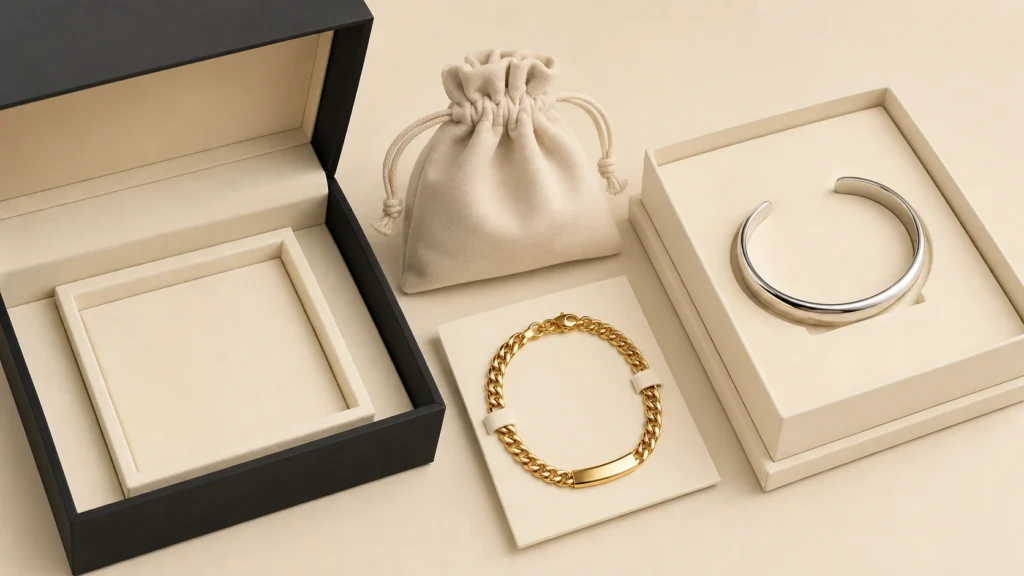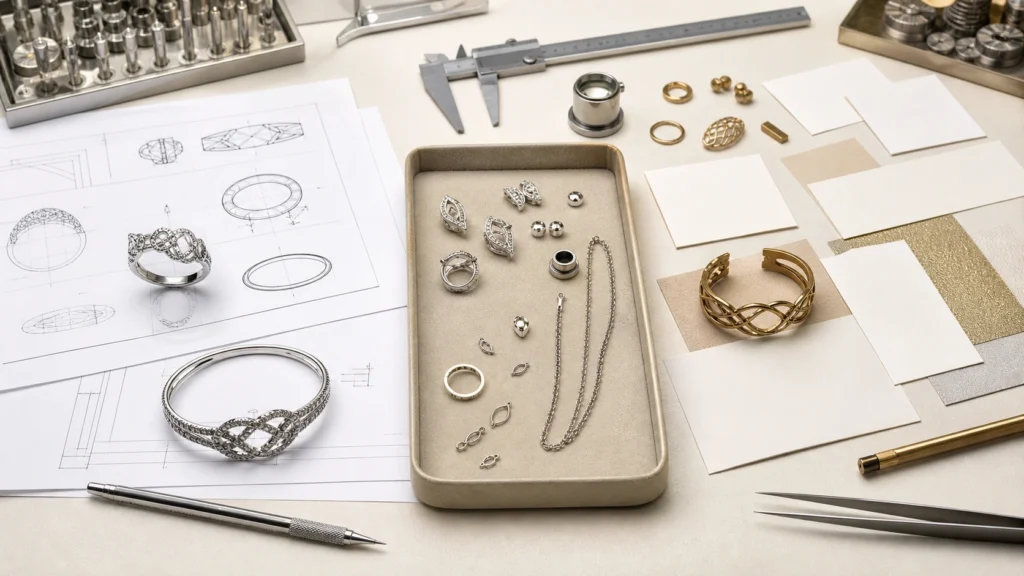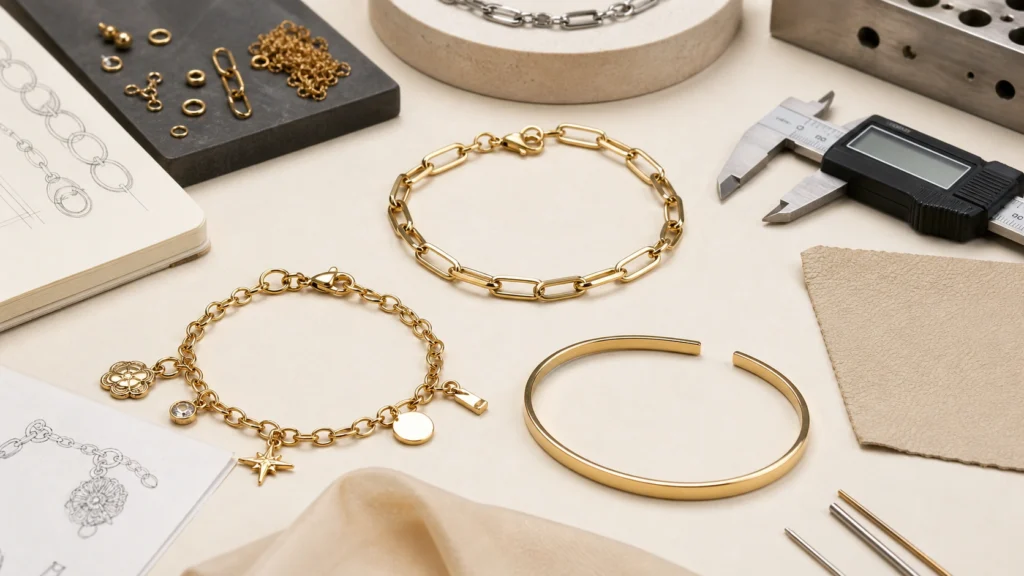
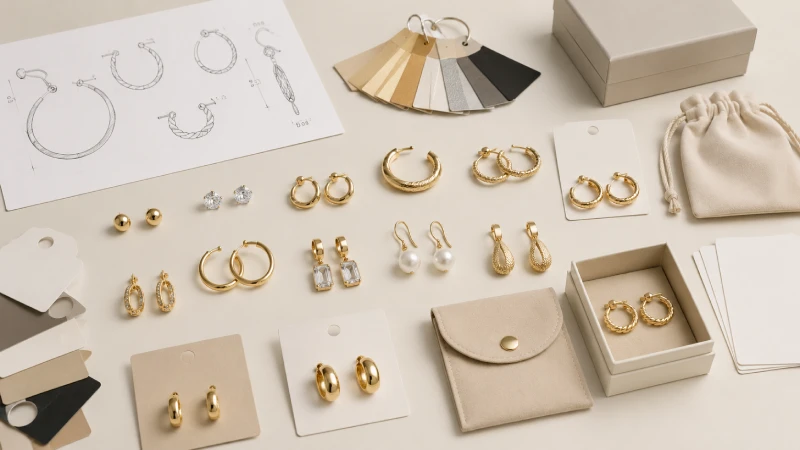
Start a private label earring collection by defining who it is for, what role each SKU plays, and which product rules the range will share. Keep the first assortment focused, sample the style with the greatest technical risk, and approve the product, packaging, and SKU data together before bulk production.
This approach suits brands building an original or adapted earring range. Exact quantities, costs, and timing still depend on the designs and production plan.
Give Every SKU a Job in the Collection
Begin with customer use, not a long mood board. Decide which pair is the easy daily choice, which one carries the collection’s visual identity, and which one raises the average order value or supports an ear stack.
For each proposed SKU, write one sentence that explains its job. If two styles have the same wearer, price position, size, finish, and visual effect, they may compete with each other rather than strengthen the launch.
A simple launch map might include:
- a small stud for frequent wear;
- a huggie or compact hoop with more visual presence;
- one drop or sculptural pair that leads campaign images;
- a coordinated variant only when color, stone, or size serves a clear demand.
The mix should reflect the brand and sales channel. A boutique display can support a different range from an online launch that relies on clear product photos and simple size choices.
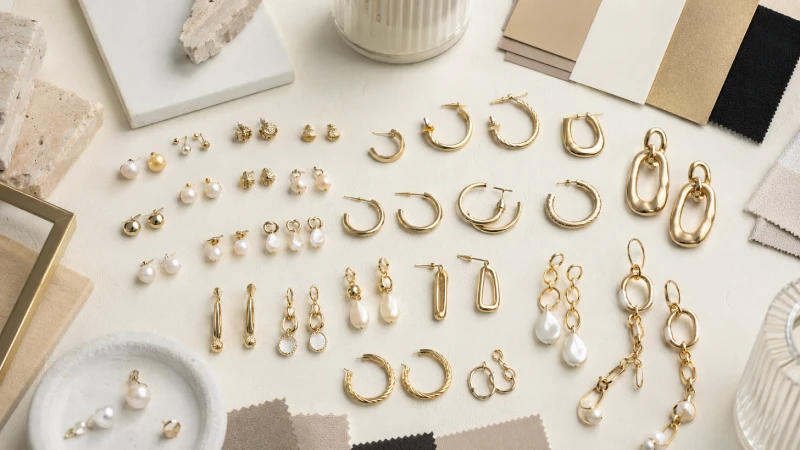
Limit the Number of Product Architectures
Visual variety does not require a new construction for every SKU. Posts and backs, hinged hoops, hooks, lever backs, and moving drops create different development and packing needs.
| Architecture | What it adds | What the buyer must control |
|---|---|---|
| Stud with post and back | Compact daily style and easy visual variation | Post position, back fit, weight balance, and pair matching |
| Hinged hoop or huggie | Strong silhouette and repeat-wear appeal | Hinge action, latch alignment, opening clearance, and pair symmetry |
| Hook or wire drop | Movement and a lighter visual feel | Hook shape, drop length, balance, and product retention on the card |
| Multi-part statement earring | Campaign impact and more design detail | Joint movement, total weight, part orientation, and packing clearance |
For a first range, reuse a proven closure or finding where it does not weaken the design. Shared parts can simplify sampling and reorders. The trade-off is less construction variety, so differentiation must come from shape, surface, stone, or proportion.
Create Rules Shared by the Whole Range
Set the rules that make separate earrings feel like one collection. These may cover base material, finish color, surface texture, logo treatment, post or hook choice, stone family, and the way sizes are named.
The rules should be specific enough to compare samples. “Small gold hoop” is weak. A better brief includes the intended outside size, section shape, closure type, finish reference, logo location, target weight or comfort concern, and how the pair will be packed.
Also record exceptions. A larger statement pair may need a different back or a deeper box. A silver hero piece may sit beside plated brass styles for a clear brand reason. An exception is manageable when it is visible in the SKU plan and quote.
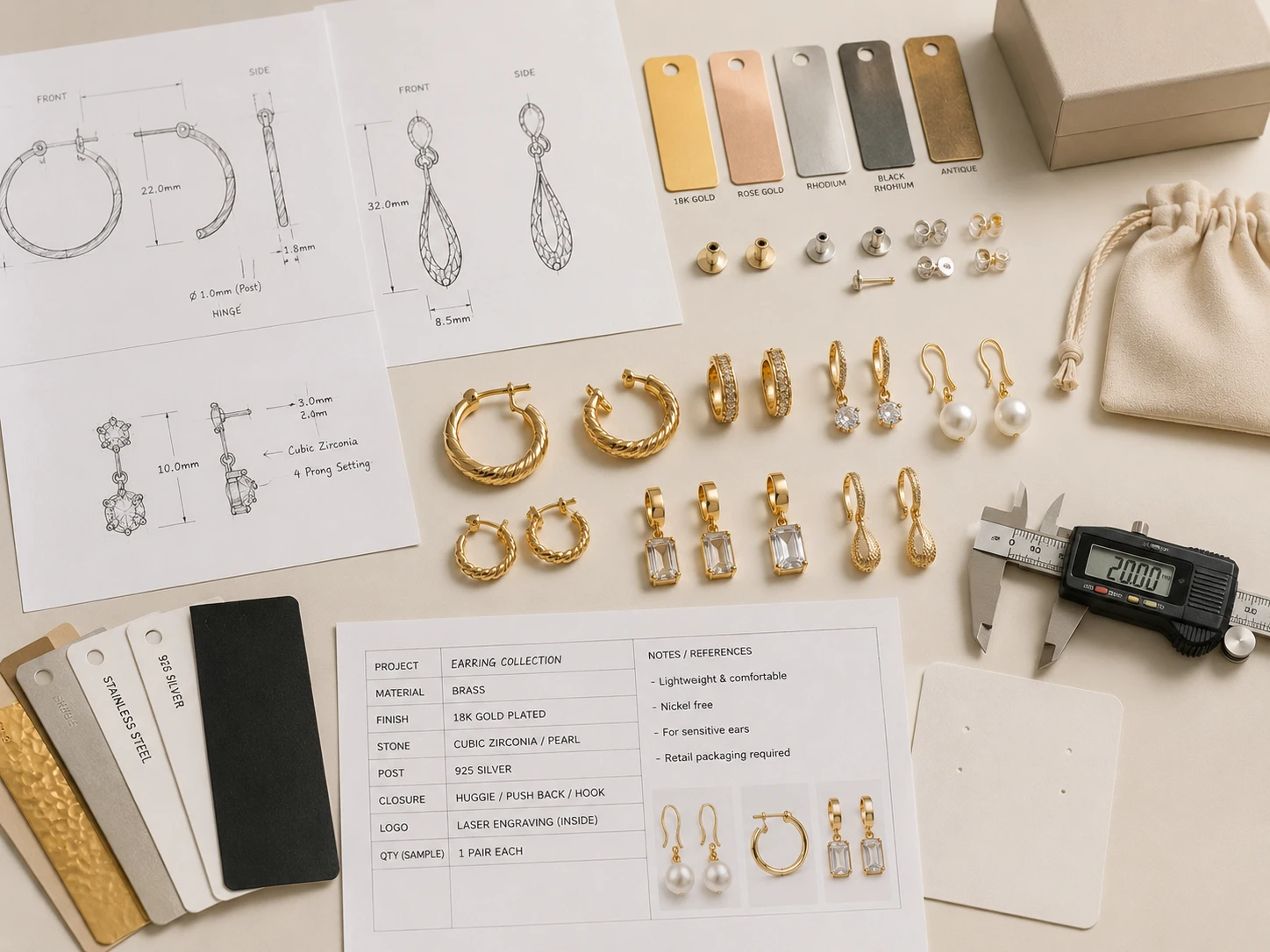
Sample the Style with the Most to Prove
Do not automatically sample the simplest stud first. Choose the pair whose failure would create the greatest launch problem.
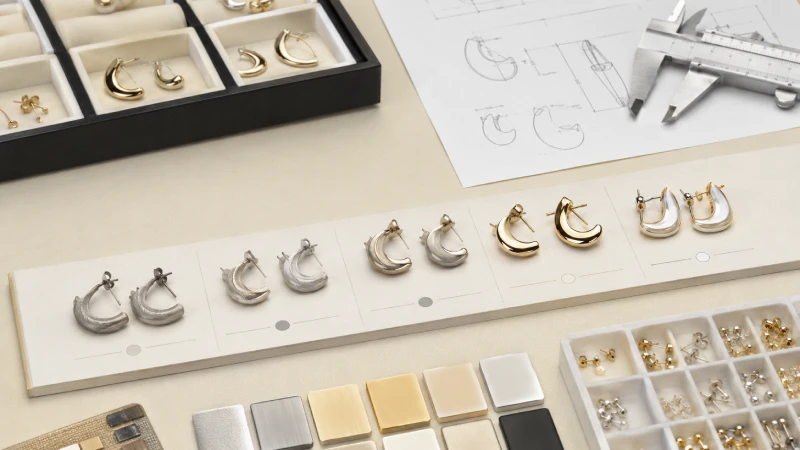
A hinged hoop may need to prove closure feel and alignment. A heavy stud may need to prove balance on the ear. A drop design may need to prove movement, orientation, and overall weight. A plated piece with deep recesses may need to show finish coverage in more than the front view.
Review the sample in this order:
- Match it with the current drawing, size, material, components, and logo details.
- Test the post, back, hinge, latch, hook, or joint in normal use.
- Compare the left and right pieces for angle, height, shape, stones, and finish.
- Check comfort points, sharp edges, weight balance, and movement.
- Record changes with numbered photos and a new revision.
Once the highest-risk architecture works, related styles can use what was learned. Each SKU still needs its own approval where size, construction, finish, or components change.
Build Packaging Around the Actual Pair
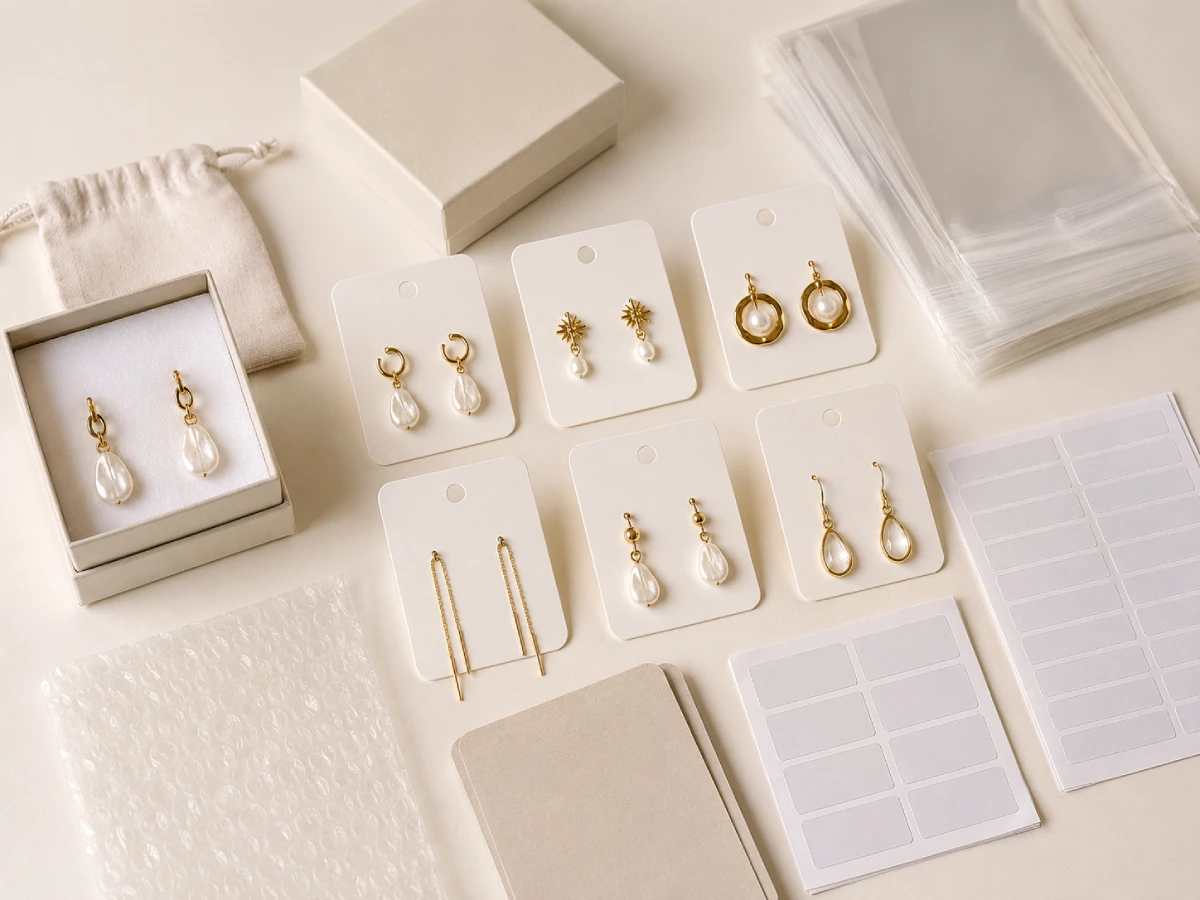
Packaging should be tested with the finished earring, not chosen from a catalog image. The card holes must suit the post, hook, or hoop. The pair should not strike each other, turn backward, bend a post, or place load on a hinge during transport.
Check the complete pack in three states: on the packing bench, inside the shipping carton, and when the customer opens it. Confirm space for the barcode or SKU label without covering brand artwork or required product information.
Use one packaging code for each real configuration. If the same card needs a different insert or box for a large hoop, treat it as a separate pack setup so warehouse staff can identify it.
Release One Clear Pack for Production
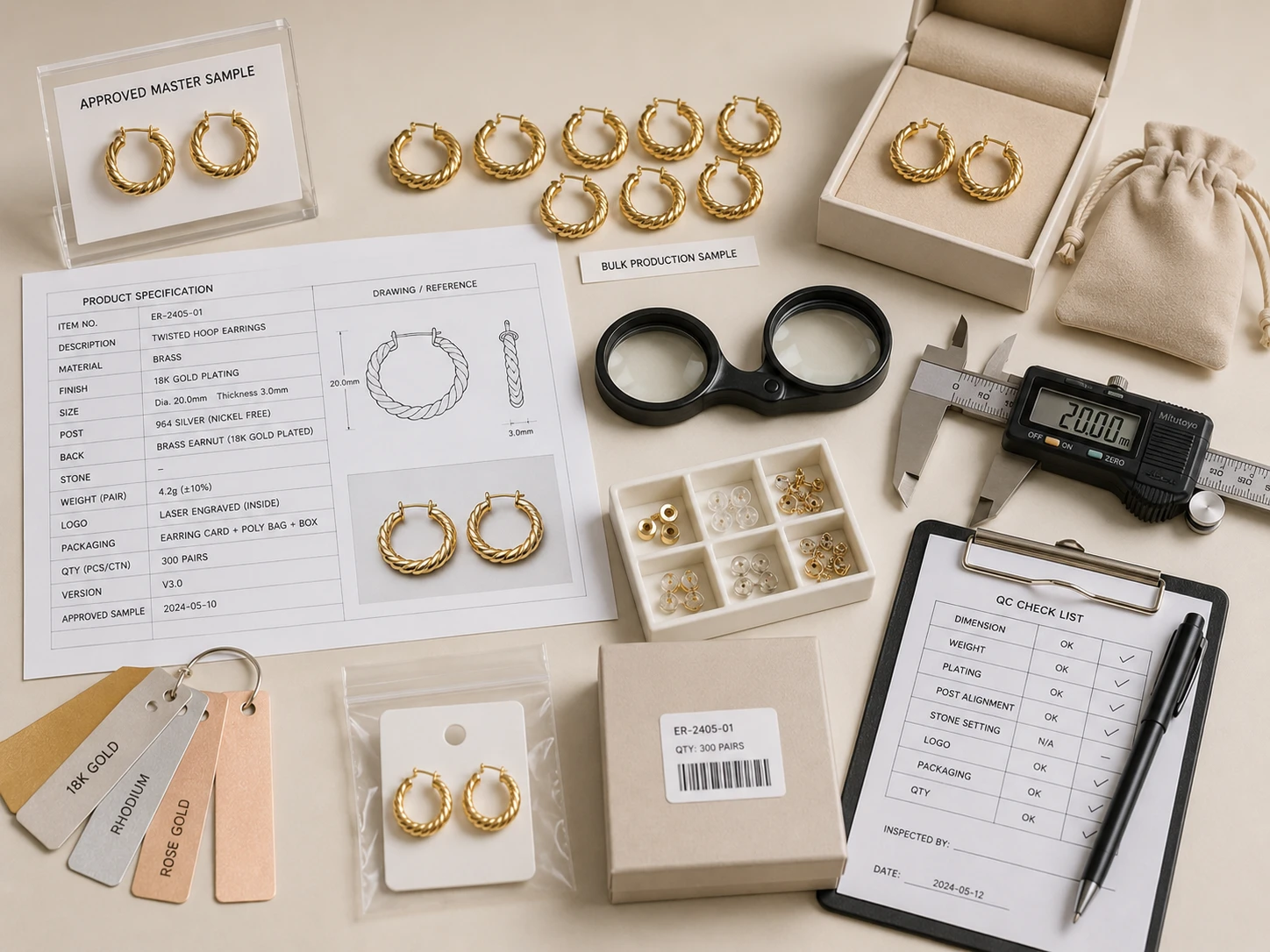
Bulk production should start from a controlled set of approved information. For each SKU, keep the current drawing or CAD view, material and finish instruction, component list, paired sample approval, packaging setup, label data, and inspection points together.
The buyer should also provide the order breakdown by design, finish, and variant. This allows the manufacturer to review the real batch structure rather than only the total order.
Jinnuo Jewelry’s verified scope includes custom earrings, CAD and product development, sampling, bulk production, logo work, packaging, and quality control. The exact route, MOQ, timing, testing, and commercial terms must be confirmed for the collection. To begin a project review, send the SKU plan and highest-risk design through the custom jewelry quote form.

Carol
Carol is a jewelry manufacturing expert with first-hand experience across materials, surface finishes, production processes and quality control. He brings critical thinking and rigor to his work, questioning common assumptions and testing them against industry standards and real production results. He looks at every issue from the point ofview of the people who buy and wear jewelry, turning technical details into clear, practical answers to real-world problems.