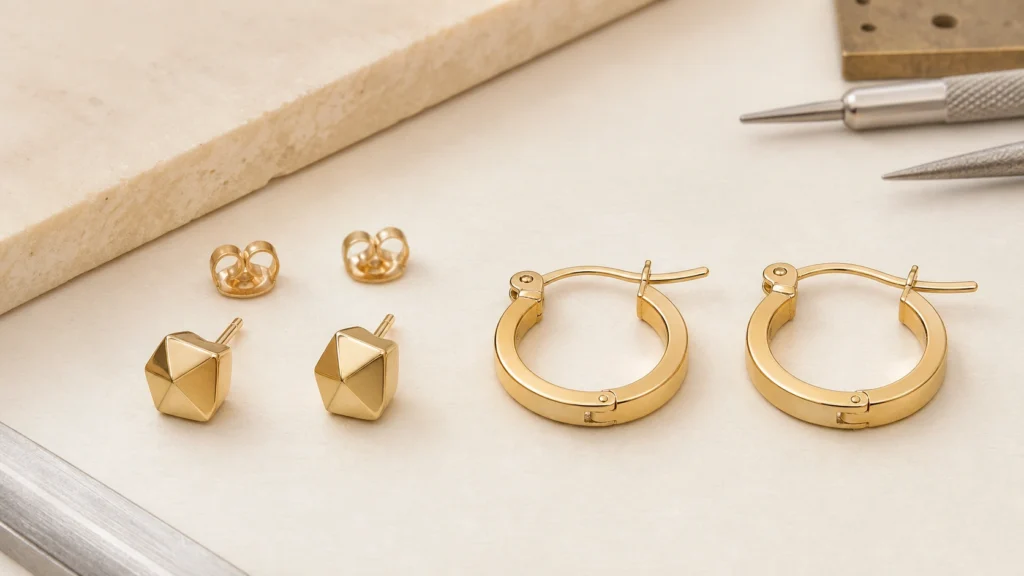
Choose studs when your brand needs a compact, easy-to-layer core style. Choose hoops when silhouette, movement, and visible scale are central to the brand. Many collections need both, but one format should lead. Decide from the target wearer, price position, product risk, and assortment role rather than assuming one style is always more popular.
Choose the Lead Style by Brand Job
The lead style should express the reason customers choose the collection. A minimalist workwear range may begin with studs. A bold fashion line may use hoops as the main visual code. An ear-stack brand can lead with huggies, then use small studs as add-ons.
| Brand need | Better lead candidate | Main trade-off |
|---|---|---|
| Small, layerable daily pieces | Studs | Less silhouette impact in product photos and displays |
| Strong shape visible from a distance | Hoops | More size, closure, weight, and packing decisions |
| Giftable core assortment | Studs or small hoops | The choice depends on brand language and wearer comfort |
| Curated ear stacks | Small studs and huggies together | More SKU combinations and pair or single-unit planning |
| Seasonal statement range | Hoops or sculptural drops | Higher fit, movement, and packaging risk |
This is a positioning choice, not a universal sales rule. Use customer data, channel feedback, or a small test assortment when demand is uncertain.
Studs and Hoops Create Different Buying Choices
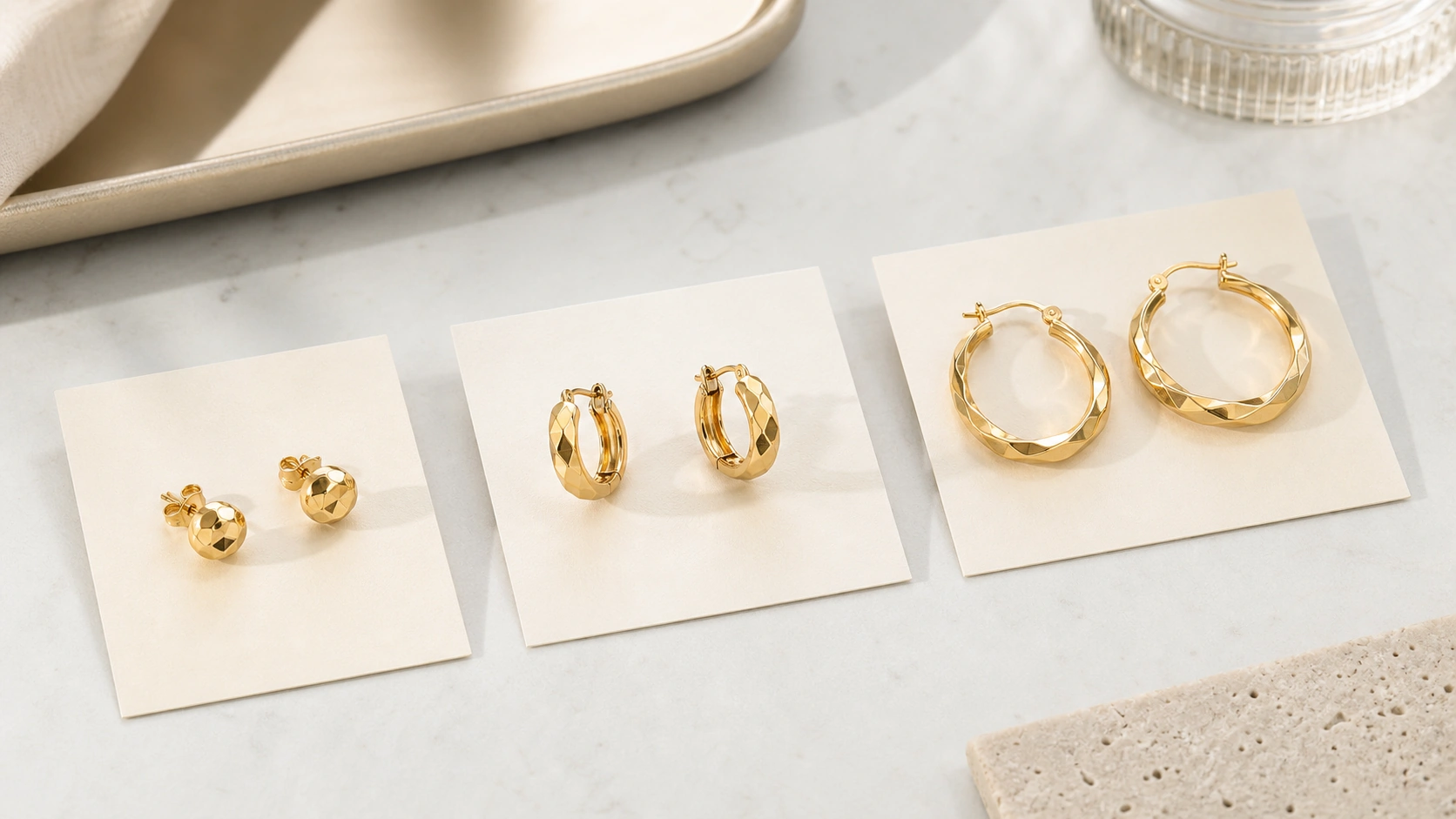
Studs are usually selected through face design, stone or motif, scale, and finish. They can support many visual variants while keeping the same post-and-back system. This is useful for brands that want a broad graphic range with fewer closure types.
Hoops add choices that the wearer can feel as well as see. Outside size, section thickness, inside clearance, weight, hinge action, and latch position all change the experience. Huggies, medium hoops, and large hoops should not be treated as one product with simple size changes.
For merchandising, studs use less display space and are easy to group by motif or color. Hoops create stronger silhouettes but may need more room on cards, trays, and product pages. A pair that looks balanced when worn can overlap or twist in flat photography.
The Main Product Risks Sit in Different Parts
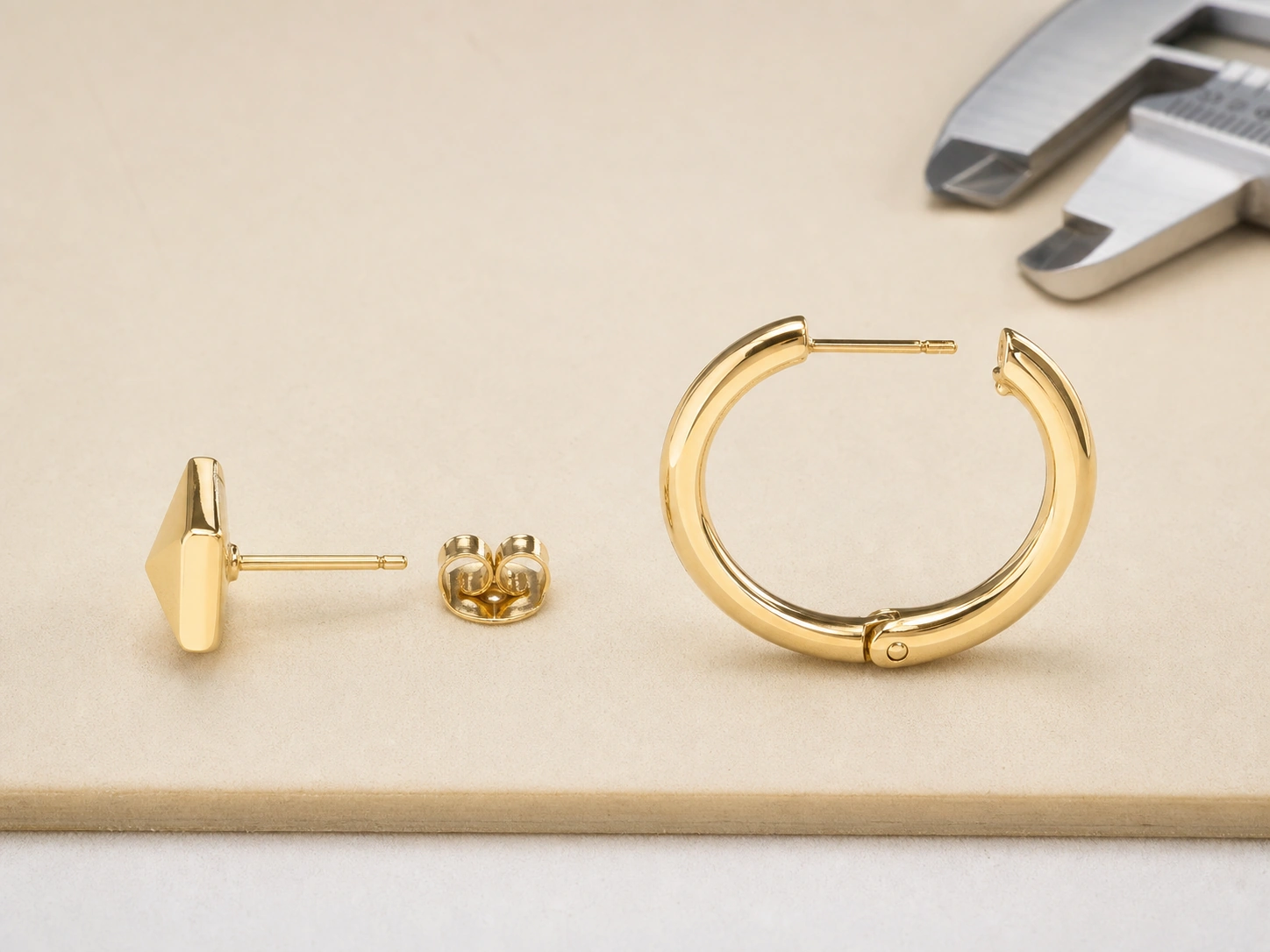
A stud depends on the relationship between the face, post, and back. The post position affects how the earring sits. A heavy or off-center face can tilt. The post and back need a suitable fit, while soldered areas and finish around the post require close review.
A hoop depends on shape and closure. The pair should match in diameter, section, hinge position, and latch alignment. Open and close both pieces. Check whether the post finds the latch without force and whether the joint remains neat when viewed from the front and side.
The material and process also matter. A cast hoop, formed tube hoop, wire hoop, and stamped hoop may need different checks. Ask the manufacturer to explain the proposed construction before approving a size or weight target.
Use Both Styles Without Building Duplicate SKUs
If both formats belong in the range, link them with one or two design cues. A shared stone shape, surface texture, logo detail, or curve can make the family coherent. Do not copy every stud motif onto a hoop if the result adds no new wearing or buying option.
A useful assortment split is:
- one core stud that defines the smallest scale;
- one hoop or huggie that carries the same design language;
- one higher-impact style that changes scale, movement, or detail;
- variants only where color, stone, or finish has a clear customer role.
Keep closures and size names consistent where possible. If a larger stud needs a different back or a heavier hoop needs a different hinge, show that change in the SKU plan and packaging brief.
Approve the Pair and Its Packaging Together
Review earrings as a pair, not as two acceptable single pieces. Compare height, angle, shape, stone position, finish, and closure feel. Then wear or fixture-test them in the intended orientation.
For studs, check post straightness, back fit, face balance, and whether the card bends the post. For hoops, check latch action, pair symmetry, movement, and whether the card or box puts load on the hinge. The pack should stop the two pieces from striking or scratching each other in transit.
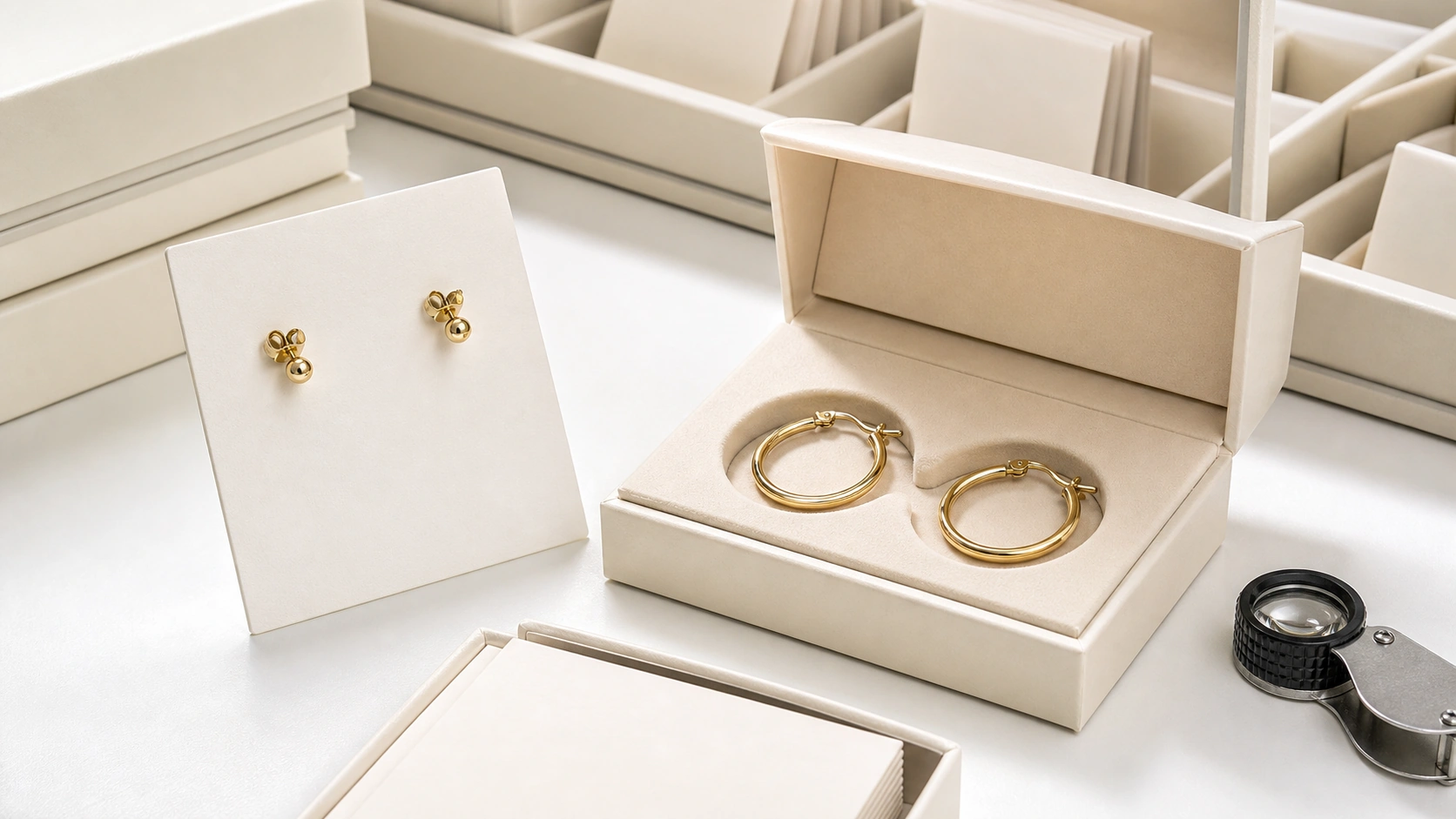
Jinnuo Jewelry’s verified scope includes custom earrings, sampling, product development, packaging, and quality control. The exact material, construction, MOQ, timing, and test plan must be confirmed for each design. Send the proposed lead style, size range, finish direction, and target market through the custom jewelry quote form for a project review.

Carol
Carol is a jewelry manufacturing expert with first-hand experience across materials, surface finishes, production processes and quality control. He brings critical thinking and rigor to his work, questioning common assumptions and testing them against industry standards and real production results. He looks at every issue from the point ofview of the people who buy and wear jewelry, turning technical details into clear, practical answers to real-world problems.