

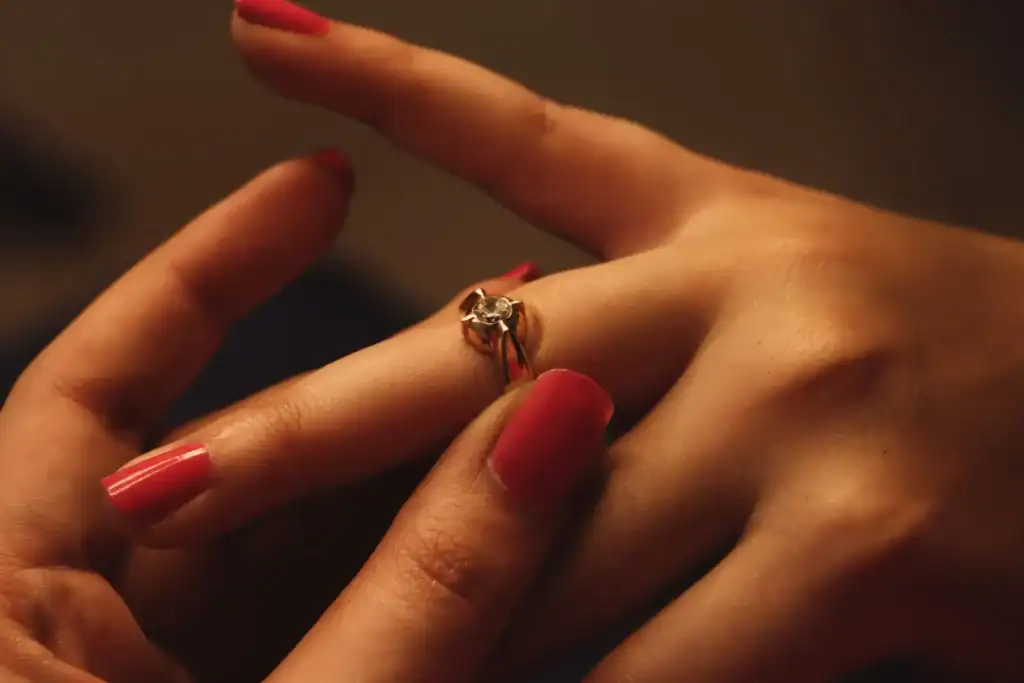
You put on a ring that takes a little effort to pass over your knuckle. A few minutes later, its front has turned toward the side of your finger. You straighten it, and it turns again. Sizing down sounds like the obvious fix—until you remember how hard it already is to take the ring off.
The first question is whether the ring feels comfortable and stays steady enough for the way you wear it. An occasional turn may be fine. A ring that repeatedly rotates, slides toward the knuckle or presses painfully deserves a closer look. The easy-to-miss problem is that an adjustment can stop the spinning while making the ring difficult to remove. Before changing anything, notice where it moves and where it resists. Those two observations will help you choose what to try next.
When Is a Spinning Ring Actually a Fit Problem?
A ring does not have to stay perfectly still to fit you. What matters is whether it feels comfortable, stays steady enough for your everyday activities and can come off without a struggle. A slight turn that you hardly notice may be acceptable. Having to straighten the ring again and again is a different experience.
Before deciding it is “too big,” notice what moves and when:
- The front turns, but the band stays at the base of your finger. The ring changes direction without traveling toward the knuckle. That tells you what needs improving, but it does not prove that the whole ring should be made smaller.
- The entire ring slides toward the knuckle. This is more than a crooked front. Pay attention to whether it approaches the point where it could come off during ordinary use.
- It feels loose once on, yet catches at the knuckle when you remove it. A smaller ring could feel steadier at the base while making this part worse.
- It stays in place but presses, rubs or is difficult to remove. This is easy to overlook after an adjustment. Stability is not an improvement if wearing the ring becomes uncomfortable.
Fit can also change with the conditions in which you wear the ring. If it turns only at certain times of day, say that when you ask for help; a quick try-on may miss the pattern. The useful question is not simply “Does it spin?” but “Where does it move, where does it resist and how does that affect me?”
Why Does a Ring Feel Snug Over Your Knuckle but Keep Twisting Out of Position?
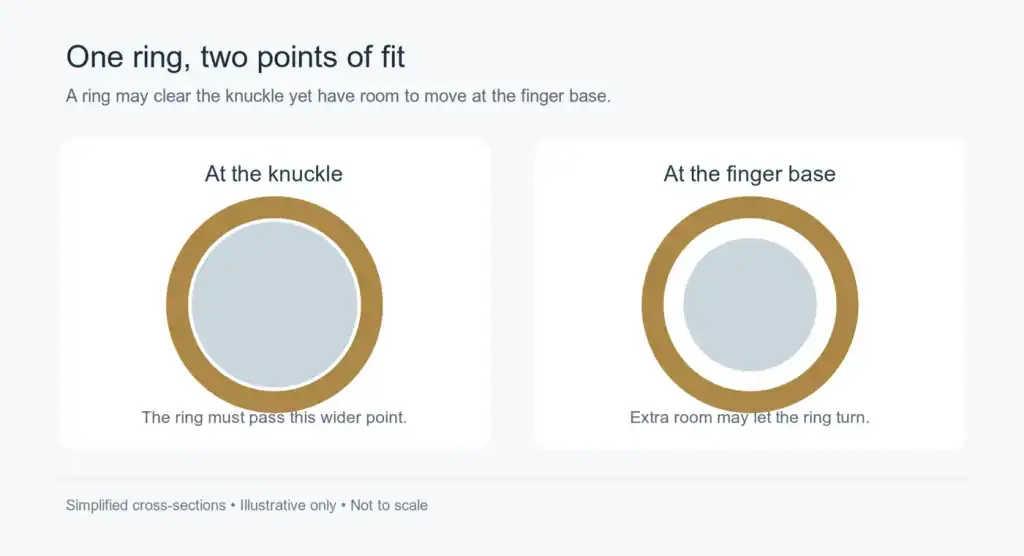
Think back to the two positions in the diagram above. The ring has one opening, but it has to do two jobs: pass over the knuckle and then sit at the base of the finger. If the knuckle is wider, a ring that clears it may have extra room once it reaches its resting place. Making the opening smaller could reduce that room, but it could also make the ring difficult to take off.
That explains one common pattern; it does not explain every ring that turns. Compare what happens with the ring you are concerned about:
- It is snug over the knuckle but moves freely at the base. The difference between those two points is likely part of the problem. Tell the jeweler about both parts of the fit.
- A plain band stays put, but a ring with a prominent top turns. The top and the band may be working differently together. Ask the jeweler to look at the ring’s balance as well as its size before making the band smaller.
- The fit changes during the day or with the weather. Fingers do not stay exactly the same size in every condition. A single try-on may give the wrong impression of how the ring usually wears.
Band width matters when you compare sizes, too. A narrow sizing ring may not feel like the wide ring you intend to wear, even if both carry the same size label. This is why the next step is to describe the actual ring and the conditions in which it turns, then check its fit at the knuckle and at the base. One number alone cannot tell you which problem needs solving.
What Should You Check Before Asking a Jeweler to Adjust the Ring?
Bring the ring itself, not just its size number. A jeweler needs to see three moments: how it passes your knuckle, how it sits at the base and how it comes off. Improving one while making another worse is not a good fit.
During normal wear, notice whether only the front twists to the side or the whole band slides toward the knuckle. Does it move out of place again after ordinary hand movements? Can you remove it comfortably? A steadier ring is not an improvement if it hurts or becomes hard to take off.

Note when it happens. Fingers can change with temperature and time of day, so one quick try-on may miss the pattern. A short video before and after normal movement can show what you mean by “it keeps turning,” although it cannot identify the cause.
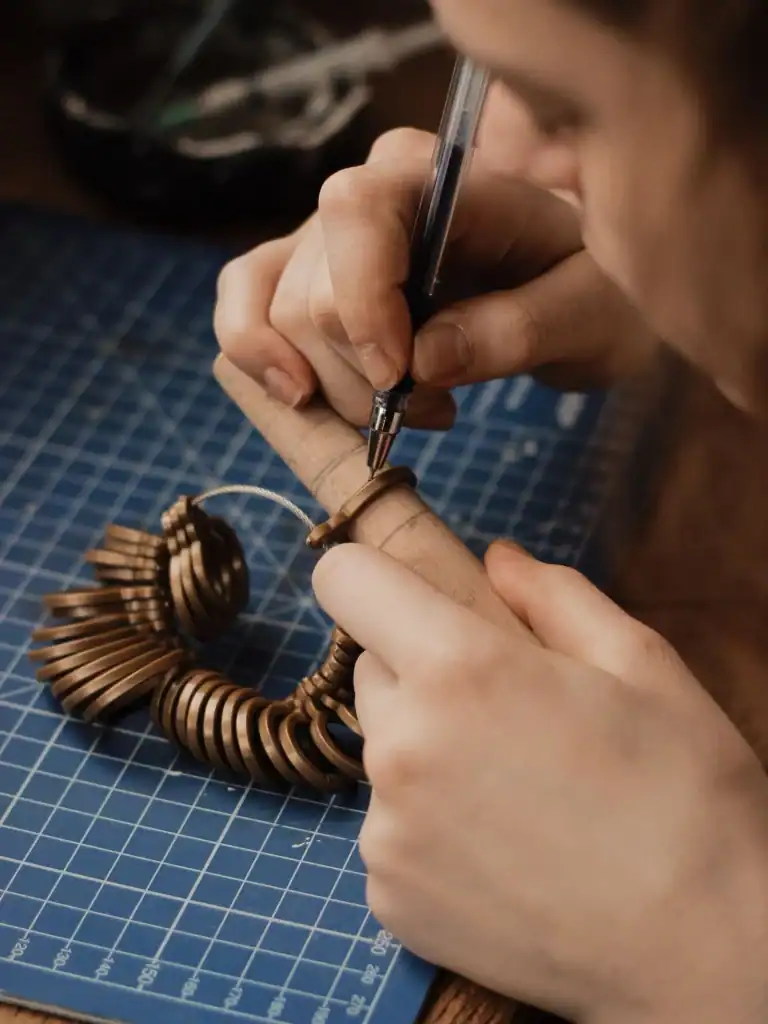
At the appointment, ask the jeweler to check the fit over the knuckle and at the base, then compare the sizing gauge with the actual ring. A wide band can feel tighter than a narrow one with the same size label. The ring’s width and shape matter before anyone recommends making it smaller.
You can put the problem plainly: “It is snug over my knuckle, but the front repeatedly turns to the side once the ring is on. Please check the fit at both points before suggesting a smaller size.” That gives the jeweler something more useful than “my ring is too big.”
Should You Try a Temporary Ring Adjuster Before Resizing?
If the ring passes your knuckle but repeatedly twists out of position at the base, a removable adjuster may be worth trying before changing the metal. A silicone coil wraps around part of the lower band; a ring guard is another option a jeweler can fit. Ask whether the guard can later be removed without affecting your ring’s finish. Both take up space where the ring rests, but neither tells you that a smaller ring size will work.
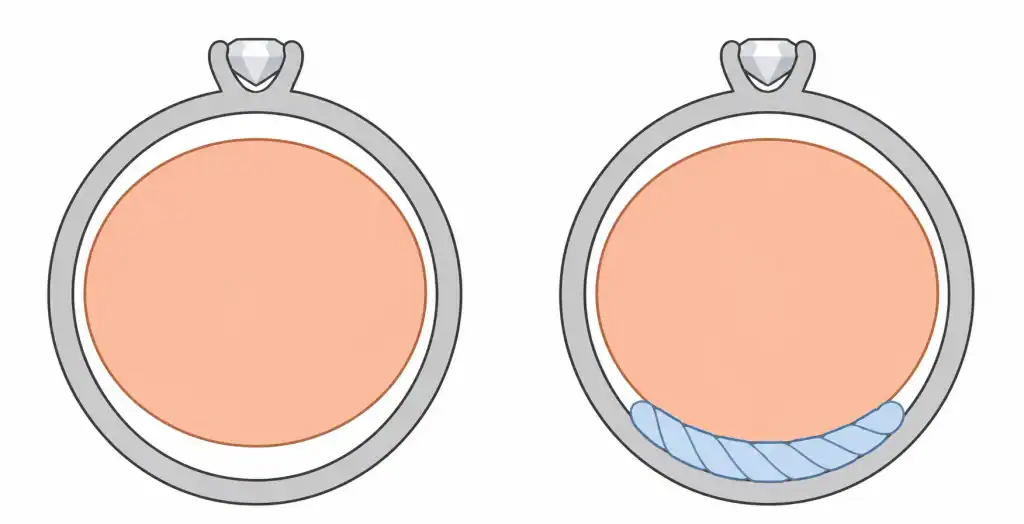
Try the ring without the adjuster first, then with it under similar conditions. After ordinary movement, does the front stay where you want it? Does the added material press or rub? Most importantly, can you still take the ring off comfortably? If it turns less but now catches painfully at the knuckle, the trial has failed. Stop rather than forcing the ring or calling that a better fit.
This comparison also helps narrow the next conversation with a jeweler. If added contact makes the ring steadier and it still comes off comfortably, ask which longer-term options could reproduce that feel on your particular ring. If it keeps twisting despite the adjuster, ask the jeweler to look beyond the size number, including how the top and band sit together. A removable coil is a trial, not a promise that sizing beads, a smaller band or a different shank will feel the same.
Sizing Beads, an Insert, Resizing or a Hinged Shank: What Changes?
These options do different jobs: add contact inside the band, make the whole opening smaller or let the band open to pass the knuckle. A shank is the band that circles your finger. The distinction matters when the ring already feels snug going on.
| Option | What the jeweler changes | The question to ask |
|---|---|---|
| Sizing beads | Adds two small metal bumps inside the lower band, creating local contact without shrinking the metal circle. | Can it still pass the knuckle comfortably? Could the beads later be removed and the finish restored? |
| Spring insert | Fits a flexible metal support inside the band. | Does it feel comfortable at the base and during removal? Can this ring accommodate it? |
| Conventional resizing | Usually removes metal and rejoins the band to make the whole opening smaller. | If the ring is already hard to get over the knuckle, how will a smaller opening get past it? |
| Hinged or expandable shank | Opens or expands for the knuckle, then fits closer at the base. | Can it be fitted to this ring? Can the wearer operate and maintain the mechanism? |
The temporary adjuster from the previous section offers a clue, not a prescription. If added contact helped without making removal difficult, beads or an insert are worth discussing. If the knuckle is the obstacle, shrinking the opening may trade one problem for another. A hinged shank addresses the two fit points differently but involves more work on an existing ring. If the band fits comfortably and only a prominent top swings sideways, ask the jeweler to assess the ring’s balance before changing its size.
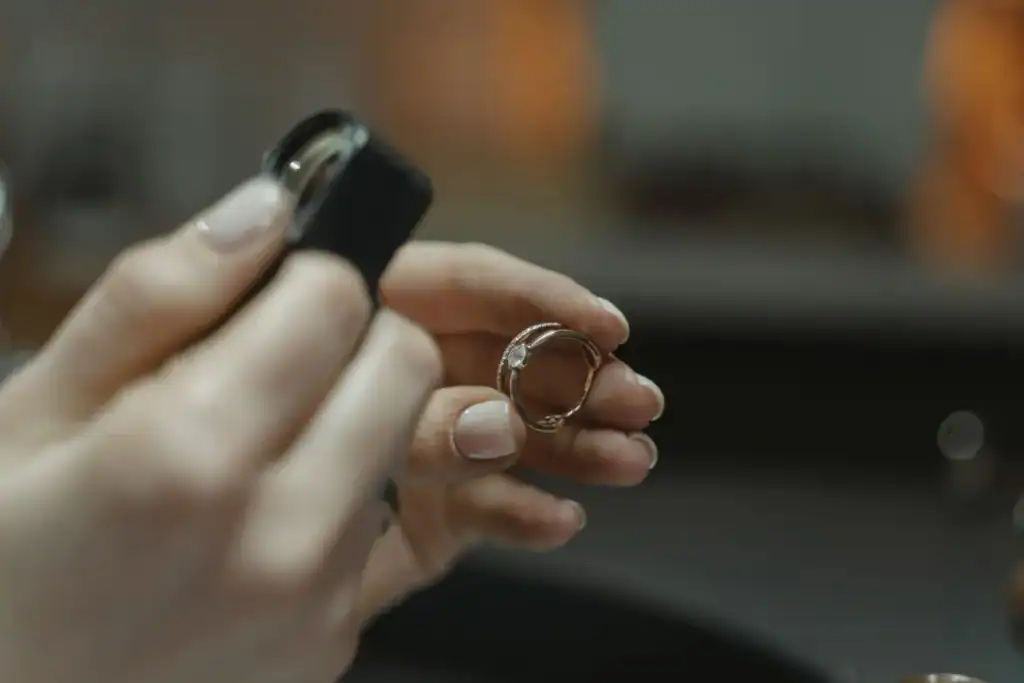
The actual ring needs inspection before a structural change. Stones along the band, engraving, stamps inside the ring and its finish can affect what the jeweler recommends.
None of these choices can be approved from a size number alone. Ask what part of your ring would be changed, whether that change can be reversed and what you should check when you try it on afterward.
Why Did Sizing Beads Help One Ring but Make Another Unwearable?
“Add sizing beads” sounds like one clear instruction. Two wearers’ accounts show why it is not specific enough.
In one account, a wearer with a large knuckle and a much narrower finger base had a lost ring remade. The new maker increased its size slightly and added two round sizing balls. The ring still turned, and removing it was so painful that the wearer reported torn skin and stopped wearing it. In a later comment, the wearer noted that the original ring had a beveled inner edge—an angled edge rather than a sharp corner—but that detail had not come up again during the remake. We cannot tell from the post whether the balls, the new ring’s inner shape or another difference caused the failure.
In the other account, a wearer whose finger narrowed toward the base disliked the feel of a temporary coil. Instead of reducing the ring’s size and adding bumps at the same time, the jeweler kept its existing size and added broader, flatter bumps, sometimes called “speed bumps.” The wearer said the ring finally felt right and the bumps were not noticeable. That is a personal result, not a measured comparison with ordinary round beads.
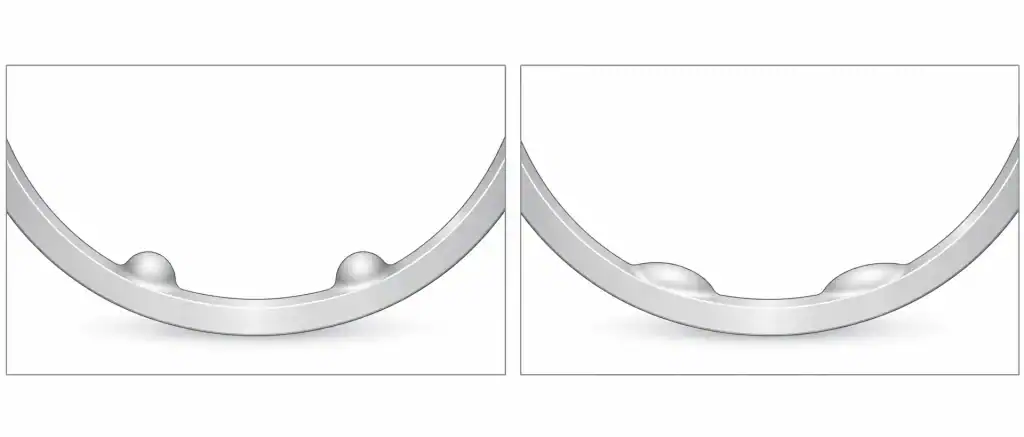
The useful lesson is that “sizing beads” names a method, not a finished fit. The metal band itself can remain the same size while added metal changes the usable space and contact points inside it. The height, width and position of that metal—and the band’s inner edge—can matter when the ring crosses the knuckle. The posts do not isolate which detail mattered most. They show why asking only “Can you add beads?” leaves out the fit that actually matters.
Before authorizing the work, ask the jeweler to show where the additions would sit and what shape they would have. If this is a remake, show them the old ring’s interior details if you have photos or records. Agree on what will be adjusted if the ring steadies at the base but becomes painful to remove. The result has to pass all three checks: on, worn and off.
What Should You Ask Before Buying or Altering a Ring?
“Make it tighter” describes a wish, not a repair. A jeweler could make the entire opening smaller, add contact inside the band or suggest a shank that opens over the knuckle. Those choices solve different problems. If the ring already catches on the way off, a result that keeps its top upright but hurts to remove is not a better fit.
Bring the actual ring to the appointment, if you have it, and describe when the problem occurs. This is a useful starting script:
“I wear this on my [left/right] [finger]. It feels [snug/painful] over the knuckle, then [the top repeatedly turns/the whole ring slides] at the base. I want it to go on and come off without pain and to stay acceptably positioned during ordinary wear. Please show me what you would change, where, and what that could do to the fit over my knuckle.”
Ask the jeweler to watch the ring go on, sit at the base and come off. If a small trial change is possible, test it before approving a second change. For example, resizing the whole band and adding beads together could leave you unable to tell which change caused new pressure. That is a way to make the outcome easier to interpret, not a rule that every repair must happen in stages.
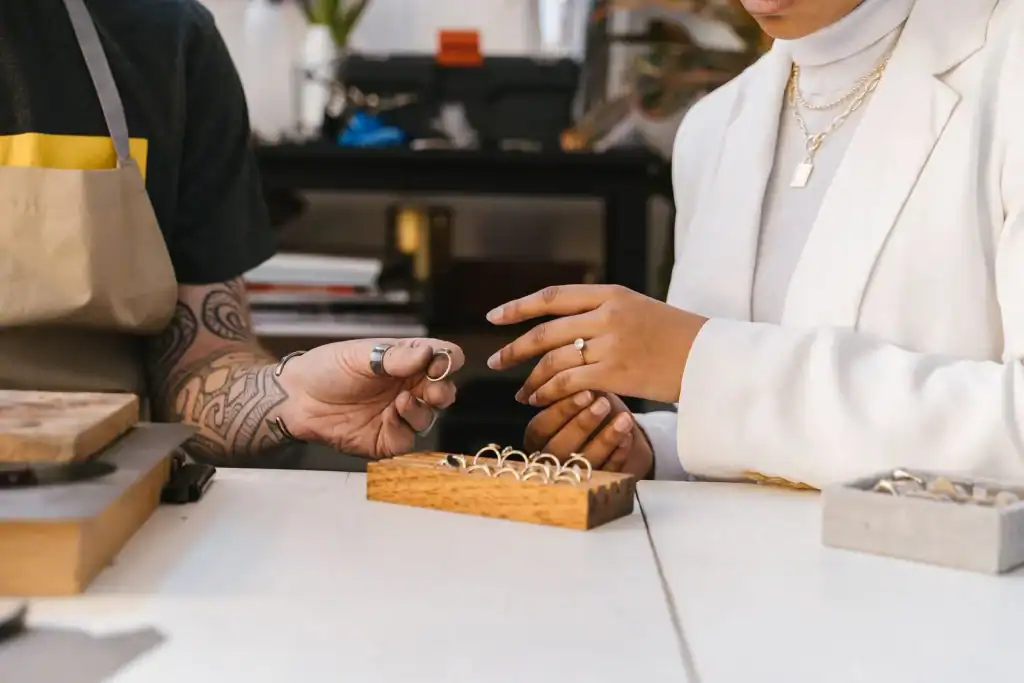
For a new or custom ring, give the maker the intended hand and finger, the band’s width and the shape of its inside edge if those are decided. Ask how the proposed design will be checked against both the knuckle and the finger base; a size number alone cannot show how a different band will feel. If you cannot try on the finished design before ordering, clarify the alteration or return options first.
Before authorizing work, confirm what will change, the price, whether stones, engraving or finish may be affected, and what happens if the first fit is uncomfortable. When collecting the ring, try it on and off yourself. Check whether the top repeatedly turns during ordinary hand movements, whether any new contact point presses or rubs, and whether the altered area and stones look sound. A comfortable minute at the counter is useful evidence, but finger size changes with conditions; report a later problem instead of forcing a painful fit.
The Right Fit Must Work Going On, While Worn and Coming Off
When a ring keeps moving, the useful question is where the fit fails. If the whole ring slides along the finger, ask a jeweler to check its overall fit at both the knuckle and the base. If it stays at the base but the top repeatedly turns out of position, ask about the ring’s balance and ways to improve contact there without losing knuckle clearance. If a change makes removal painful, stop wearing the ring and have that change reassessed before trying another. A ring that is stuck while the finger swells, changes color or becomes numb needs prompt medical help.
Sources
- Gemological Institute of America (GIA), “How to Determine Ring Size: Tips and Ring Size Chart”.
- Gemological Institute of America (GIA), “Accurate Determination of Finger and Ring Sizes”.
- Jewelers of America, “Rings”.
- Jewelers of America, “Jewelry Repair”.
- Stuller, “The Anatomy of a Ring”.
- Stuller, “Adjustable Shanks and Ring Styles”.
- The Beadsmith, Fall 2024 Quarterly, “12-Piece Ring Size Adjuster Set,” p. 10.
- Reddit, r/jewelry, “Cannot correctly size custom ring” — one wearer’s account.
- Reddit, r/EngagementRings, “If you are considering sizing beads, do it!” — one wearer’s account.
- National Health Service (NHS), “Finger pain”.