

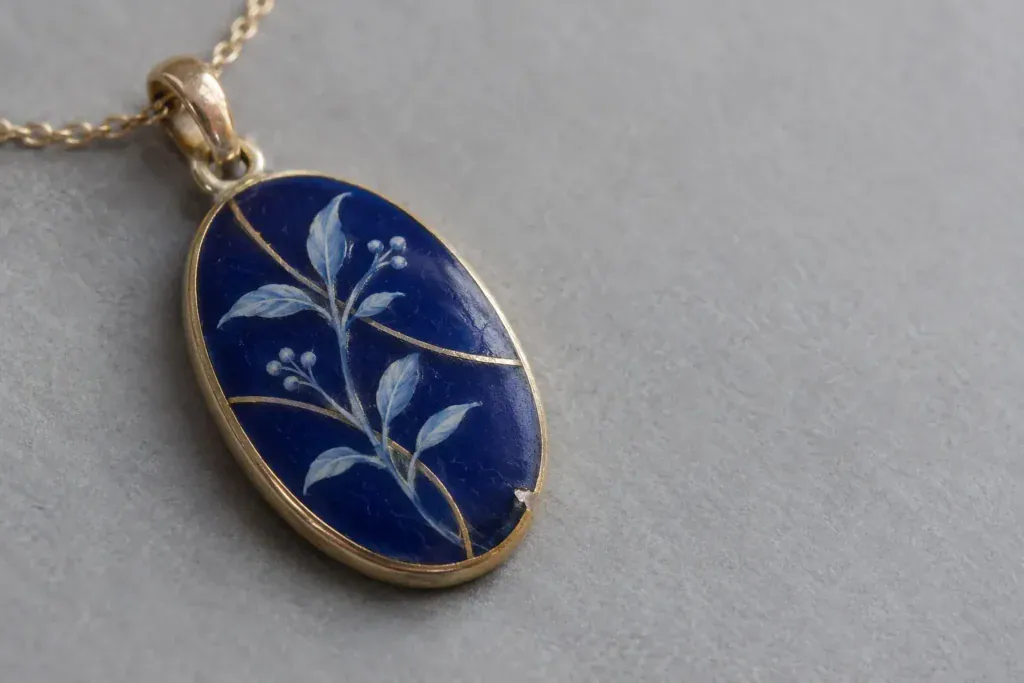
Your enamel pendant slips from your fingers as you take off your necklace and hits the bathroom tile. A small blue fragment comes away; you find it beside the pendant. Gluing it back seems obvious—at least the color would match. But the fragment cannot tell you whether the surrounding surface is still secure, and glue in the wrong place could make a later repair harder. You keep the fragment instead of pressing it into the gap. Can the original piece be reattached safely, does the missing area need a different repair, or is it better to leave it alone?
Did You Find the Piece That Came Off?
Finding the fragment gives a repairer more to work with, but it does not mean it can simply be glued back. Keep it in a small, clean container with the necklace. Avoid pressing it into the gap to check the fit: repeated contact can wear the broken edges. A specialist can examine both pieces and decide whether the fragment can be secured or is more useful as a record of the original color and shape.
If the fragment is gone, it is natural to think the only choice is to hide the gap. That decision can wait. Photograph the damaged area and check whether the surrounding enamel appears cracked, lifted or loose. If more is coming away, stop wearing the necklace until it has been assessed. Whether the gap can be filled or remade depends on the material and how the enamel was applied; that is the next question to settle before choosing a repair.
What Is the Damaged Color Actually Made Of?
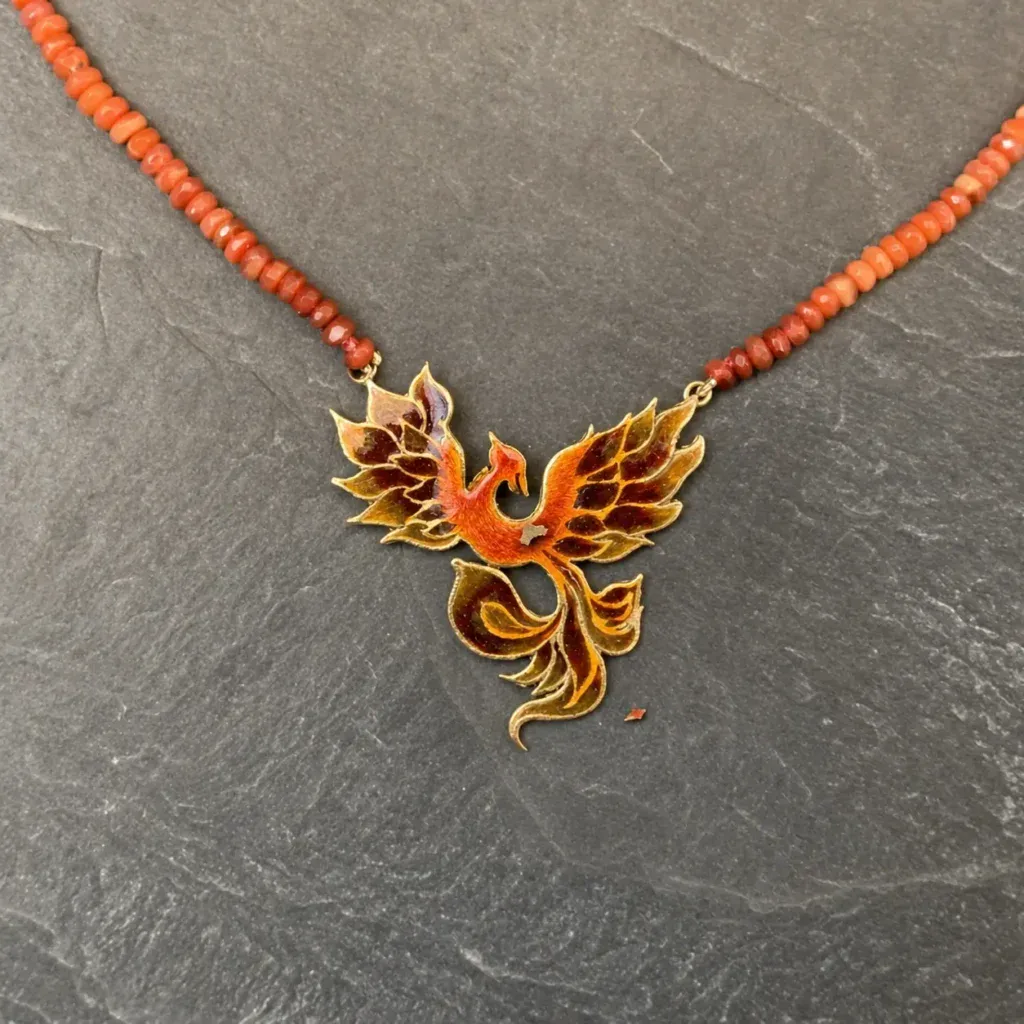
Looking at the orange gap on the phoenix, it is tempting to ask a repairer to “paint it back.” But matching the shade is only part of the job. Traditional vitreous enamel is glass fused to metal with heat. Some jewelry uses colored resin, sometimes sold as “cold enamel,” instead. A photograph of a glossy surface cannot reliably tell you which one you have. Repairing fired glass with resin may be a reasonable choice in some cases, but it is a different material and should be described as such.
The structure beneath the color matters too. In one design, enamel sits in a recess with solid metal behind it. In another, it spans an opening like a tiny stained-glass window. A missing spot in those two structures is not the same repair problem. Look at the front and back without scraping or pushing on the damaged area: is there metal behind the color, or can light pass through? Those observations help a specialist, but they do not identify the material by themselves. The phoenix photograph shows only the front, so it cannot settle this question.
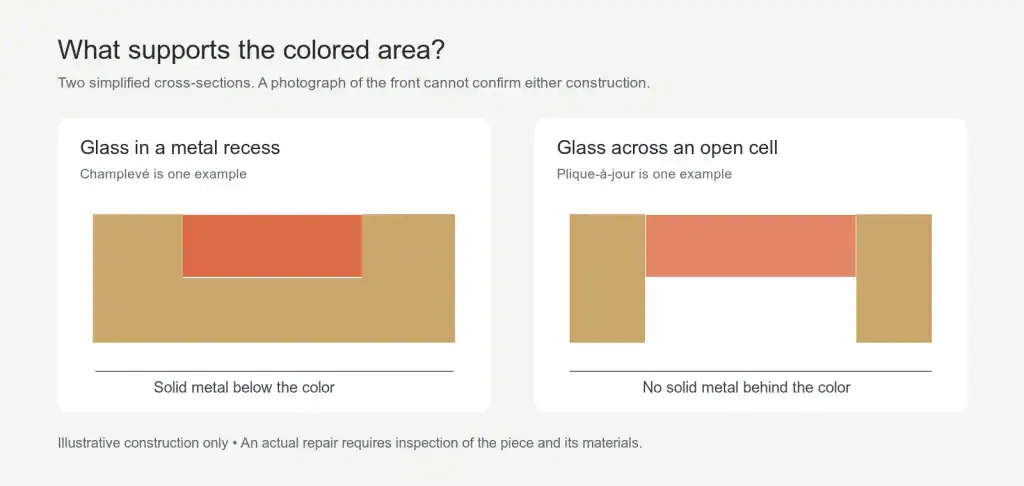
Both surfaces may appear colored from the front. One has solid metal behind the enamel; the other spans an opening. This diagram explains the structural difference; it does not identify how the phoenix necklace was made.
Before accepting a repair quote, find the product description or ask the maker what the colored material is. Then ask the repairer: “Is the damaged area fired glass, resin or another finish? What is supporting it, and what material would you use to repair it?” The answer tells you whether the proposed repair would restore the original material or only approximate its appearance.
Which Enamel Chips Can Be Repaired, and What Cannot Be Restored?
The orange gap on the phoenix is small, but its size alone does not tell you how simple the repair will be. The first question is whether only the color is missing or whether the enamel beside it and the metal holding it are damaged too. It also helps to separate two goals: stopping further loss and making the chip disappear. A repair may achieve one without achieving the other.
| What you find | What a specialist may be able to do | What the repair cannot promise |
|---|---|---|
| Cracked enamel is still attached | Secure loose areas before they break away. In a documented conservation case, this was done without replacing the color. | A secure surface will not necessarily look unbroken. |
| One small area is missing, but the surrounding enamel and metal backing are sound | Assess a color fill or reconstruction. Resin may be an option even when the original was fired glass, if that difference is acceptable to you. | A matching shade does not guarantee matching gloss, level or material. |
| The missing color formed a backless, translucent “window,” or a metal divider is bent | Assess whether the cell or its support must be rebuilt. This needs a specialist familiar with that construction. | Paint across the gap cannot restore the original open structure. |
| The original finish is colored resin | Assess a compatible resin repair or replacement of the colored area. | This is not a restoration of fired glass enamel. |
| More enamel is lifting, the metal is distorted or nearby stones and joints may be affected | Check the whole piece first; stabilization or leaving the loss visible may be safer than a cosmetic patch. | An invisible repair cannot be promised from a front-view photo alone. |
Finding the fallen fragment is useful, but it does not move the piece automatically into the “easy repair” column. If the fragment is gone, that original piece cannot be reattached; a new fill or rebuilt section may still be possible.
And if someone proposes firing new glass onto an older or gem-set piece, ask what else the heat could change. A precise repair proposal should name both the problem it will solve and the original features it may not restore.
When Can a Touch-Up Make the Chip Look Worse?
The small orange gap on the phoenix might be easy to overlook. A smooth patch in the wrong shade could draw your eye every time the pendant moves. The two repair reference galleries show a distinction that a quote can leave vague: “filled” and “hard to notice” are different outcomes. A patch may match the color when viewed straight on, yet look brighter, duller or slightly raised when the jewelry tilts. With translucent enamel, the metal beneath the color contributes to what you see. On guilloché jewelry, a patterned metal surface shows through the enamel; if that pattern is damaged, new color alone cannot restore it.
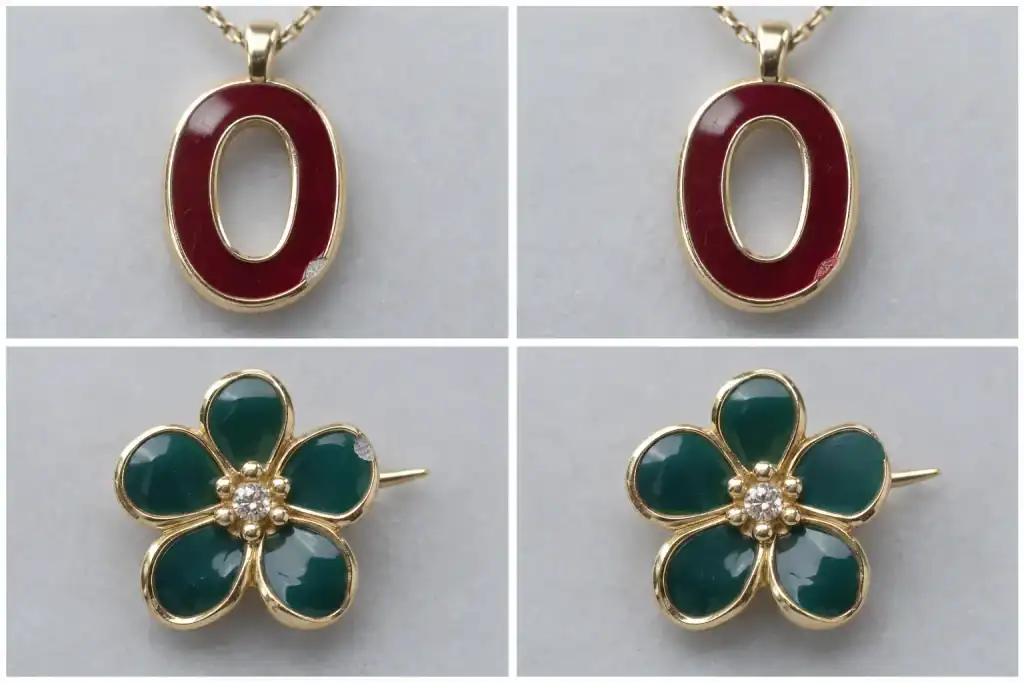
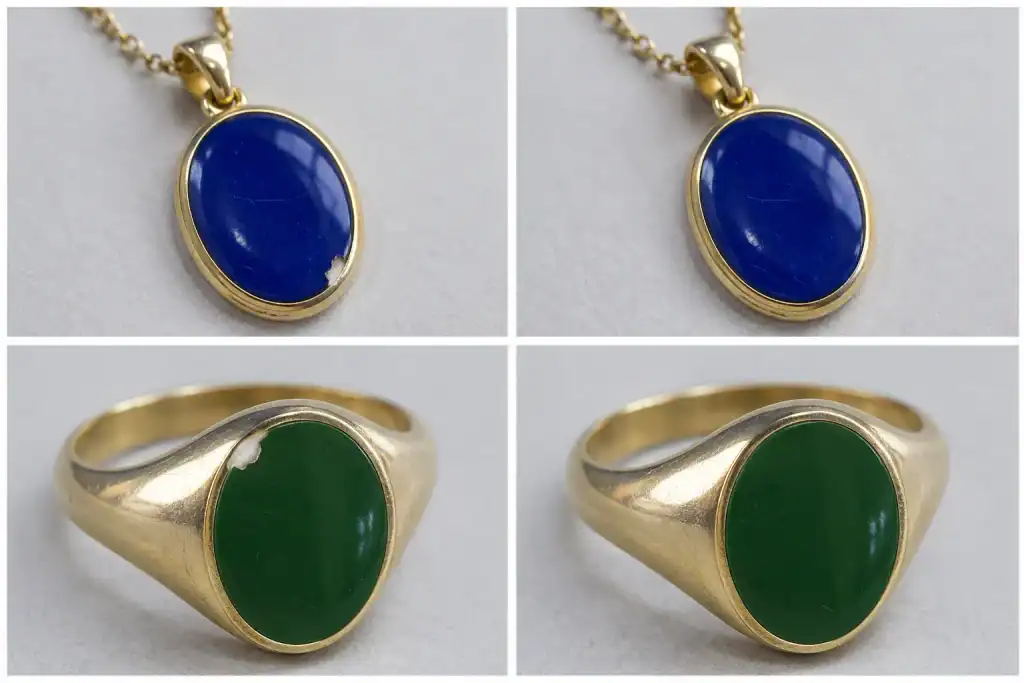
An after photo cannot show every risk. If enamel beside the chip is cracked or lifting, filling the empty space does not automatically secure the surrounding area. Firing new glass onto the piece may avoid a resin fill, but the heat can change the color of older enamel or damage solder joints. Some nearby gems and treatments are heat-sensitive too. In one documented 18K gold locket repair, the enameler tested an original chip alongside the proposed new enamel before firing the piece. That was a check for that particular locket, not a promise that every piece can be treated the same way.
Before approving a “color touch-up,” ask: “Is anything around the chip loose? What material will you add? Will the original piece be heated? What might still show from the front or when it catches the light?” A useful answer describes the expected appearance and what will be done to protect the rest of the jewelry.
Should You Stabilize the Chip, Fill It or Re-Enamel the Piece?
These are different jobs, and a piece may need more than one. In a documented enamel watch restoration, conservators first secured the fragile original enamel, then filled the missing areas to match its color and transparency. That sequence matters: covering an empty spot does not, by itself, secure the enamel around it.
Even with the same damage, the owner’s priority can change the plan. Someone who cares most about keeping the phoenix pendant’s original surface might accept a visible gap after loose material is secured. Someone who wants the orange color back might accept a carefully matched resin fill if the surrounding enamel and metal are sound, knowing the fill is a new material rather than the original fired glass. Someone who wants glass enamel rebuilt needs a specialist to assess the existing enamel, metalwork and any other parts that could be affected by heating. If the metal supporting the color is damaged, that problem has to be assessed before anyone promises a neat patch. The chip’s size alone cannot choose among these outcomes.
Instead of asking only, “Can you fix it?”, say what matters most: “I want to keep as much original enamel as possible, even if a small mark remains,” or “I would accept a visible color fill, but please tell me what material you would use.” Ask the repairer to identify any area they would remove or heat, and to check with you before expanding the work beyond the agreed spot.
Can You Fix Chipped Enamel Jewelry With Glue or Nail Polish?
The orange fleck from the phoenix pendant is still in your hand. Gluing it back feels like the obvious next step. But first consider what the repair needs to do: reattach the fragment, secure any loose enamel beside it and make the join look acceptable. Glue alone cannot do all three. If the enamel around the chip is lifting, a fragment that appears to fit neatly may still leave that edge unstable.
If the fragment is lost, nail polish or a paint pen may cover the bare spot, but neither turns it back into fired glass enamel. A close color match can still have a different shine or sit higher than the surrounding surface. Covering the spot may also make a nearby crack harder to see. “The chip looks less noticeable” and “the damaged area is secure” are two different outcomes.
A modest cosmetic touch-up may be enough for an inexpensive piece, particularly if the original colored surface is resin rather than fired glass and the surrounding area is sound. For a valuable or sentimental piece, keep any recovered fragment separate and ask a repairer before applying anything: “Is the enamel around the chip secure? Would you reattach the fragment or fill the missing area? If I try a cosmetic patch first, could it be removed without disturbing the original surface?” The answers matter more than whether a bottle of glue promises a strong bond.
Why Might a Jeweler Refuse a Small Enamel Repair?
A tiny gap can be surprisingly hard to get a clear repair answer about. In a recent public discussion, the owner of an older ring said ordinary jewelry repair shops would not take on a small missing white enamel detail. Replies proposed everything from nail polish to fired glass enamel. Those replies do not tell us which treatment was right for that ring. They show why “Can you fill this spot?” is too vague a question: different people may be offering entirely different materials and results.
One jeweler documented a more revealing case. Her client wanted a worn gold enamel ring to look new again. The enamel had disappeared from the sides of the band, but the gold beneath was also worn. Replacing the color there would have required cutting new recesses into already thin metal to give the enamel a place to sit. They agreed to preserve the central design and leave the sides alone. Later, previously hidden solder caused trouble during kiln work. The remaining central design was eventually made into a pendant. This is one case, not evidence that old enamel jewelry usually contains hidden solder. The useful lesson is that the condition beneath a missing patch can change both the repair and what is worth preserving.
If a general jewelry shop declines the job, that does not by itself mean the piece is beyond repair. Ask whether they perform fired enamel work or only cosmetic fills, and look for examples of repairs on similar pieces. Before approving work, agree on a stopping point: “Please tell me if restoring the color would require cutting into the metal, removing a stone or changing an original feature. If you uncover another problem, stop and discuss the options with me first.” A careful refusal or a limited plan may protect the piece better than a promise to make a tiny chip vanish.
How Much Does Enamel Repair Cost, and Is It Worth It?
The price of a repair is not set by the size of the orange gap on the phoenix. One U.S. jeweler publicly lists $40 to re-enamel an epoxy-colored ring, bracelet or pendant and $130 to re-enamel one with glass. It lists removal of existing glass enamel as a separate $70 service. These are that jeweler’s prices for different services, not a market price range or a quote for this pendant. The list does not tell us which services a particular repair would require. The same jeweler offers re-enameling at no charge for eligible pieces bought from it, so checking the original maker’s repair policy is a useful first step.
To compare quotes, ask what each one will actually do. Does it only put color in the empty spot, or does it also secure loose enamel? Does it include removing an old repair, working on damaged metal or handling nearby stones? Two prices both labeled “enamel repair” may buy different results. In the worn-ring case above, restoring the color on the sides would have meant cutting new recesses into already thin gold. The owner and jeweler decided that preserving the central design mattered more than making the whole ring look new.
Then compare the total cost and likely result with a comparable replacement. If a similar piece is easy to buy, the damage is confirmed to be cosmetic and the repair costs as much as replacing it, paying for a touch-up may make little sense. A stable, visible mark might be acceptable instead. For a one-of-a-kind or sentimental piece, replacement may not solve the real problem; a limited repair that preserves the original could still be worth paying for.
Before deciding, ask: “What will this price fix, what will remain visible and is the result suitable for the way I plan to wear it?” A cheap color fill is poor value if it leaves loose enamel untouched. An expensive repair is poor value if the damaged structure is likely to defeat the new finish. There is no useful percentage of the purchase price that decides this for every piece.
How Do You Check an Enamel Repair Before Wearing It Again?
When the phoenix pendant comes back, compare it with the photos taken before repair and with the result you agreed to accept. Look at the orange area straight on, then tilt it in ordinary light. Is the new color confined to the agreed area? Are there new visible cracks or changes to nearby metal or stones? A repair can be good even if a small mark remains, provided that was the result you approved. Do not press, scrape or flex the enamel to “test” it.
Ask the repairer to show the worked area under magnification and explain what was secured, what was filled and what remains unchanged. A smooth surface in a photograph cannot tell you whether the enamel beside the chip was stabilized. If a stone setting or clasp was disturbed during the work, check that part against the original repair record too. Raise anything unexpected before taking the piece home.
Matching matters even more with a pair. One enamel restorer asks clients to send both earrings or cufflinks even when only one is damaged, so the untouched piece can serve as a reference for the repaired finish. At pickup, compare them side by side under the same light. Finally, ask how this repair should be cleaned and worn, and what change would call for another inspection. An attractive result at pickup shows how it looks today; it cannot prove how long it will last in use.
How Can You Keep a Repaired Enamel Piece From Chipping Again?
Replacing the missing color does not change what caused the chip. The phoenix pendant was damaged when it fell onto a stone counter. Taking the necklace off over a softer surface and storing it away from other jewelry address that particular risk. A ring with enamel at its exposed outer edge faces a different problem: that edge can meet hard objects again during ordinary hand use. In a recent discussion, one jeweler described seeing chips on older enamel rings without a raised metal edge to shield the color. That is their experience with those pieces, not a failure rate for all enamel rings.
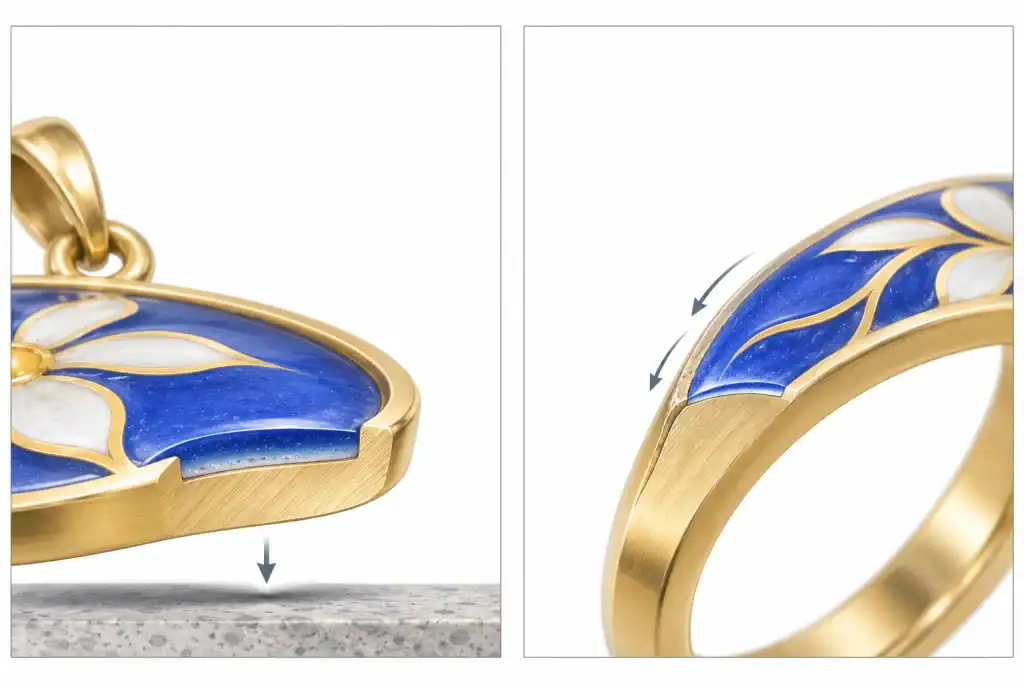
If a repaired area chips again, that does not prove the repair was poor: a fresh impact may be enough to break sound enamel. But repeated loss in the same place deserves a closer look at the design beneath it. In the documented restoration discussed earlier, gold on a ring’s shoulders had worn so thin that cutting new recesses for enamel was judged too risky; the owner and jeweler left those areas alone. Before paying for another color fill, ask “Was this a new impact, or is the enamel at this edge repeatedly exposed or poorly supported?” The answer changes whether gentler use is enough or the repair plan itself needs to change.
Care should follow the material actually used in the repair. Avoid bending a ring or bracelet with fired glass enamel, and take it off for activities where it is likely to be knocked. A resin or lacquer fill may need different cleaning precautions, so ask the repairer how to care for this piece. If a new crack or lifted edge appears, stop wearing it and have it assessed before trying another patch. The goal is to reduce repeat damage, not to promise that repaired or newly made enamel can never chip.
A chipped enamel piece is not automatically beyond repair, but a neat color match is not the same as fixing the cause of the damage. If the surrounding enamel and metal are sound, the choice may be between keeping a visible mark and accepting a fill that could still be noticeable. If the edge is lifting, the metal is damaged or the same area keeps chipping, ask for that problem to be assessed before paying for more color. Before approving the work, agree on what will be secured or replaced, what material will be used, what may remain visible and the total cost. The right result is one that suits the piece and the way you wear it—not a promise that a repaired surface will look new forever.
To Sum Up: What Should You Do With a Chipped Enamel Piece?
For the phoenix pendant, finding the orange fragment is a useful start, but it does not tell us whether gluing it back is safe or whether the repair will look seamless. The decisions in this article follow a simpler order:
- Save what you have. Photograph the damage and keep any fallen fragment. If enamel around the gap is lifting or cracked, stop wearing the piece until it has been assessed.
- Find out what is damaged. Ask whether the color is fired glass enamel, resin or lacquer, and whether the surrounding enamel and supporting metal are sound. A small-looking chip can involve more than missing color.
- Choose the result you want. Securing original enamel, adding a color fill and rebuilding fired enamel are different jobs. Decide whether preserving the original surface or making the gap less visible matters more to you; ask what each option cannot restore.
- Compare the whole repair, not just the price. Get the proposed material, work, visible result, risks and total cost in writing. Compare that result with leaving a stable mark or, if a comparable piece exists, replacing it. Personal value may change that decision.
- Check the result and protect it. Compare the finished piece with your original photos and the agreed plan, then ask for care instructions for the material actually used. A repaired surface can be chipped again, just as newly made enamel can.
The best answer is the one that addresses the damage beneath the color and gives you a result you understand and want to wear.
Sources
- Victoria and Albert Museum, “A Guide to Metalworking Techniques”.
- The Enamelist Society, “Useful Links,” section “Enamel Repair and Other Service Links”.
- Royal Collection Trust, “A Jewelled Necklace with a Hidden Treasure”.
- Institute of Conservation (Icon), “Sarah Peek Conservation”.
- Guild of Enamellers, “Restoration/Conservation of Enamel Jewellery”.
- Gemological Institute of America (GIA), “Tips on Caring for Jewelry”.
- Canadian Conservation Institute, “Basic Care – Glass and Ceramic Objects”.
- Canadian Conservation Institute, “Care of Ceramics and Glass,” CCI Notes 5/1.
- Jewelers of America, “Repairs”.
- Patsy Croft, “Enameling on 18k Gold and Repairing Enamel Jewels,” Alohi Lani Designs (2010); a documented locket repair.
- Ruth Mary Jewellery, “What Happens When Jewellery Repair Goes Wrong?” (2025); a documented ring repair and redesign.
- Enamel Restoration, “FAQ”; a repairer’s account of color matching and why both pieces of a pair are useful.
- Honolulu Jewelry Company, “Jewelry Repair”; that shop’s posted epoxy and glass re-enameling prices, checked November 15, 2026.
- Jewelers Mutual Group, “Jewelry Repair Intake Checklist: What to Document Before Work Begins”; repair intake, approval of additional work and pickup inspection.
- Tiffany & Co., Jewelry Care and Gemstone Enhancement Guide; impact and enamel care.
- Rebecca D. Enamel, “Taking Care of Your Vitreous Enamel Jewelry”; maker guidance on impact, bending and storage.
- Reddit r/jewelrymaking, “Anyone Know What I Can Do to Restore the Enamel on My Ring? Normal Jewelry Repair Places Won’t Do It” (2026); the owner’s experience and differing suggestions, not repair instructions.
- Reddit r/jewelers, “How Do Enamel Pieces Wear Over Time?” (2026); one jeweler’s experience with exposed enamel edges, not a failure-rate study.