

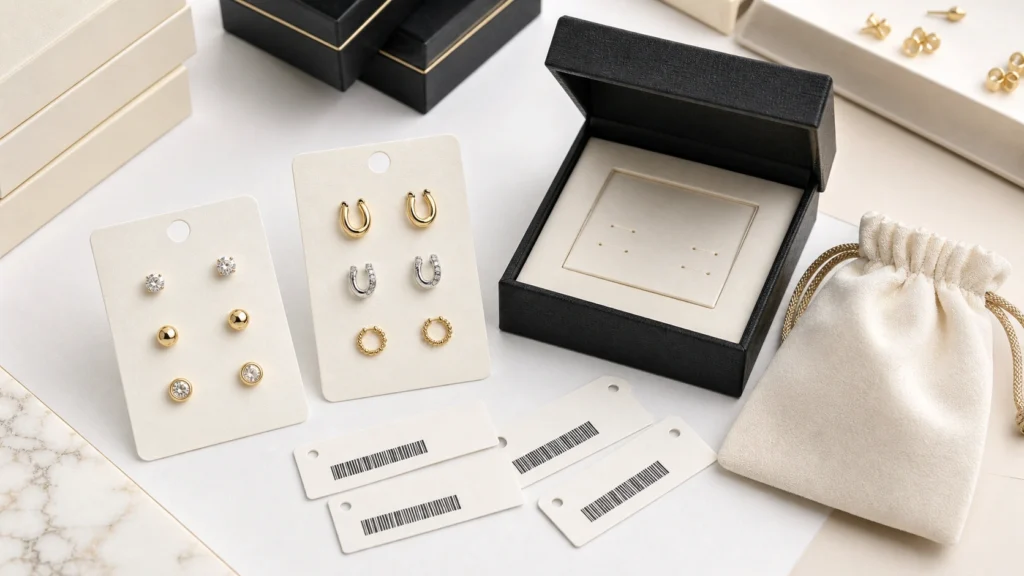
Use an earring card when low bulk, display, and SKU visibility matter most. Add a pouch for surface protection or a box for stronger restraint, gifting, and higher presentation value. The best private label earring packaging is the smallest complete system that holds the pair correctly through packing, shipping, display, and customer opening.
Choose the Pack by Its Main Job
Decide which task must not fail. A wholesale card may need fast picking and clear SKU data. An ecommerce pack may need stronger movement control inside a mailer. A gift-led product may need a box that presents the pair in the correct position.
Packaging usually has four separate jobs:
- hold the left and right earrings in the right place;
- prevent contact, bending, snagging, or surface damage;
- carry brand and product information;
- fit the outer pack used for storage and shipping.
One item does not have to perform every job. A card can hold the pair, a soft sleeve can protect the surface, and a shipping carton can handle external load.
Cards, Boxes, and Pouches Solve Different Problems
| Format | Best use | Main limitation |
|---|---|---|
| Earring card | Retail display, low pack volume, clear pair and SKU view | Limited crush protection; holes and card strength must suit the earring |
| Pouch | Soft surface contact, compact gifting, reusable presentation | Weak position control unless paired with a card or insert |
| Rigid or folding box | Gifting, stronger restraint, structured presentation | More volume, cost, storage space, and insert development |
| Card plus pouch | SKU control with added surface protection | More packing steps and material parts |
| Card or insert inside box | Strong display position and better outer protection | Fit must be checked as a full system, not as separate components |
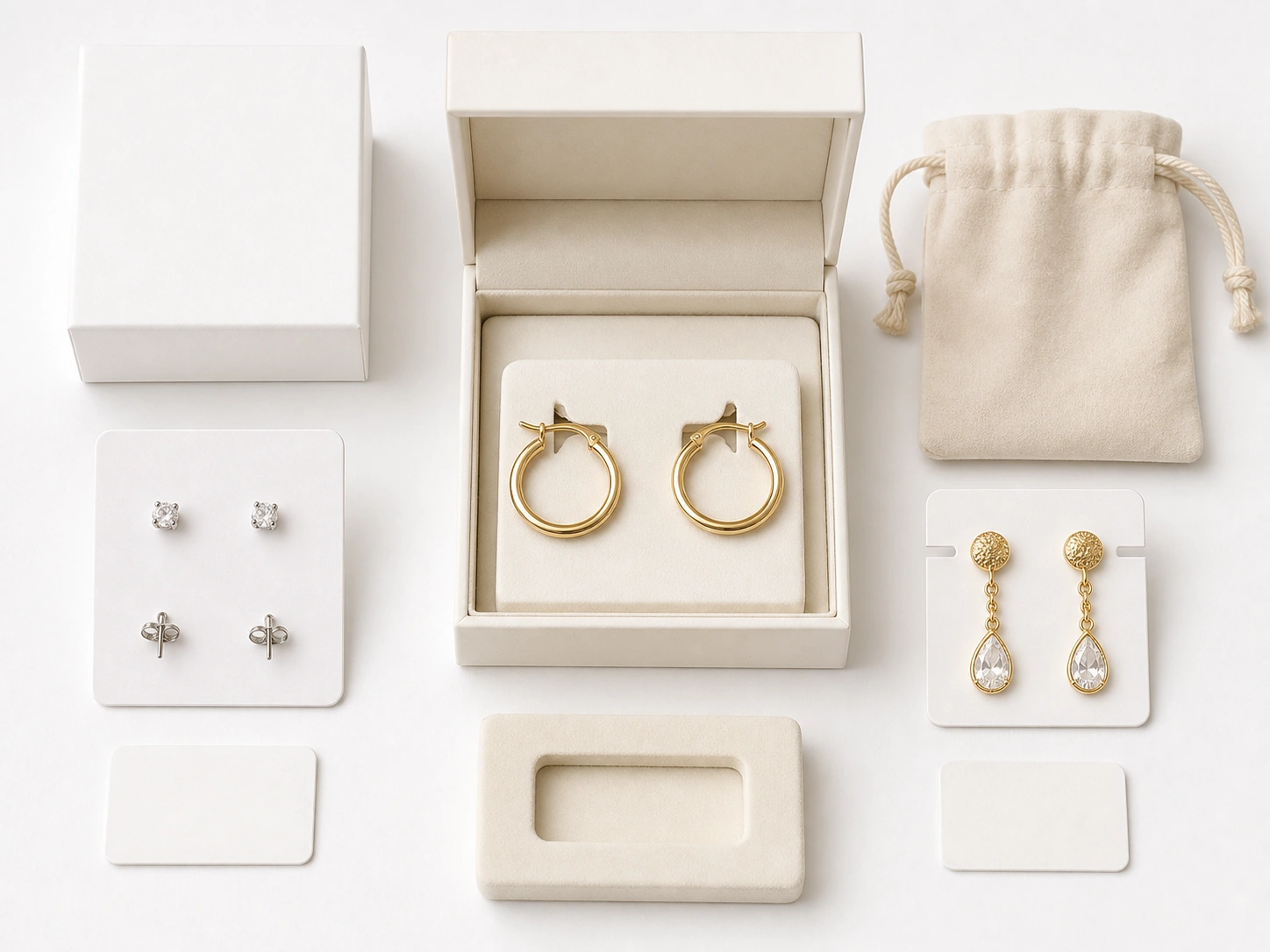
Choose only the layers that solve a real handling need. Extra tissue, foam, ribbon, or cards can raise pack volume and labor without improving product control.
Design Retention Around the Earring
The pack must match the earring architecture. A stud card needs holes that do not bend the posts or let the faces collide. The backs should remain attached and easy for the customer to remove.
A hoop may need slots, ties, or an insert that prevents the pair from turning and loading the hinge. Large hoops need clearance from the box wall. A drop or hook style should not tangle, pull through the card, or swing against stones and plated surfaces.
Check every contact point:
- post against card and back;
- hinge or latch against insert;
- hook against slot or hole;
- stone or raised logo against the opposite earring;
- plated face against ties, foam, paper, and pouch fabric;
- earring edge against the box wall during movement.
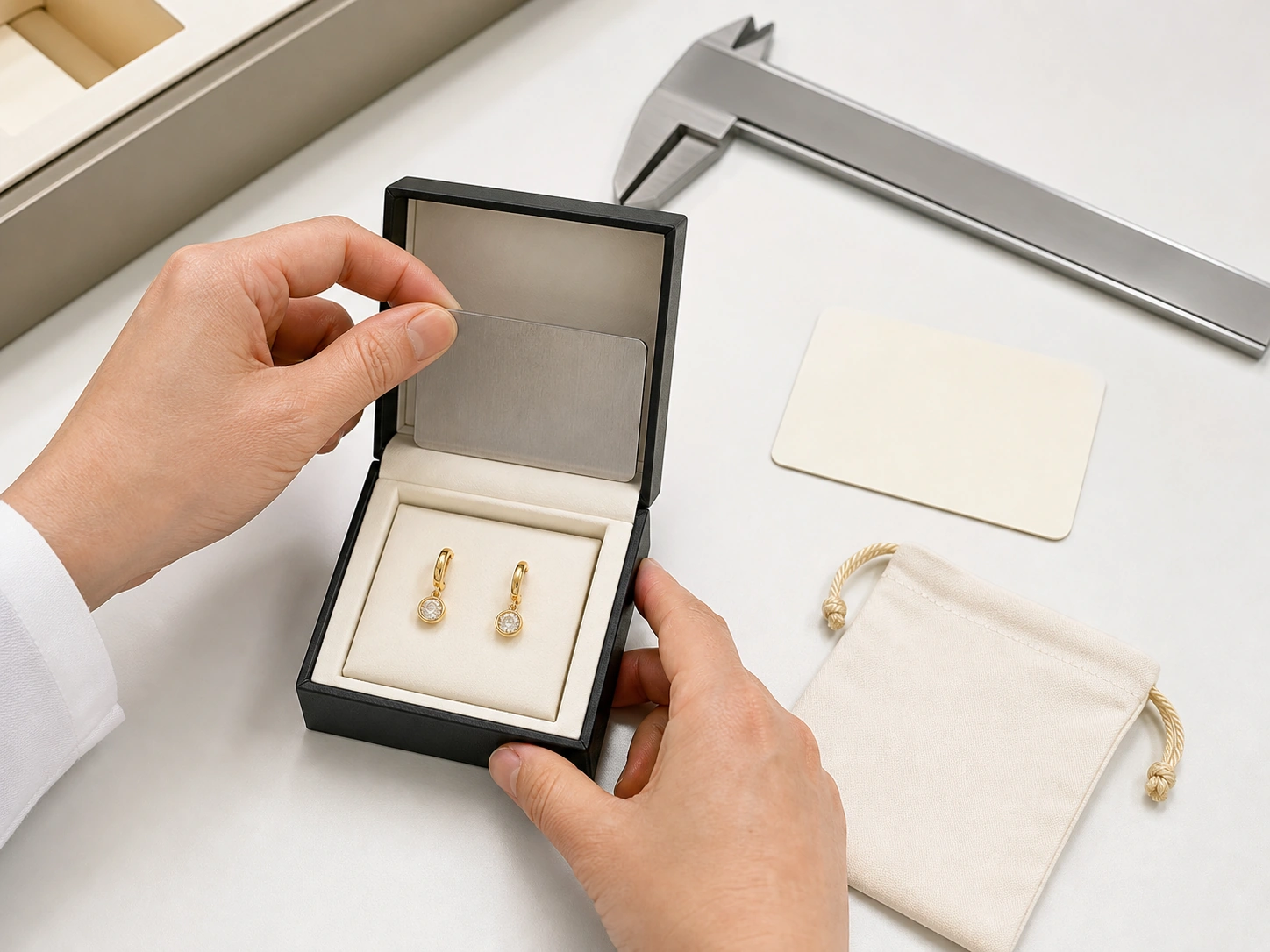
Use the actual finished pair for fit approval. A drawing may not show how the earring hangs, rotates, or presses into the insert.
Keep Artwork, SKU Data, and Barcodes Separate
Brand artwork changes less often than product data. Keep the logo, colors, and fixed copy in one controlled file. Place variable fields such as SKU, finish, size, country or market data, and barcode content in a separate data source or label layer.
Before artwork approval, define:
- the owner of each code and product field;
- the printed location and quiet space around a barcode;
- the smallest pack variant that must carry the label;
- whether labels are applied by the factory, warehouse, or retailer;
- how a revised SKU or barcode file replaces the old version.
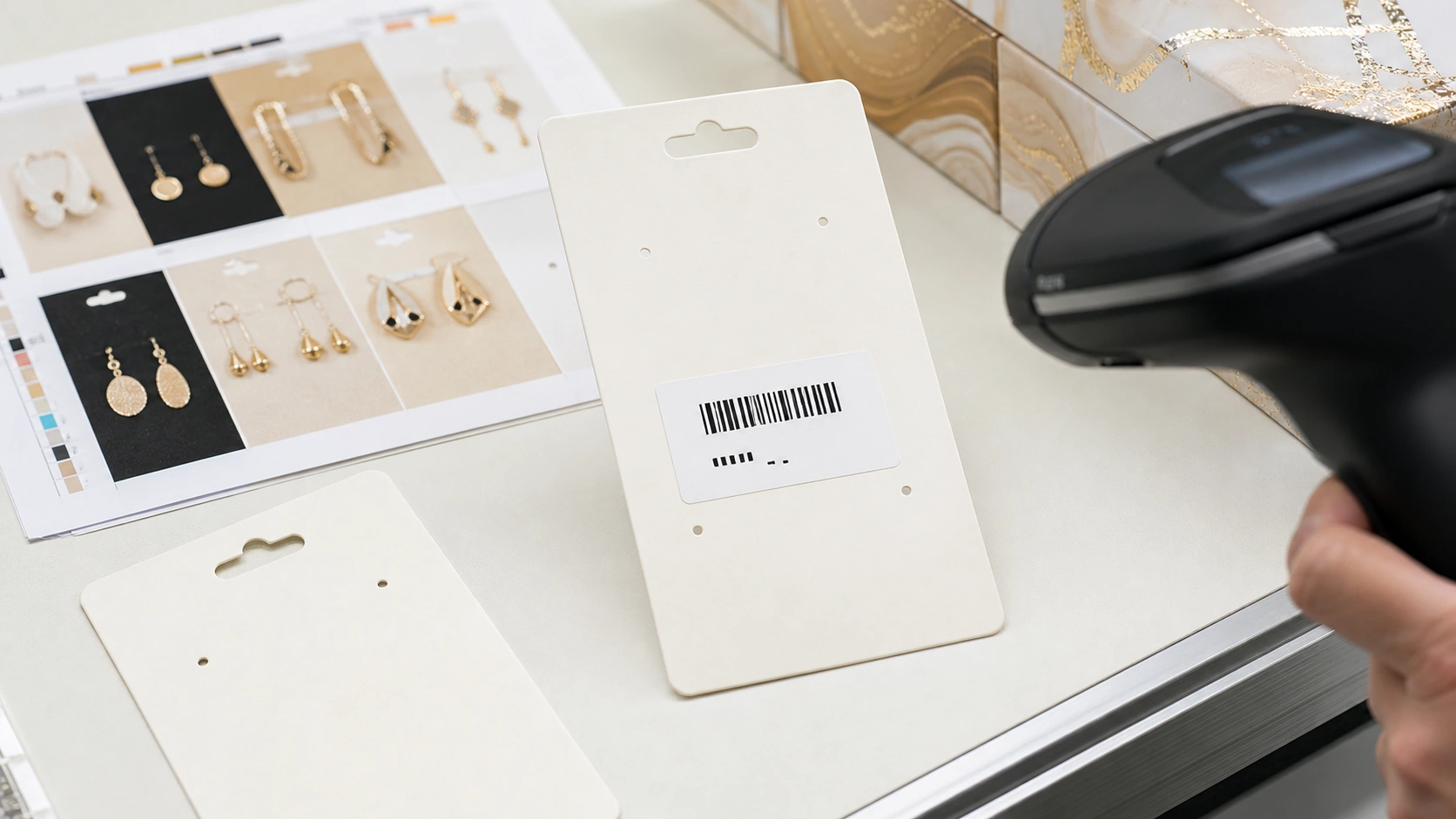
Print and scan a real label on the chosen material and finish. A code that works on screen may fail after scaling, coating, lamination, curve, or poor contrast. The buyer should confirm the data and channel requirements rather than asking the packaging supplier to invent them.
Approve the Complete Pack in Real Handling
Review a packed sample, not an empty box or flat artwork proof. Pack the pair using the intended steps and check whether staff can do so without forcing posts, hooks, or hinges.
Then move the pack through five states:
- closed and handled on the packing bench;
- stacked or placed in the inner carton;
- moved inside the shipping carton;
- opened in the intended display or customer orientation;
- closed again if returns, inspection, or wholesale repacking may occur.
Look for shifted pairs, bent posts, loose backs, surface rub, tangled drops, label damage, and inserts that lift or collapse. Record the approved product, insert, card or box, pouch, label, and packing direction as one configuration.
Jinnuo Jewelry’s verified scope includes custom packaging alongside custom jewelry development and production. Exact materials, dimensions, print methods, quantities, timing, and channel requirements need project review. Send the earring sample, pack goal, artwork, SKU list, and shipping format through the custom jewelry quote form.