Use OEM jewelry manufacturing when your brand brings the product definition and needs the supplier to develop or produce against it. Use ODM when the supplier brings an existing design platform that your brand selects and modifies within agreed limits. The right choice depends on the asset you start with, the decisions your team can own, the changes you need, and the commercial rights written into the agreement.
OEM does not automatically guarantee exclusivity or file ownership. ODM does not automatically guarantee a lower MOQ or shorter lead time. Jinnuo Jewelry supports verified OEM, ODM, OBM, and private-label models, but the boundary must be defined for each project.
Choose by the Asset You Bring to the Project
Classify the job by its starting asset:
- OEM route: the buyer supplies an original drawing, CAD, detailed specification, approved sample, or clearly owned product concept.
- ODM route: the supplier supplies an existing design, catalog style, component platform, or adaptable product concept.
- Hybrid route: the buyer starts from a supplier platform but commissions meaningful new construction or design work.
A logo, new finish, stone color, or package may personalize an ODM item without changing its base design. Conversely, asking a supplier to create CAD does not automatically make the supplier the design owner. The origin and rights must be documented.
Define the Decision Boundary Before Sampling
Create a responsibility table for product geometry, material, stones, finish, components, logo, packaging, testing, labeling, sample approval, and bulk release. Name who proposes, who decides, and who supplies evidence for each line.
OEM usually gives the buyer more product decisions. That control also requires a clearer brief and faster approval discipline. ODM can reduce some development decisions because the base platform already exists. The buyer still owns brand claims, destination-market requirements, variant selection, and final commercial approval.
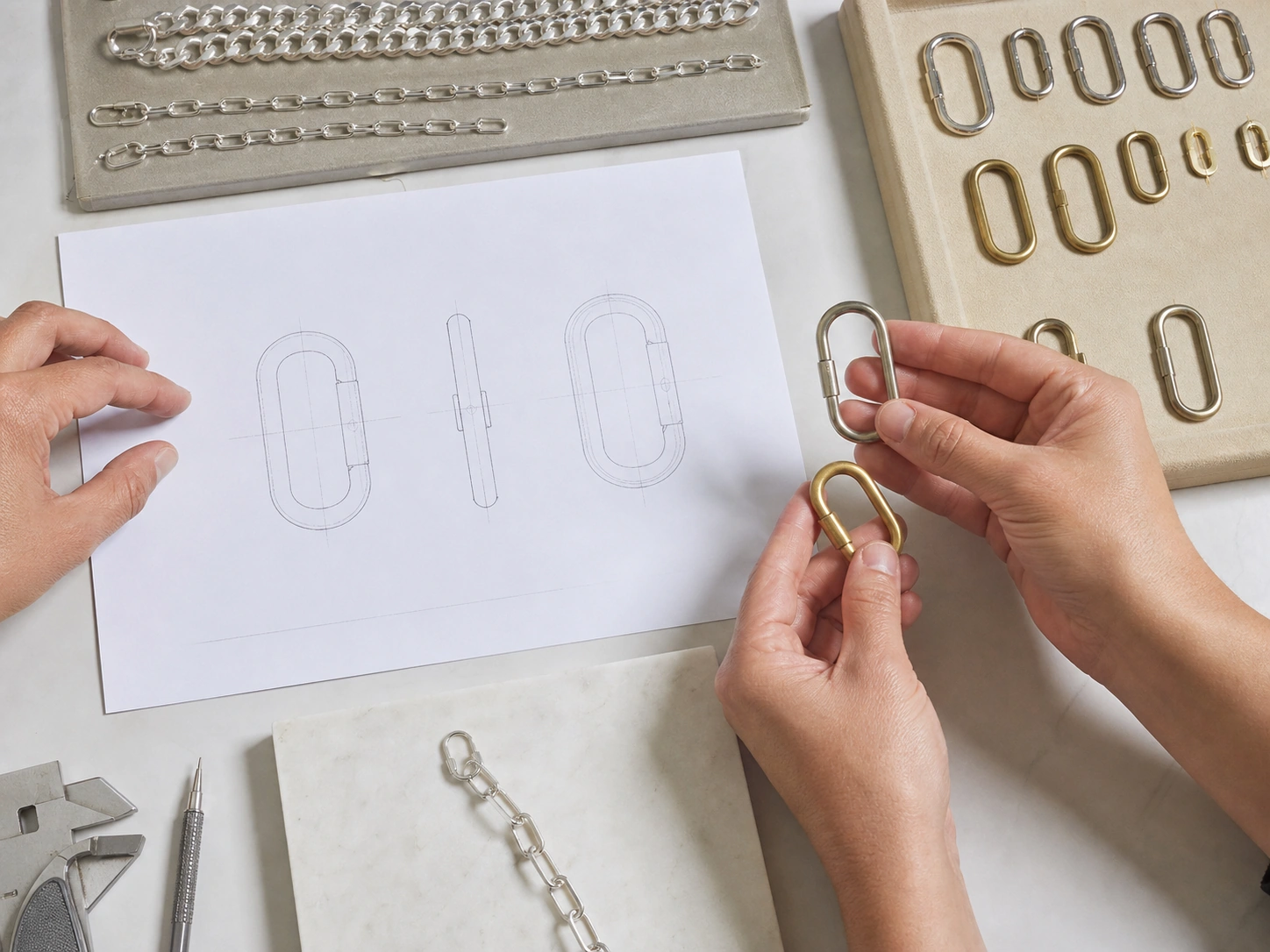
The useful question is not “Who designed it?” It is “Who has authority to approve this characteristic, and what record proves the decision?”
Separate Ownership from Manufacturing Work
Put these terms in writing before paying for development or tooling:
- Ownership or permitted use of drawings, CAD, prototypes, molds, tools, and photography.
- Access to editable source files and production data.
- Whether the base design or modification is exclusive, non-exclusive, or limited by market or time.
- Who may reuse tooling, components, or derivative designs.
- What happens to files and tools when the relationship ends.
These are commercial and legal matters, not automatic consequences of the words OEM or ODM. Obtain qualified legal advice for the relevant jurisdiction. A supplier statement such as “custom” is not a substitute for an agreement.
Compare Change Cost, Not Just Launch Speed
ODM can be quicker when the chosen base design, tooling, components, and finish route are actually ready. A structural change can remove that advantage. OEM can take more development because the product definition must be created and proven. It can also be efficient when the buyer supplies complete, manufacturable files and fast decisions.
For each route, ask what a change reopens. A logo edit may affect one operation. A new stone size can affect CAD, setting, sourcing, and inspection. A new material can change the whole production route.
Compare quotes only after defining permitted modifications, sample rounds, tooling scope, units by variant, packaging, approval gates, and delivery point. Exact MOQ, price, and schedule remain supplier- and project-specific.
Use OEM and ODM by SKU Role
A brand does not need one model for every product. ODM may suit accessory styles, early category tests, or seasonal color programs. OEM may suit signature products whose geometry and identity justify deeper development. A hybrid route may adapt a proven platform while adding controlled brand-specific elements.
Label the manufacturing model and rights for every SKU in the product record. If a successful ODM item later inspires an OEM design, do not assume the new version is free of the original platform’s rights. Review the design and agreement.
For a Jinnuo Jewelry discussion, provide the starting assets, intended changes, target materials, rights questions, variant plan, packaging, destination market, and approval owner. The feasibility review can then define whether the project is OEM, ODM, private label, or a documented hybrid.

Carol
Carol is a jewelry manufacturing expert with first-hand experience across materials, surface finishes, production processes and quality control. He brings critical thinking and rigor to his work, questioning common assumptions and testing them against industry standards and real production results. He looks at every issue from the point ofview of the people who buy and wear jewelry, turning technical details into clear, practical answers to real-world problems.