How to Start a Private Label Earring Collection

Article Contents

Launching a private label earring collection requires more than choosing several attractive designs and asking a factory for a price. A commercially viable collection must connect the brand’s target customer, sales channel, price position, product architecture, materials, manufacturing method, packaging, and approval standards.

A custom earrings manufacturer can review design references, recommend a suitable development route, and identify technical questions before sampling.

Quick Answer: What Do You Need to Start a Private Label Earring Collection?

To start a private label earring collection, first define the target customer, sales channel, price position, and intended number of styles and variants. Then prepare design references, approximate dimensions, material and plating preferences, closure requirements, logo files, packaging needs, and target-market information.

A jewelry manufacturer can use this brief to review feasibility, recommend OEM, ODM, or existing-design customization, and prepare samples. Bulk production should begin only after the structure, finish, branding, packaging, and written product specifications have been approved.

Start with a Commercial Brief, Not Individual Earring Designs

Define the Customer and Sales Channel

Start by describing who will buy the earrings and where the products will be sold. A collection for a minimalist online brand may require compact packaging, clear product photography, and fulfillment-friendly dimensions. A boutique retail collection may need earring cards designed for display hooks, while a premium gifting range may justify boxes or pouches.

The channel also affects SKU labels, product information, display format, and the level of protection needed for delivery.

Establish the Product and Price Positioning

Decide whether the range will be positioned as accessible fashion jewelry, premium fashion jewelry, or fine jewelry. This decision influences the suitable base material, stone selection, plating, finishing level, packaging, and acceptable product complexity.

Use the target retail position to establish practical boundaries while accounting for packaging, tooling, testing, freight, duties, and channel margins.

Set the Scope of the First Collection

Count both styles and sellable SKUs. One hoop design offered in three plating colors may represent one style but three inventory units. Adding multiple sizes, stone colors, and packaging versions can multiply the total SKU count quickly.

A focused launch is easier to sample, approve, stock, and replenish. Collection size should reflect the channel, budget, merchandising plan, and operational capacity.

Planning DecisionQuestions to AnswerWhy It MattersInformation for the Manufacturer
Target customerWho will wear the earrings and in what situations?Guides style, comfort, size, and positioningCustomer profile and use cases
Sales channelOnline, boutique, wholesale, gifting, or marketplace?Affects packaging, labels, and protectionChannel and fulfillment requirements
Product levelFashion, premium fashion, or fine jewelry?Narrows material and finish optionsTarget positioning and price range
Collection scopeHow many styles, colors, and sizes?Controls sampling and inventory complexityPreliminary style and SKU list
Target marketWhere will the products be sold?Influences claims, testing, and labelingCountries, age group, and retailer rules

Build a Cohesive Earring Collection Architecture

A strong collection does not require every product to look identical. It needs a recognizable visual language and a deliberate balance of commercial roles.

Assign a Role to Each Style

Use core styles for regular wear, entry styles for accessibility, and statement styles for visual identity. This balance prevents the range from becoming either too technically demanding or too generic.

A core stud or small hoop may support regular sales and replenishment. A more complex dangle design may be better suited to campaign photography, social media, or seasonal merchandising. Each style should have a clear purpose within the assortment.

Balance Product Types around the Customer

Studs, hoops, huggies, and dangle earrings involve different decisions about weight, closures, dimensions, storage, and packaging. A brand does not need every category. It should choose the mix that best fits the customer and channel.

A travel-oriented range may emphasize secure huggies and compact studs, while a fashion-led boutique line may use dangle earrings as visual anchors. Brands can compare stud earrings vs hoop earrings before finalizing the assortment.

Control Colorways and Shared Components

Offering gold, silver, and rose-gold finishes may broaden customer choice, but every additional finish can affect sampling, photography, labels, inventory, and replenishment.

Shared findings, stones, charms, or plating colors can make a collection more coherent and reduce unnecessary variation. The aim is controlled consistency rather than making every design look the same.

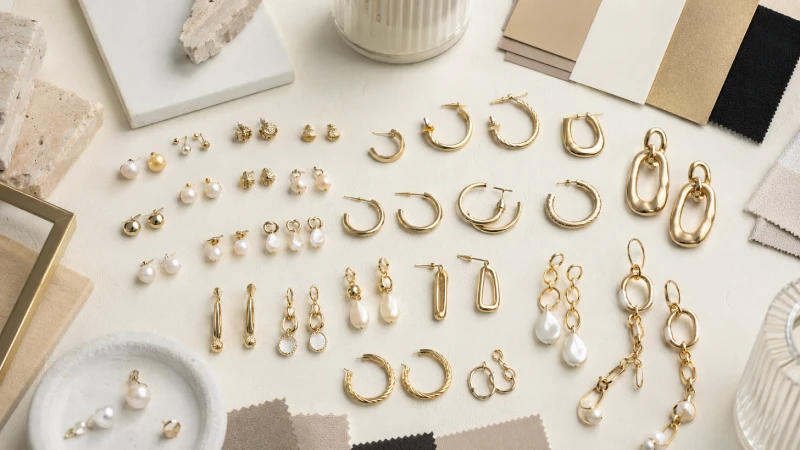
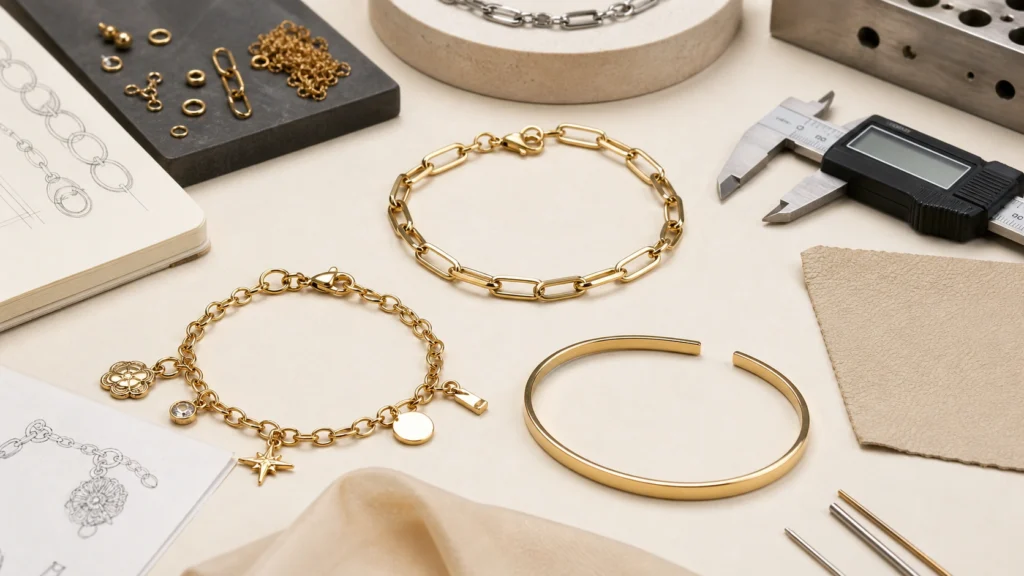
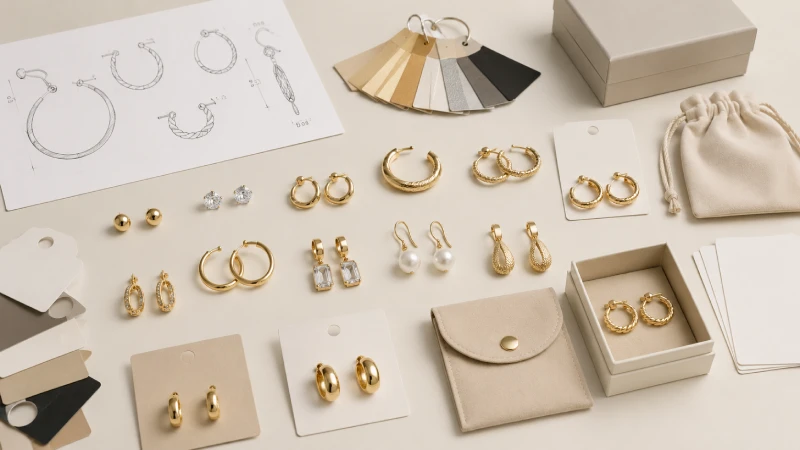
Private label earring collection planning board with coordinated studs, hoops, huggies, and dangle earrings

Choose the Right Development Route

Not every private label collection needs to begin with completely original tooling. The best route depends on design ownership, launch timing, development resources, and the required level of differentiation.

Development RouteBest ForBuyer Input RequiredAdvantagesTrade-Offs
OEM from an original designBrands with a defined concept or technical designDetailed references, dimensions, structure, and finish requirementsStrong differentiation and design controlMore development work and revision management
ODM developmentBrands with a clear direction but incomplete technical filesCustomer profile, design direction, performance, and positioningManufacturer support with producibilityThe brand still needs a clear brief and approval process
Existing-design customizationFaster launches or lower development complexitySelected base style, plating, stones, logo, and packagingReduced tooling and structural uncertaintyLower exclusivity and narrower modification scope

OEM Development

OEM suits brands with original sketches, CAD files, or a defined concept. It offers greater control over the product form and brand identity but may require new molds, custom components, structural development, and additional sample revisions.

ODM Development

ODM suits brands with a clear customer and aesthetic direction but incomplete technical files. The manufacturer can support decisions involving structure, dimensions, materials, findings, and production feasibility.

ODM should not be treated as a substitute for brand strategy. The buyer must still explain how the collection should be positioned and used.

Existing-Design Customization

Existing designs may be adapted through plating, stones, charms, logos, dimensions, or packaging. This route can reduce structural uncertainty and development complexity, but it may provide less differentiation than a fully original product.

Brands should confirm which features are genuinely customizable and whether any existing molds or components limit the proposed changes.

Prepare a Manufacturer-Ready Development Brief

Provide Design References and Dimensions

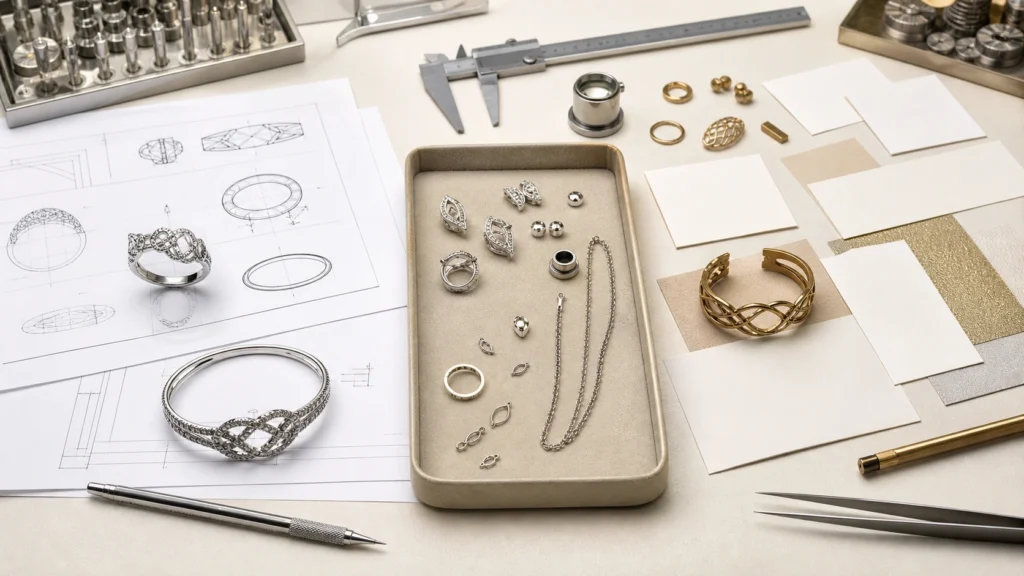
Send sketches, front and side views, CAD files, photographs, physical samples, or annotated references. Explain whether each reference concerns the silhouette, texture, closure, stone layout, proportion, or surface finish.

Include approximate dimensions and wearing orientation so the manufacturer can assess scale, likely weight, connections, and structure. A drawing without dimensions could represent either a small stud or a large statement earring, resulting in very different manufacturing assumptions.

Define Materials, Finishes, and Skin-Contact Parts

Identify the preferred base material, post, back, hook, stone, plating color, texture, and protective finish. When the exact material is undecided, describe the required outcome, such as lower weight, premium positioning, or better resistance to everyday wear.

A more detailed comparison of brass, stainless steel, and sterling silver is available in best materials for custom earrings. At this stage, the main objective is to connect the material with the brand position, product structure, finish, skin-contact parts, and target market.

Specify Closures, Weight, and Wearability

State whether the design requires a push back, screw back, hinged hoop, lever back, hook wire, huggie closure, or clip-on structure.

Ask the manufacturer to review moving parts, post alignment, weak connection points, and weight distribution. Comfort depends on dimensions, balance, closure, wearing time, and the intended customer rather than one universal weight limit.

Include Branding, Packaging, and Market Information

Provide vector logo files and proposed logo locations. Small logos may not remain legible with every engraving, stamping, casting, or printing method, so size and placement should be reviewed early.

The brief should also identify:

  • Target countries or regions
  • Intended wearer and age group
  • Sales channel
  • Packaging style
  • SKU structure
  • Barcode requirements
  • Material or care information
  • Retailer-specific testing or documentation requests
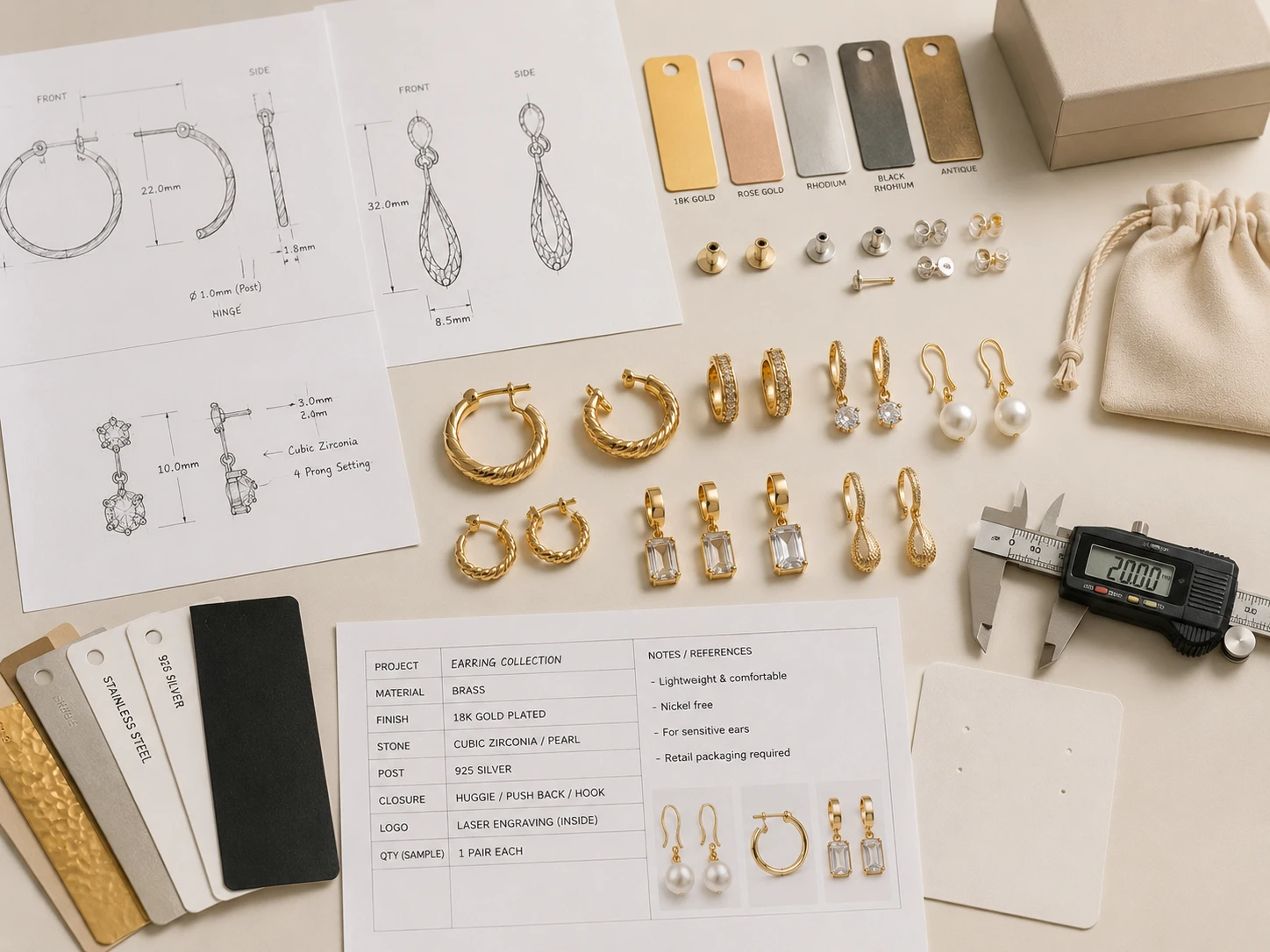
Custom earring development brief with sketches, dimensions, materials, closures, and plating references

Review Feasibility before Requesting a Final Quote

A reference image is not a complete quotation basis. Before a manufacturer can calculate a reliable production price, it may need to confirm dimensions, material, expected weight, component construction, stone setting, plating, logo method, packaging, and order configuration.

The feasibility review should cover structural stability, closure function, stone settings, polishing and plating access, and packaging fit. New molds, custom findings, complex textures, hand assembly, dense stone layouts, or special packaging should be identified before sampling.

When comparing suppliers, confirm that quotations use the same materials, components, plating, packaging, tooling, and testing assumptions. Compare the complete specification rather than only the headline unit price.

A lower quotation may exclude items such as:

  • Mold or tooling charges
  • Earring posts and backs
  • Stones or decorative components
  • Logo application
  • Product cards or boxes
  • Barcode and SKU labels
  • Testing requirements
  • Special protective packaging

Have an Earring Collection Concept but Not a Final Technical Design?

Send your sketches, reference images, target materials, and sales-market requirements for an initial feasibility review.

Review My Earring Collection Brief

Plan Sampling as a Series of Approval Gates

Sampling should reduce uncertainty in stages. Treating the first physical sample as the final production standard can cause avoidable revisions later.

Approve the Structure before Cosmetic Details

First evaluate the size, proportion, wearing direction, closure function, post position, connections, weight distribution, and stone security.

Once the structure is workable, the project can move to plating color, surface finish, logo appearance, and packaging fit. The complete sequence is explained in the custom earring sampling process guide.

Review Samples as a Collection

Place the samples together instead of reviewing each product in isolation. Compare:

  • Overall design language
  • Relative product scale
  • Plating consistency
  • Stone and color coordination
  • Logo proportions
  • Product roles
  • Packaging presentation

An individual design may be acceptable on its own but look inconsistent beside the rest of the collection.

Document Revisions and Approvals

Record the product code, version, requested change, measurement, finish reference, supporting image, and whether resampling is required.

Consolidated comments are more reliable than instructions scattered across emails and messaging applications. The approved master sample should always be supported by a written specification.

Approval StageWhat the Buyer ReviewsWhat Must Be RecordedRisk of Early Approval
Concept or CADProportion, structure, dimensionsVersion, measurements, componentsA visually attractive but unproducible design
Physical sampleFit, closure, weight, assemblySample code and requested revisionsStructural problems discovered after finishing
Finish samplePlating, texture, stones, logoFinish reference and accepted appearanceInconsistent interpretation during production
Packaging sampleFit, protection, card or box layoutPackaging files, labels, placementDamage, movement, or incorrect retail information
Production standardAll product and packaging detailsFinal specification and approved referenceBulk goods produced to an outdated version
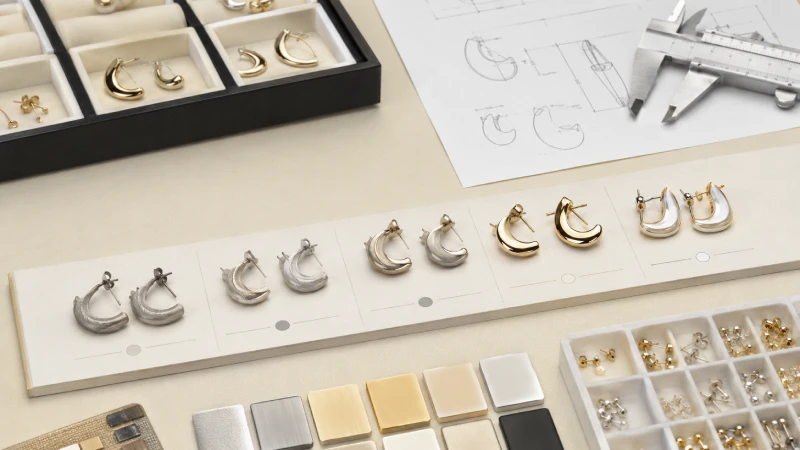
Private label earring samples showing structural review, finish approval, and final production sample

Confirm Market, Material, and Product-Claim Requirements Early

Compliance planning starts with the destination market, product description, intended wearer, and sales channel. Requirements can differ by country, age group, retailer, and product construction, so brands should verify the current rules that apply to their specific products.

For earrings sold in the European Union, the consolidated EU REACH Regulation, Annex XVII includes nickel-release restrictions for post assemblies inserted into pierced ears and for articles intended for direct and prolonged skin contact.

This is why material composition, plating, skin-contact components, and the applicable test scope should be considered together rather than relying only on a generic “nickel-free” description.

For the United States, the FTC Jewelry Guides explain how businesses should avoid deceptive claims concerning precious metals, gemstones, and related jewelry descriptions.

Product names, plating statements, fineness claims, and disclosures should match the actual product construction rather than being selected only for marketing purposes.

Children’s earrings require separate attention. The U.S. Consumer Product Safety Commission’s jewelry guidance explains that children’s jewelry must meet applicable children’s product requirements, including requirements concerning total lead content and surface coatings.

A brand should not assume that a testing plan developed for adult fashion jewelry automatically covers earrings intended for children.

Material specifications, supplier declarations, test reports, and legal compliance are not interchangeable. Confirm the required evidence for the destination market, intended age group, retailer, and sales channel.

Design Packaging around the Sales Channel

Packaging is part of product development, not a task to postpone until the earrings have been completed.

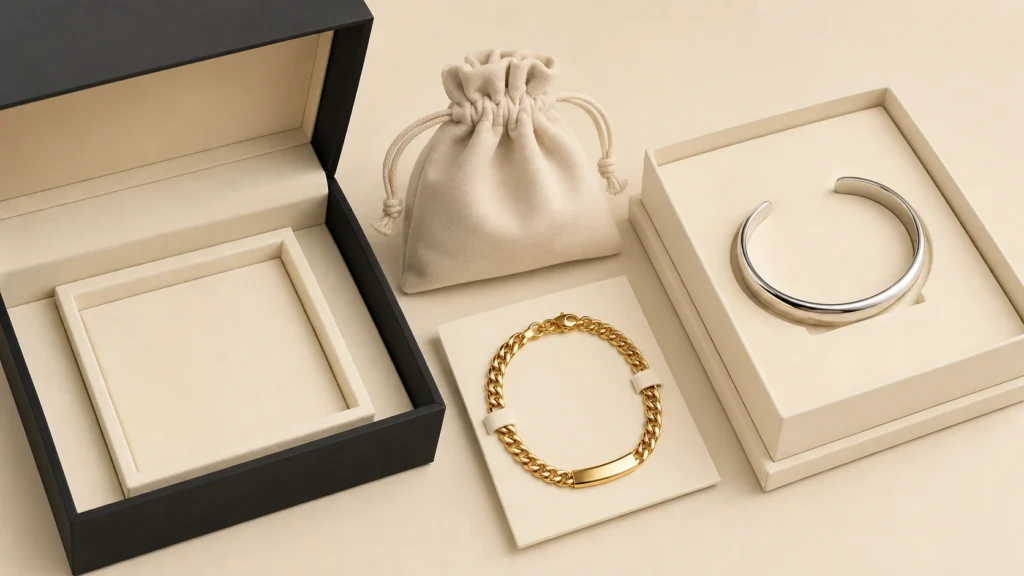
An earring card may suit compact retail display and lower shipping volume. A pouch can protect the finish and support a softer brand presentation. A box may work for gifting or premium positioning but adds dimensions, components, and transportation considerations.

The detailed trade-offs between cards, boxes, pouches, and labels are covered in private label earring packaging.

Test the packaging with finished samples for:

  • Earring-post protection
  • Product movement
  • Chain or dangle tangling
  • Surface abrasion
  • Card stability
  • Logo visibility
  • Barcode placement
  • Outer-carton protection

Brands also need a clear SKU and product-identification system. GS1 explains that a Global Trade Item Number is used to uniquely identify trade items that may be priced, ordered, or invoiced.

Different sellable variants may therefore require separate identification depending on the brand’s sales channel and the applicable GS1 rules.

Confirm who will supply the barcode, product name, material statement, care instructions, country or importer information where applicable, and final label artwork. These details should be approved before packaging is ordered in bulk.

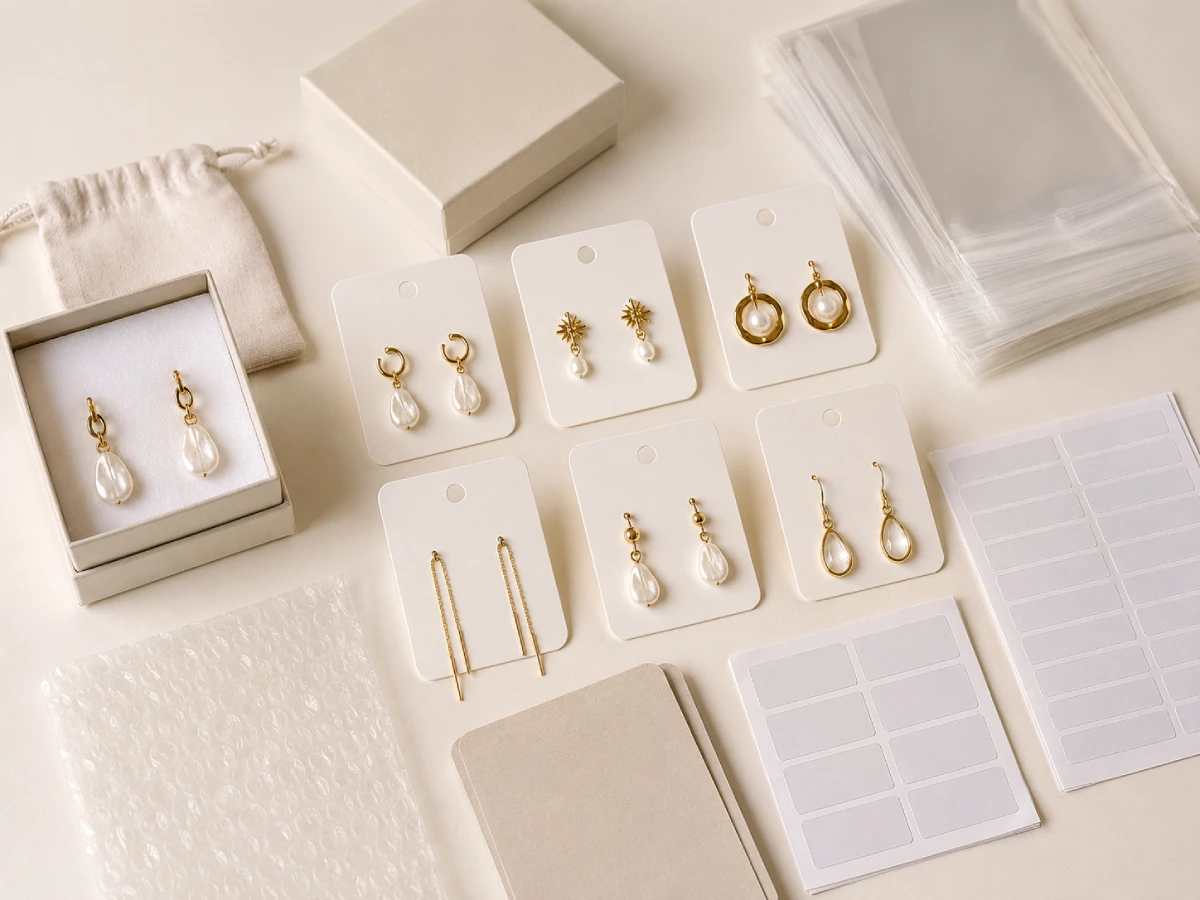
Private label earring packaging with cards, boxes, pouches, SKU labels, and barcode preparation

Lock the Production Standard before Bulk Manufacturing

Bulk production should begin only after the brand and manufacturer have aligned on a final product specification.

The specification should identify:

  • Product code and version
  • Dimensions
  • Base material
  • Earring posts and backs
  • Findings and connections
  • Plating and surface finish
  • Stones or decorative parts
  • Logo position and method
  • Packaging components
  • SKU and barcode labels
  • Approved samples and artwork

The bill of materials should cover the earring body, findings, stones, cards, boxes, pouches, and labels to reduce substitution and omission risks.

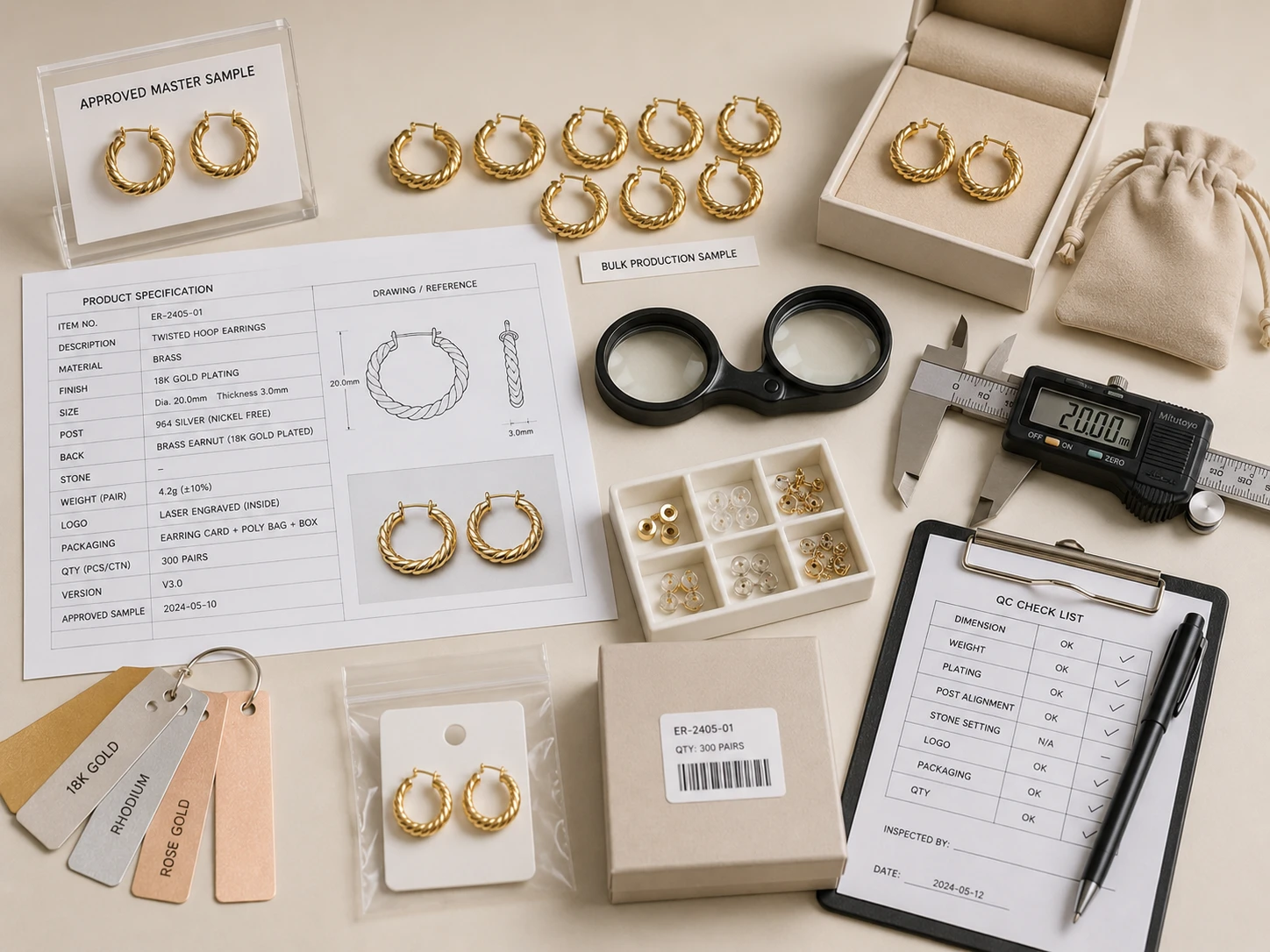
Define the critical production checks before manufacturing begins. Depending on the design, these may include component dimensions, closure operation, post alignment, surface preparation, plating appearance, stone security, left-right pairing, logo position, packaging, SKU labels, and quantity verification.

A detailed explanation of manufacturing stages is available in how custom earring production works. The key principle is that the approved sample, written specification, bill of materials, packaging files, and revision history must all point to the same product version.

Custom earring production standard review with approved sample, specifications, packaging, and quality inspection tools

Build a Realistic Launch Timeline around Dependencies

Private label projects rarely follow one fixed lead time because the sequence depends on design complexity, sample revisions, tooling, material availability, packaging, testing, order size, and transportation.

A practical development sequence is:

Commercial brief → Collection architecture → Feasibility review → CAD or tooling → Structural sample → Finish approval → Packaging approval → Production specification → Bulk production → Final inspection

Common causes of delay include:

  • Changing dimensions after tooling
  • Adding SKUs during sampling
  • Submitting contradictory revision comments
  • Changing materials or plating late
  • Starting packaging development too late
  • Missing barcode or label data
  • Discovering market requirements after production planning
  • Approving bulk production without a final master sample

Allow decision time for internal sample review, artwork approval, compliance verification, freight, customs, and warehouse intake. The actual schedule should be confirmed after the manufacturer has reviewed the design and project requirements.

What to Send a Manufacturer before Requesting a Quote

Prepare as much of the following information as possible:

  • Brand, target customer, and price position
  • Intended sales channel and destination market
  • Design sketches, reference images, CAD files, or physical samples
  • Approximate dimensions and wearing orientation
  • Preferred material or required performance
  • Plating color and surface finish
  • Closure and skin-contact component requirements
  • Stones, charms, chains, or decorative parts
  • Logo file and preferred placement
  • Packaging, label, SKU, and barcode requirements
  • Number of styles and sellable variants
  • Sample expectations and approval process
  • Intended launch period
  • Questions requiring manufacturer recommendations

A manufacturer may still provide an early feasibility review when some information is incomplete. However, a preliminary estimate, sample quotation, and confirmed bulk-production quotation should not be treated as the same thing.

Decide Whether Your Collection Is Ready for Development

A collection is ready for manufacturer review when the brand can explain the customer, sales channel, collection structure, and required materials, finishes, branding, packaging, and market preparation.

The technical files may still need development, but the product direction, variant plan, approval owner, and revision method should already be controlled.

Starting with a clear collection strategy makes it easier to:

  • Evaluate design feasibility
  • Compare quotations fairly
  • Control sample revisions
  • Approve packaging
  • Confirm market requirements
  • Maintain consistency during production
  • Prepare the collection for retail or online sales

Turn Your Earring Collection Plan into a Manufacturer-Ready Project

Share your collection brief, design files, material direction, branding requirements, and packaging goals to discuss sampling and production options.

Start My Private Label Earring Project or request a custom jewelry quote.

FAQ

How many styles should a first private label earring collection include?

There is no universal number. The collection should be large enough to communicate a clear brand direction but small enough to sample, approve, stock, and replenish without creating unnecessary SKU complexity.

Should a new jewelry brand choose OEM or ODM earring development?

OEM is generally better for brands with original designs and clear technical requirements. ODM can suit brands that have a defined customer and visual direction but need manufacturer support with structure, materials, and producibility.

What files should I send to an earring manufacturer?

Useful files include sketches, CAD files, front and side views, reference images, dimensions, logo artwork, packaging files, and notes explaining materials, finishes, closures, and target-market requirements.

Can one earring design be produced in several plating colors?

Often yes, but every additional color can increase sampling, SKU, packaging, photography, and inventory complexity. The manufacturer should confirm whether the base material and surface preparation are suitable for each requested finish.

When should private label packaging be finalized?

Packaging should be developed alongside product sampling and tested with finished samples. It should be approved before bulk packaging components are ordered and before final production packing begins.

How should a brand approve a custom earring sample before bulk production?

Review the dimensions, structure, closure, comfort, finish, stones, logo, and packaging. Record all changes by product code and version, then keep an approved master sample together with the final written specification.

What affects a custom earring quotation besides the base material?

Important factors include dimensions, weight, closure, stones, plating, surface texture, logo method, molds, custom components, packaging, testing, order configuration, and shipping terms.

What testing or documentation may be needed for different earring markets?

Requirements depend on the destination country, intended wearer, product claims, retailer, and sales channel. Brands should verify applicable chemical, labeling, children’s product, precious-metal, and retailer-specific requirements for each target market.

CONTENT REVIEW

Prepared for Custom Jewelry Buyers

Written by
Jinnuo Jewelry Team
Reviewed by
Production & Quality Control Team
Last updated
Jul 28, 2026

Developing an OEM, ODM or Private Label Collection?

Share your collection direction, product category and branding requirements to discuss a suitable development route.
Email Us WhatsApp