Design bracelet packaging from the product inward. First classify the bracelet as flexible, rigid, open, or articulated. Then choose an insert that controls movement without forcing the product into the wrong shape. Isolate clasps, charms, and chain ends from visible surfaces, and keep length or size identity on the pack.
A presentation box is not the shipping system; test it inside the planned mailer or carton. Final packaging depends on the finished bracelet dimensions, surface, quantity, sales channel, destination, and assembly responsibility. Do not order a custom insert from drawings alone when a physical finished sample is available.
Classify the Bracelet Before Choosing a Box
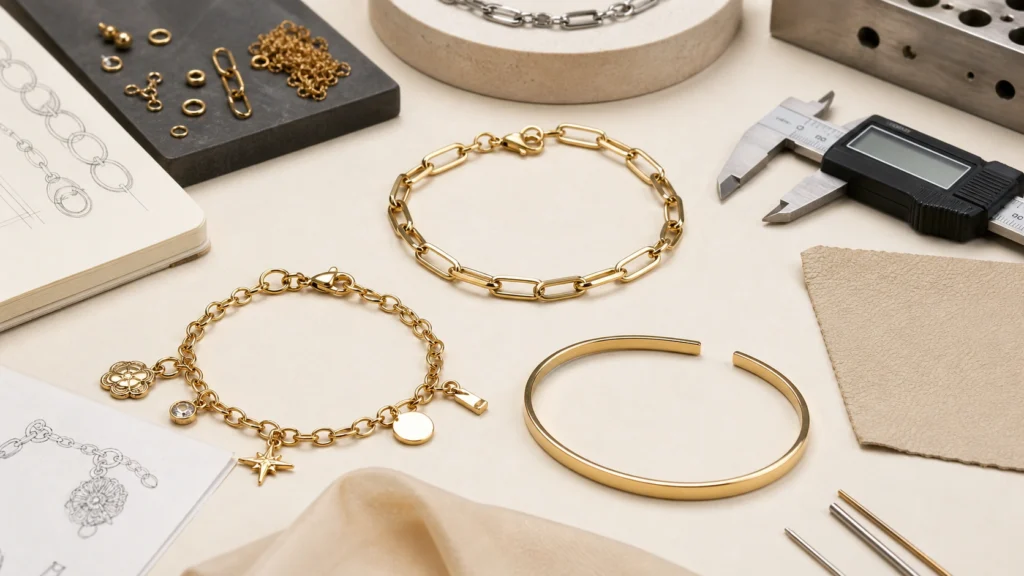
Flexible chain and cord bracelets can tangle or gather in one corner. Rigid bangles need clearance around their inside and outside shape. Cuffs need support that does not compress the opening. Tennis and articulated bracelets should not be bent against their natural movement.
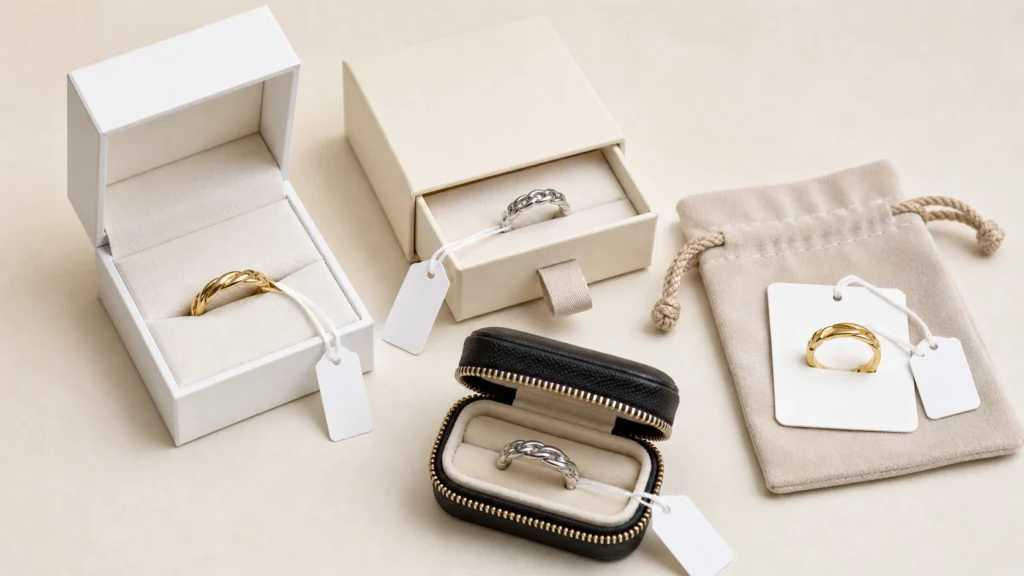
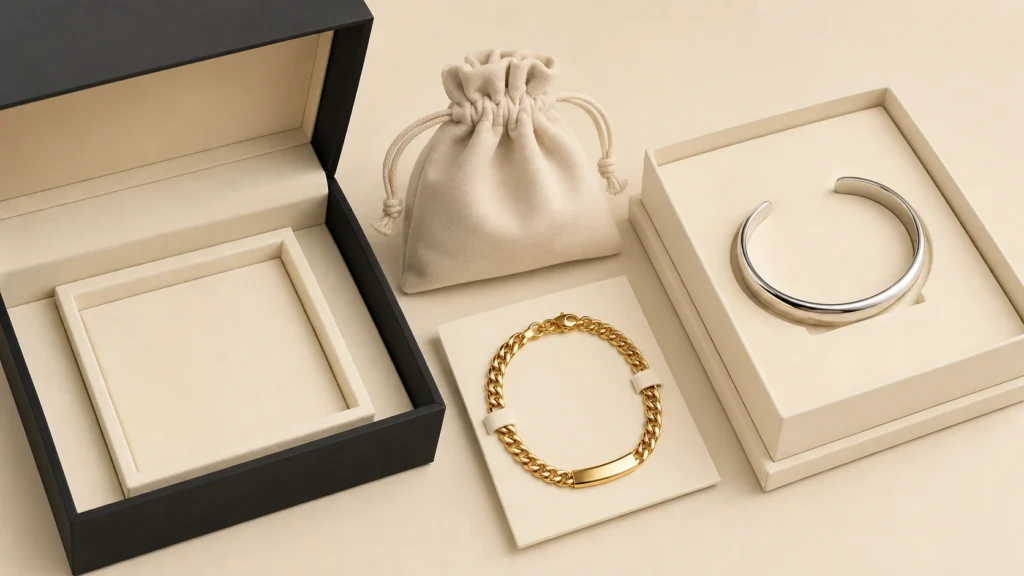
Choose the smallest practical format that respects the bracelet:
- A card or wrapped support can suit light flexible styles when both ends are restrained.
- A pouch can reduce volume but provides limited positional control.
- A cushion can support bangles or flexible bracelets around a gentle curve.
- A die-cut or formed insert can hold heavier, open, or unusually shaped products.
- A long box can display an articulated bracelet flat when bending is undesirable.
The tradeoff is between pack volume, presentation, protection, component count, and packing labor.
Restrain the Body and Isolate the Hardware
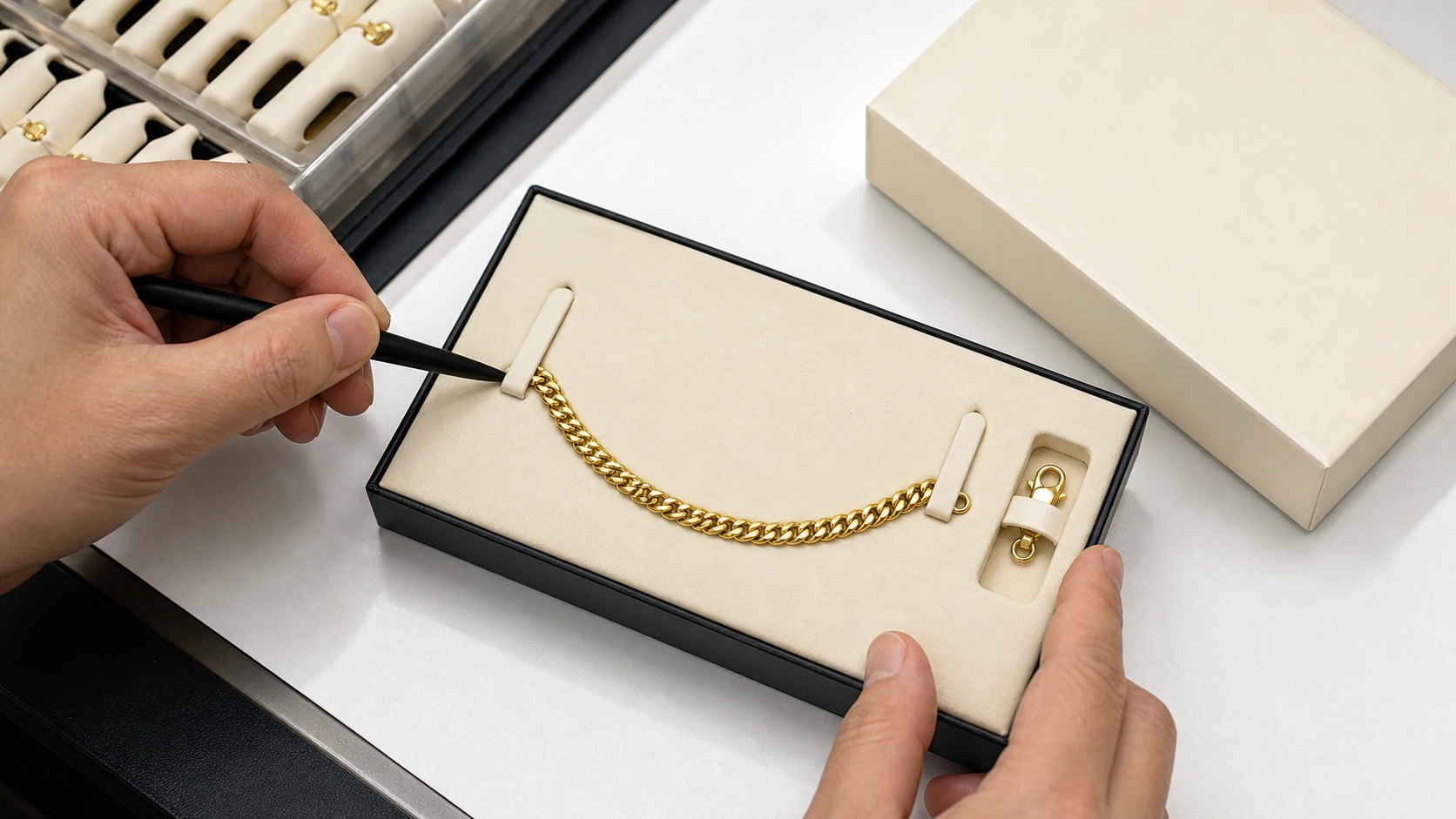
Map every potential contact point. The clasp, extender, charm, stone setting, and chain end should not swing across a polished or plated surface. Use slots, loops, pockets, wraps, or separate recesses where needed.
The restraint must be secure but removable. Tight elastic can mark a finish or pull on a connector. A loose cushion allows rotation. Fibers can catch on prongs. Adhesives or printed surfaces can transfer material if compatibility is not checked.
Specify the approved bracelet orientation, fastening state, clasp position, and removal method. Photograph the loaded sample for the packing instruction.
Design Labels for Length and Variant Control
Bracelet collections often look identical across lengths or finishes. Place SKU, length or size, finish, stone or charm variant, and barcode data where warehouse staff can read them without opening the pack.
Match the inner-pack code to the pick list and master-carton record. If a customer-facing package should stay clean, use a removable logistics label on an outer sleeve or protective bag. Test label placement and removal against the actual pack surface.
The brand is responsible for accurate artwork, claims, care text, and destination-market labeling. Do not assume the jewelry or packaging supplier owns those decisions.
Run a Loaded Retention and Contact Test
Test a finished bracelet in the complete package. Invert it, handle it through repeated opening and closing, and apply an agreed controlled shake. Then inspect product position, clasp isolation, finish contact, insert deformation, loose fibers, odor, transfer, and removal effort.
For ecommerce, place the loaded presentation pack inside the intended outbound mailer with its protective material. Review movement and damage after a shipping simulation appropriate to the route. Exact test methods should be agreed with the buyer and packaging specialist.
Repeat the check for the smallest, largest, heaviest, and most vulnerable bracelet variants. One mid-range sample may not represent the collection.
Assign Packaging Responsibilities Before Ordering
List who sources each box, insert, pouch, label, care card, protective bag, and shipping carton. Also name who approves artwork, performs final assembly, supplies barcode data, and checks packed goods.
Packaging quantity and timing may follow different constraints from jewelry production. Confirm whether components arrive together, whether extra packaging units are needed, and how reorders will match the approved version.
Jinnuo Jewelry can review packaging within a confirmed bracelet project, but no particular packaging structure, material, MOQ, cost, or schedule should be assumed. Provide finished product samples or dimensions, variant data, branding files, shipping route, and responsibility map for review.

Carol
Carol is a jewelry manufacturing expert with first-hand experience across materials, surface finishes, production processes and quality control. He brings critical thinking and rigor to his work, questioning common assumptions and testing them against industry standards and real production results. He looks at every issue from the point ofview of the people who buy and wear jewelry, turning technical details into clear, practical answers to real-world problems.